 Back
Covalent Bonding: Properties, Polarity, Energies, and Molecular Geometry
Study Guide - Smart Notes
 Tailored notes based on your materials, expanded with key definitions, examples, and context.
Properties of Covalent Bonds
Bond Length, Strength, and Directionality
Covalent bonds form when atoms share valence electrons, typically between nonmetals or metalloids. Unlike ionic bonds, covalent bonds are directional, meaning the shared electron density is concentrated between the bonded nuclei, resulting in specific bond angles and molecular shapes.
Bond Length: The distance between the nuclei of two bonded atoms. Shorter bonds are generally stronger. For example, the H2 molecule has a bond length of 74 pm, while I2 has a bond length of 270 pm.
Bond Dissociation Energy (BDE): The energy required to break a covalent bond. BDE values are typically given in kJ/mol and represent average values for a given bond type.
Bond Order: The number of shared electron pairs between two atoms. Higher bond order correlates with shorter, stronger bonds.
Example: The average C–H BDE in methane (CH4) is calculated as the mean of the four individual C–H bond energies.
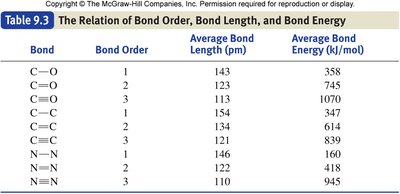
Table Purpose: This table compares bond order, bond length, and bond energy for C–O, C–C, and N–N bonds, illustrating that higher bond order leads to shorter and stronger bonds.
Bond Energies and Reaction Energies
In chemical reactions, bonds are broken and formed. The overall reaction energy can be estimated using bond energies:
Reaction Energy Formula:
Example: For the reaction H2(g) + Cl2(g) → 2HCl(g):
Bonds broken: H–H (436 kJ/mol), Cl–Cl (243 kJ/mol)
Bonds formed: 2 × H–Cl (431 kJ/mol each)
Reaction energy: 436 + 243 – 2×431 = –183 kJ
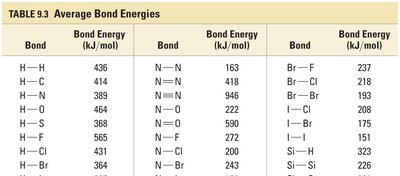
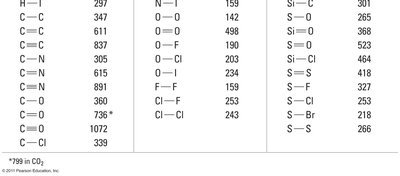
Table Purpose: These tables provide average bond energies for a variety of bonds, useful for calculating reaction enthalpies.
Bond Polarity and Electronegativity
Polarity of Covalent Bonds
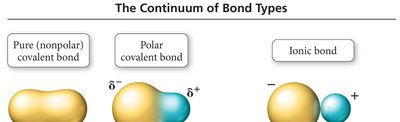
Covalent bonds can be nonpolar (equal sharing of electrons) or polar (unequal sharing). In polar bonds, one atom attracts the shared electrons more strongly, resulting in partial charges (δ+ and δ–).
Bond Dipole Moment (μ): A measure of bond polarity, defined as where is the bond length.
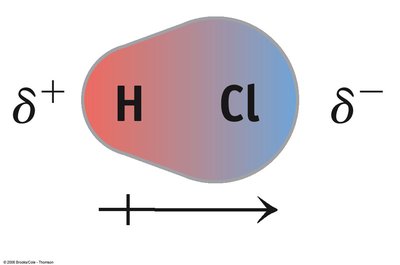
Example: In HCl, chlorine is more electronegative than hydrogen, resulting in a dipole moment directed from H (δ+) to Cl (δ–).
Effect of Electric Fields on Polar Molecules
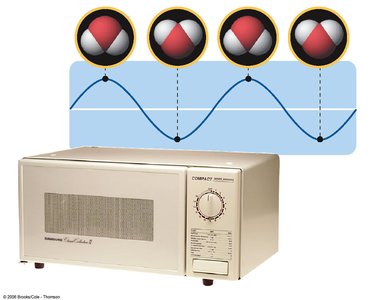
Polar molecules align with external electric fields, which is the basis for many applications, including electrets and microwave heating.
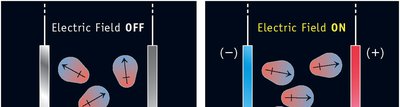
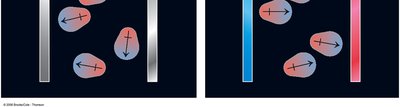
Example: When an electric field is applied, polar molecules align with the field, affecting their physical properties.
Applications of Electrets
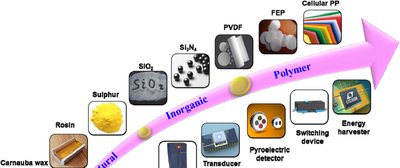
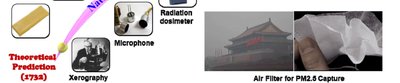
Electrets are materials with a permanent electric dipole moment, analogous to permanent magnets. They are used in microphones, sensors, and air filters.
Microwave Heating and Molecular Polarity
Microwave ovens heat food by causing polar water molecules to oscillate in response to the rapidly changing electric field, generating heat through molecular collisions.
Percent Ionic Character
The percent ionic character (PIC) quantifies the extent to which a bond is ionic versus covalent. It is calculated as:
If PIC > 50%, the bond is considered predominantly ionic.
Electronegativity and Bond Polarity
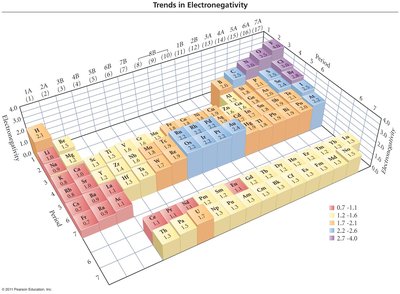
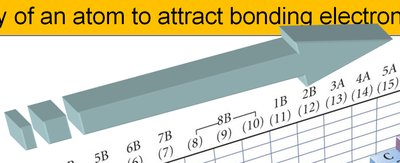
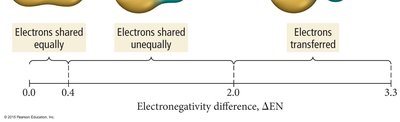
Electronegativity (χ) is the ability of an atom to attract bonding electrons. The difference in electronegativity (Δχ) between two atoms determines bond polarity:
Δχ = 0–0.4: Nonpolar covalent
Δχ = 0.4–2.0: Polar covalent
Δχ ≥ 2.0: Ionic
Summary Table: Bond Order, Length, and Energy
Bond | Bond Order | Average Bond Length (pm) | Average Bond Energy (kJ/mol) |
|---|---|---|---|
C–O | 1 | 143 | 358 |
C=O | 2 | 123 | 745 |
C≡O | 3 | 113 | 1070 |
C–C | 1 | 154 | 347 |
C=C | 2 | 134 | 614 |
C≡C | 3 | 121 | 839 |
N–N | 1 | 146 | 160 |
N=N | 2 | 122 | 418 |
N≡N | 3 | 110 | 945 |
Table Purpose: This table demonstrates the relationship between bond order, bond length, and bond energy for common bonds.
Lattice Energy of Ionic Compounds
Definition and Significance
Lattice energy is the energy released when gaseous ions combine to form an ionic solid. It is a measure of the strength of the ionic bonds in a crystal lattice and is always exothermic (ΔHf < 0).
Example: Na+(g) + Cl–(g) → NaCl(s); ΔHf = lattice energy
Lattice energy increases with higher ionic charges and smaller ionic radii.
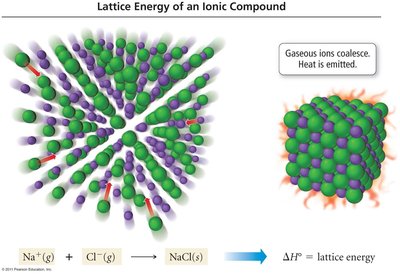
Image Purpose: This image illustrates the formation of an ionic crystal lattice from gaseous ions, with the release of lattice energy as heat.
Summary
Covalent bonds are characterized by directionality, specific bond lengths, and bond energies.
Bond polarity arises from differences in electronegativity, leading to partial charges and dipole moments.
Lattice energy is a key concept for understanding the stability of ionic compounds.
Tables of bond energies and bond lengths are essential tools for predicting reaction energetics and molecular properties.
