 Back
BackElectrochemistry: Principles, Calculations, and Applications
Study Guide - Smart Notes
 Tailored notes based on your materials, expanded with key definitions, examples, and context.
Electrochemistry
Introduction to Electrochemistry
Electrochemistry is the branch of chemistry that studies the relationship between chemical energy and electrical energy, focusing on the conversion of one form into the other. It encompasses both spontaneous and non-spontaneous processes, including the study of redox (oxidation-reduction) reactions where electrons are transferred between species.
Electrochemical reactions involve the transfer of electrons from one chemical species to another.
These reactions are fundamental to batteries, corrosion, electrolysis, and biological energy conversion.
Oxidation and Reduction
Definitions and Key Concepts
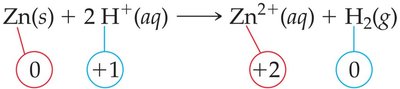
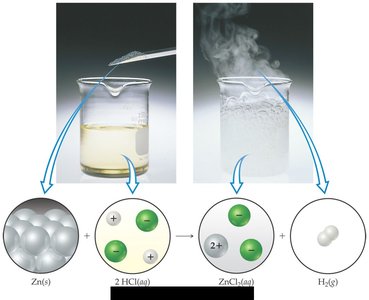
Understanding redox reactions requires tracking electron transfer using oxidation numbers. Oxidation is the loss of electrons, while reduction is the gain of electrons.
Oxidation: Loss of electrons by a species (increase in oxidation number).
Reduction: Gain of electrons by a species (decrease in oxidation number).
Oxidizing agent: The species that is reduced (gains electrons).
Reducing agent: The species that is oxidized (loses electrons).
Assigning Oxidation Numbers
Oxidation numbers are assigned to atoms to keep track of electron transfer in reactions. The rules for assigning oxidation numbers are as follows:
Elements in their elemental form have an oxidation number of 0.
The oxidation number of a monoatomic ion equals its charge.
Nonmetals usually have negative oxidation numbers, but can be positive in certain compounds.
Oxygen is usually −2, except in peroxides (−1).
Hydrogen is +1 when bonded to nonmetals, −1 when bonded to metals.
Fluorine is always −1; other halogens are −1 unless bonded to oxygen or other halogens.
The sum of oxidation numbers in a neutral compound is 0; in a polyatomic ion, it equals the ion's charge.

Balancing Redox Reactions
The Half-Reaction Method
Redox equations are often balanced using the half-reaction method, which separates the oxidation and reduction processes for clarity and systematic balancing.
Assign oxidation numbers to all atoms to identify what is oxidized and what is reduced.
Write the oxidation and reduction half-reactions.
Balance all elements except H and O.
Balance O by adding H2O; balance H by adding H+.
Balance charge by adding electrons.
Multiply half-reactions by appropriate integers to equalize electron transfer.
Add the half-reactions and cancel species appearing on both sides.
Check that both mass and charge are balanced.

Example: Balancing in Acidic and Basic Solutions
Redox reactions can occur in acidic or basic solutions, requiring different balancing steps. In basic solutions, after balancing as if in acid, add OH− to neutralize H+ and form water.
Example: Balancing the reaction between Cr2O72− and I− in acidic and basic media.

Electrochemical and Electrolytic Cells
Cell Types and Their Functions
Electrochemical cells convert chemical energy to electrical energy (Galvanic/Voltaic cells), while electrolytic cells use electrical energy to drive non-spontaneous chemical reactions.
Galvanic (Voltaic) Cell: Spontaneous redox reaction produces electrical energy. Anode is negative, cathode is positive.
Electrolytic Cell: Non-spontaneous reaction driven by external voltage. Anode is positive, cathode is negative.
Electrons always flow from anode (oxidation) to cathode (reduction).
Feature | Galvanic Cell | Electrolytic Cell |
|---|---|---|
Spontaneity | Spontaneous | Non-spontaneous |
Anode | Negative | Positive |
Cathode | Positive | Negative |
Electron Flow | Anode to Cathode | External source to Cathode |
Voltaic Cell Structure and Operation
A typical voltaic cell consists of two half-cells connected by a salt bridge. The salt bridge maintains electrical neutrality by allowing ion flow between compartments.
Electrons flow through an external circuit from anode to cathode.
Cations move toward the cathode; anions move toward the anode.
Cell notation: Zn(s) | Zn2+(1 M) || Cu2+(1 M) | Cu(s)
Cell Potential and Electromotive Force (EMF)
Definition and Measurement
The cell potential (Ecell) or electromotive force (emf) is the potential difference between the anode and cathode, measured in volts (V). It represents the driving force for electron flow in the cell.
1 V = 1 J/C (one joule per coulomb of charge).
Cell potential depends on the nature of the electrodes, concentrations, and temperature.
Standard cell potential (Ecell°) is measured under standard conditions (1 M, 1 atm, 25°C).
Standard Reduction Potentials
Standard reduction potentials (Ered°) are tabulated for many half-reactions, referenced to the standard hydrogen electrode (SHE), which is defined as 0 V.
Cell potential is calculated as:
The more positive the reduction potential, the stronger the oxidizing agent.
The more negative the reduction potential, the stronger the reducing agent.
Free Energy and Electrochemistry
Gibbs Free Energy and Spontaneity
The Gibbs free energy change (ΔG) indicates the spontaneity of a reaction. For electrochemical cells:
n = number of moles of electrons transferred
F = Faraday's constant = 96,485 C/mol
If E > 0, the reaction is spontaneous (ΔG < 0).
If E < 0, the reaction is non-spontaneous (ΔG > 0).
Relationship to Equilibrium
At equilibrium, ΔG = 0 and E = 0.
The relationship between standard free energy and the equilibrium constant (K):
The Nernst Equation
Cell Potentials Under Non-Standard Conditions
The Nernst equation allows calculation of cell potential under non-standard conditions:
At 298 K:
Q = reaction quotient (ratio of product and reactant concentrations)
Applications: Batteries, Corrosion, and Electrolysis
Batteries
Batteries are practical applications of electrochemical cells, providing portable sources of electrical energy through spontaneous redox reactions.
Corrosion
Corrosion, such as rusting, is an electrochemical process where metals are oxidized, often requiring protection strategies to prevent material degradation.
Electrolysis
Electrolysis uses electrical energy to drive non-spontaneous redox reactions, such as the decomposition of water or the extraction of metals from ores.
Faraday's Law: The amount of substance oxidized or reduced at an electrode is proportional to the total charge passed through the cell.
Q = I × t (charge = current × time)
1 mole of electrons = 96,500 C
Summary Table: Key Equations
Equation | Description |
|---|---|
Standard cell potential | |
Gibbs free energy and cell potential | |
Nernst equation at 298 K | |
Total charge passed |
Quick Reference: Mnemonics
OIL RIG: Oxidation Is Loss, Reduction Is Gain (of electrons)
Red Cat: Reduction occurs at the Cathode
Voltaic cell: Spontaneous, anode is negative
Electrolytic cell: Non-spontaneous, anode is positive
