 Back
BackElectrochemistry: Redox Reactions, Galvanic Cells, and Electrolytic Processes
Study Guide - Smart Notes
 Tailored notes based on your materials, expanded with key definitions, examples, and context.
Electrochemistry Overview
Introduction to Electrochemistry
Electrochemistry is the branch of chemistry that studies the interconversion of chemical and electrical energy through redox (oxidation-reduction) reactions. These reactions involve the transfer of electrons between chemical species, and are fundamental to processes such as batteries, corrosion, and electrolysis.
Electricity: The flow of electrical charge, carried by electrons or ions.
Redox Reactions: Chemical reactions where electrons are transferred from one atom to another.
Oxidation: Loss of electrons by a species.
Reduction: Gain of electrons by a species.
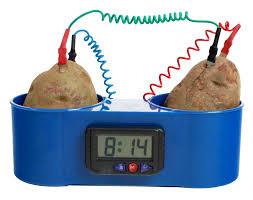
Redox Chemistry Fundamentals
Oxidation and Reduction
Redox reactions are composed of two half-reactions: one for oxidation and one for reduction. These processes always occur together, as electrons lost by one species are gained by another.
Oxidation: Electrons are produced; the species is oxidized. Example:
Reduction: Electrons are consumed; the species is reduced. Example:
Redox Reaction: Both oxidation and reduction occur simultaneously.
Mnemonic: OIL RIG – Oxidation Is Loss, Reduction Is Gain (of electrons).
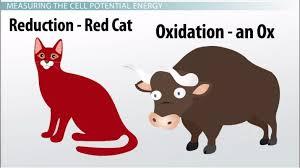
Oxidizing and Reducing Agents
Oxidizing Agent: Causes oxidation by accepting electrons (is itself reduced).
Reducing Agent: Causes reduction by donating electrons (is itself oxidized).
Oxidation Numbers (States)
Oxidation numbers are assigned to atoms to track electron transfer in redox reactions. They are not real charges, but a bookkeeping tool.
Elemental substances: Oxidation number is 0.
Monatomic ions: Oxidation number equals the ion's charge.
Common nonmetals: H = +1 (with nonmetals), -1 (with metals); O = -2 (most compounds); F = -1 (always); other halogens = -1 (except with O or other halogens).
The sum of oxidation numbers in a neutral compound is 0; in a polyatomic ion, it equals the ion's charge.
Galvanic (Voltaic) Cells
Structure and Function
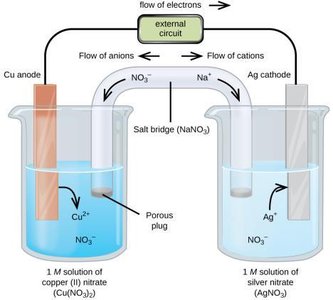
Galvanic cells convert chemical energy from spontaneous redox reactions into electrical energy. The cell is divided into two half-cells, each containing an electrode and an electrolyte solution. The half-cells are connected by a salt bridge and an external circuit.
Anode: Site of oxidation (loss of electrons).
Cathode: Site of reduction (gain of electrons).
Electrons flow from anode to cathode through the external circuit.
Ions move through the salt bridge to maintain electrical neutrality.
Cell Notation
Cell notation is a shorthand way to represent a galvanic cell:
Oxidation half-cell on the left, reduction half-cell on the right.
Single vertical line (|) indicates a phase boundary; double vertical line (||) indicates the salt bridge.
Example:
Electrode and Cell Potentials
Standard Electrode Potentials (E°)
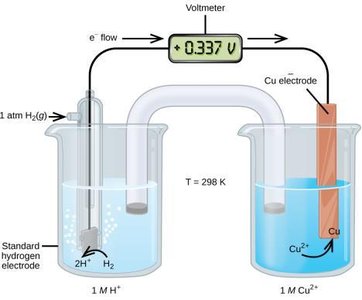
The standard electrode potential (E°) measures the tendency of a half-cell to gain electrons (be reduced) under standard conditions (1 M, 1 atm, 25°C). All potentials are measured relative to the standard hydrogen electrode (SHE), which is assigned a potential of 0 V.
Cell Potential (E°cell): The difference in potential between the cathode and anode.
Calculated as:
A positive E°cell indicates a spontaneous reaction.
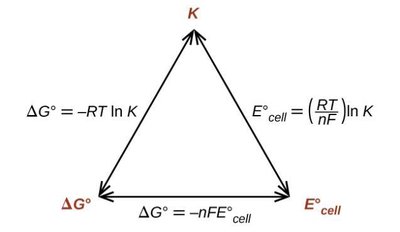
Relationship Between E°, ΔG°, and K
The spontaneity of a redox reaction is related to the cell potential, the standard free energy change (ΔG°), and the equilibrium constant (K):
A positive E°cell means ΔG° is negative and K > 1 (spontaneous reaction).
The Nernst Equation and Nonstandard Conditions
The Nernst Equation
The Nernst equation allows calculation of cell potential under nonstandard conditions (when concentrations or pressures are not 1 M or 1 atm):
(at 25°C)
Q is the reaction quotient, reflecting the current concentrations of reactants and products.
Concentration Cells
Concentration cells are a special type of galvanic cell where both electrodes are the same material, but the ion concentrations differ. The cell generates a potential due to the concentration gradient.


Batteries and Fuel Cells
Common Batteries
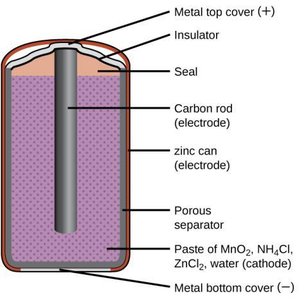
LeClanché (Acidic Dry Cell): Uses a Zn anode and MnO2 cathode in a paste electrolyte. Non-rechargeable.
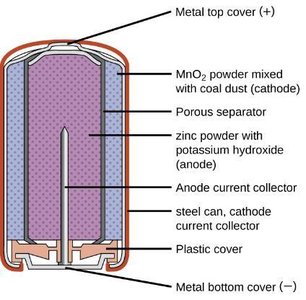
Alkaline Dry Cell: Similar to acidic dry cell but uses KOH as the electrolyte. Longer shelf life and less corrosion.
Nickel–Metal Hydride (NiMH) Battery: Rechargeable, uses a metal hydride anode and NiO(OH) cathode.
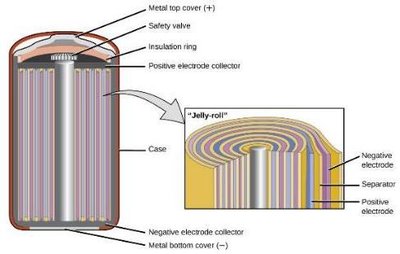
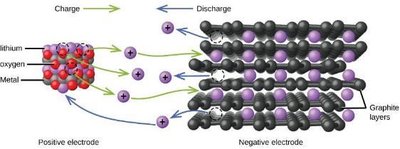
Lithium-Ion Battery: Rechargeable, high energy density, uses graphite anode and lithium metal oxide cathode.
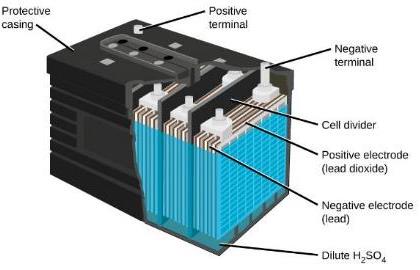
Lead Storage Battery: Used in cars, consists of Pb and PbO2 electrodes in H2SO4 electrolyte. Rechargeable.
Fuel Cells
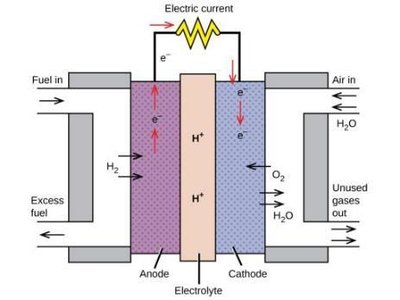
Fuel cells generate electricity by continuously supplying reactants (e.g., H2 and O2) to the cell. They are more efficient than combustion engines and are used in clean energy applications.
Corrosion and Its Prevention
Corrosion
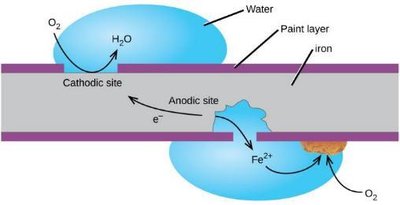
Corrosion is the deterioration of metals due to redox reactions with environmental substances, such as oxygen and water. Rusting of iron is a common example, where iron is oxidized to iron(III) oxide (rust).

Prevention of Corrosion
Coating the metal with paint or another protective layer.
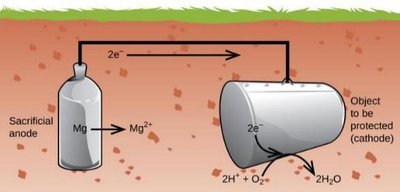
Using sacrificial anodes (more reactive metals) to protect the main metal (cathodic protection).
Electrolysis and Electrolytic Cells
Electrolysis
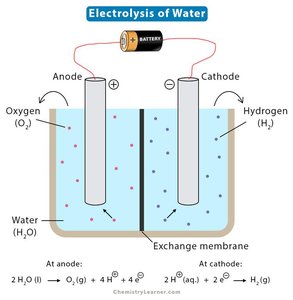
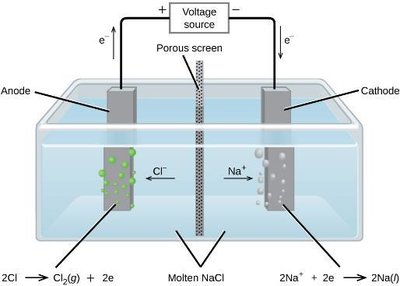
Electrolysis is the process of driving a nonspontaneous chemical reaction using electrical energy. It is used for metal extraction, purification, and electroplating.
Oxidation occurs at the anode; reduction at the cathode.
Requires an external power source to drive the reaction.
Electroplating
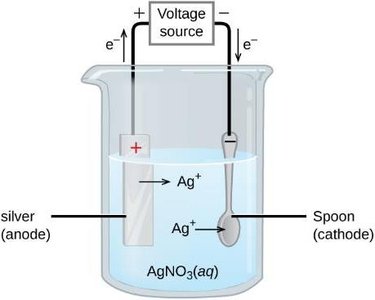
Electroplating uses electrolysis to deposit a thin layer of metal onto a surface. The object to be plated is the cathode, and the plating metal is the anode.
Faraday’s Law of Electrolysis
The amount of substance produced at each electrode during electrolysis is proportional to the quantity of electric charge passed through the cell.
1 Faraday (F) = 96,485 C = charge of 1 mole of electrons.
Mass of substance deposited:
