Back
BackEssentials of Matter and Measurement in Chemistry
Study Guide - Smart Notes
 Tailored notes based on your materials, expanded with key definitions, examples, and context.
Introduction to Chemistry
What is Chemistry?
Chemistry is the scientific study of matter, its properties, and its behavior. It explores how substances interact, combine, and change to form new substances. Understanding chemistry is fundamental to many scientific disciplines and practical applications.
The Scientific Method
Steps of the Scientific Method
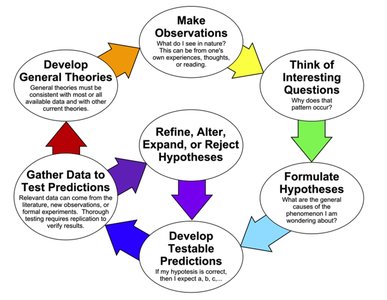
The scientific method is a systematic approach used by scientists to explore observations, answer questions, and solve problems. It involves several key steps:
Make Observations: Gathering information from nature or experiments.
Think of Interesting Questions: Asking why certain patterns or phenomena occur.
Formulate Hypotheses: Proposing explanations for observations.
Develop Testable Predictions: Creating predictions that can be tested through experiments.
Gather Data to Test Predictions: Collecting and analyzing data from experiments or observations.
Develop General Theories: Formulating theories that explain the data and can be tested further.
Refine, Alter, Expand, or Reject Hypotheses: Modifying hypotheses based on experimental results.
Matter and Its Properties
Definition of Matter
Matter is anything that has mass and occupies space. All physical objects are made of matter, which can exist in different forms and states.
Atoms, Elements, and Compounds
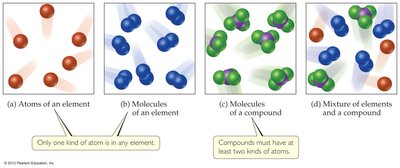
Atoms: The fundamental building blocks of matter.
Elements: Substances made of only one kind of atom.
Compounds: Substances composed of two or more different kinds of elements chemically bonded together.
States of Matter
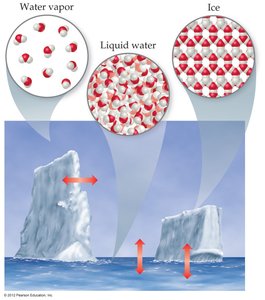
Matter exists in three primary states: solid, liquid, and gas. Each state is characterized by the arrangement and movement of its particles.
Solid: Particles are closely packed in a fixed structure.
Liquid: Particles are close but can move past each other.
Gas: Particles are far apart and move freely.
Classification of Matter
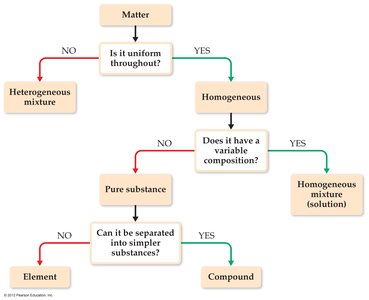
Pure Substances and Mixtures
Matter can be classified based on its uniformity and composition:
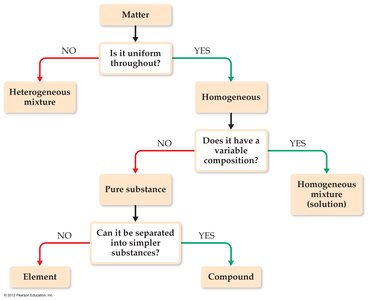
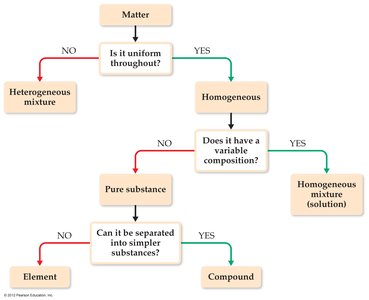
Pure Substances: Have a fixed composition and distinct properties. They can be elements or compounds.
Mixtures: Combinations of two or more substances that retain their individual properties. Mixtures can be homogeneous (uniform throughout) or heterogeneous (not uniform).
Properties and Changes of Matter
Types of Properties
Physical Properties: Can be observed without changing the substance's identity (e.g., boiling point, density, mass, volume).
Chemical Properties: Can only be observed when a substance changes into another substance (e.g., flammability, reactivity).
Intensive Properties: Independent of the amount of substance (e.g., density, boiling point).
Extensive Properties: Depend on the amount of substance (e.g., mass, volume).
Types of Changes
Physical Changes: Changes that do not alter the composition of a substance (e.g., changes of state, temperature, volume).
Chemical Changes: Changes that result in the formation of new substances (e.g., combustion, oxidation, decomposition).
Chemical Reactions
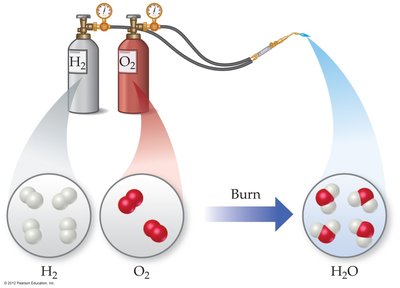
During a chemical reaction, reactants are transformed into new products with different properties and compositions.
Separation of Mixtures
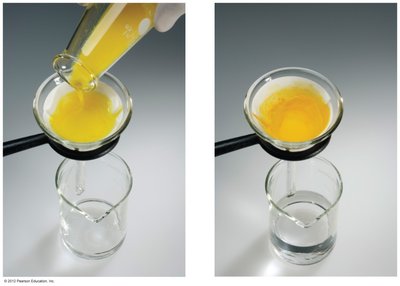
Filtration
Filtration separates solid substances from liquids and solutions by passing the mixture through a filter.
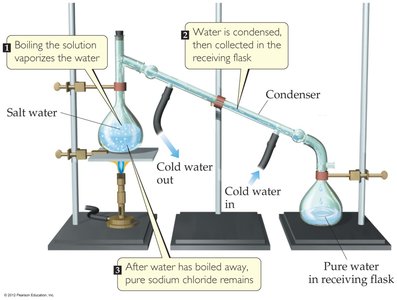
Distillation
Distillation separates components of a homogeneous mixture based on differences in boiling points.
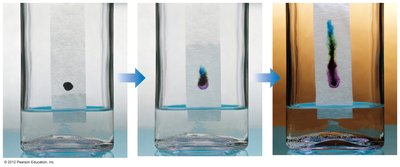
Chromatography
Chromatography separates substances based on differences in solubility in a solvent.
Units of Measurement
SI Units
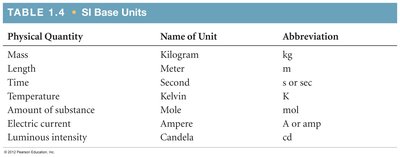
The International System of Units (SI) is the standard for scientific measurements. Each physical quantity has a specific base unit.
Physical Quantity | Name of Unit | Abbreviation |
|---|---|---|
Mass | Kilogram | kg |
Length | Meter | m |
Time | Second | s or sec |
Temperature | Kelvin | K |
Amount of substance | Mole | mol |
Electric current | Ampere | A or amp |
Luminous intensity | Candela | cd |
Metric System Prefixes
Prefixes are used to express multiples or fractions of base units, making measurements more convenient.
Prefix | Abbreviation | Meaning | Example |
|---|---|---|---|
Kilo | k | 103 | 1 kilometer (km) = 1 × 10³ m |
Centi | c | 10-2 | 1 centimeter (cm) = 1 × 10⁻² m |
Milli | m | 10-3 | 1 milliliter (mL) = 1 × 10⁻³ L |
Micro | μ | 10-6 | 1 micrometer (μm) = 1 × 10⁻⁶ m |
Nano | n | 10-9 | 1 nanometer (nm) = 1 × 10⁻⁹ m |
Volume
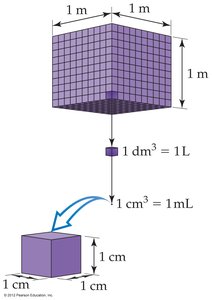
Volume is commonly measured in liters (L) and milliliters (mL). A liter is defined as the volume of a cube that is 1 decimeter (dm) on each side, and a milliliter is the volume of a cube that is 1 centimeter (cm) on each side.
Temperature Scales
Temperature is a measure of the average kinetic energy of particles. The Celsius and Kelvin scales are most commonly used in science.
Celsius (°C): 0°C is the freezing point of water, 100°C is the boiling point.
Kelvin (K): The SI unit for temperature. K = °C + 273.15. No negative values.
Fahrenheit (°F): Not commonly used in scientific work. °F = 9/5(°C) + 32.
Derived Units: Density
Density is a physical property defined as mass per unit volume. It is commonly expressed in g/mL or g/cm3.
Measurement and Uncertainty
Uncertainty in Measurement
All measurements have some degree of uncertainty, depending on the precision of the measuring instrument.
Significant Figures
Significant figures are the digits in a measurement that are known with certainty plus one estimated digit. They indicate the precision of a measurement.
All nonzero digits are significant.
Zeroes between significant digits are significant.
Leading zeroes are not significant.
Trailing zeroes are significant if a decimal point is present.
Rules for calculations:
Addition/Subtraction: Round to the least significant decimal place.
Multiplication/Division: Round to the least number of significant figures in any number used.
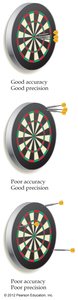
Accuracy vs. Precision
Accuracy: How close a measurement is to the true value.
Precision: How close repeated measurements are to each other.
Dimensional Analysis
Unit Conversions
Dimensional analysis is a method for converting one unit to another using conversion factors. The conversion factor is chosen so that the unwanted unit cancels, leaving the desired unit.
Example: To convert 8.00 m to inches: