 Back
Exceptions to the Octet Rule, Resonance, Formal Charge, and Bond Energies
Study Guide - Smart Notes
 Tailored notes based on your materials, expanded with key definitions, examples, and context.
Bonding and the Octet Rule
Atoms, Molecules, and Lewis Structures
Atoms are the fundamental building blocks of matter, and molecules are formed when atoms combine, resulting in new properties that are not present in the individual atoms. The sharing and redistribution of valence electrons across a compound is key to these emergent properties. Lewis Theory provides a framework for predicting the arrangement of atoms and the distribution of electrons in molecules, which is essential for understanding chemical properties. The origin of each valence electron is irrelevant; only their sharing and distribution matter.
Resonance and Formal Charge
Resonance Structures and Formal Charge
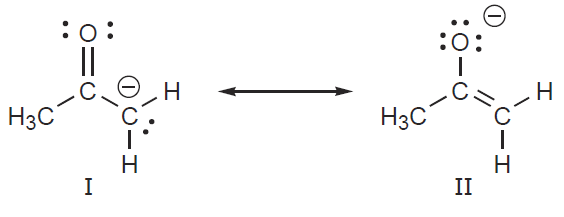
Resonance structures are different possible arrangements of electrons in a molecule that cannot be represented by a single Lewis structure. The formal charge is used to determine the most stable resonance structure. When drawing resonance structures, only electrons are moved, not atoms. The compound exists as a hybrid of all resonance structures, with the major structure contributing most to the actual molecule.

Determining Major Resonance Structures
The major resonance structure is identified by the following rules:
More atoms with full valence shells (octets)
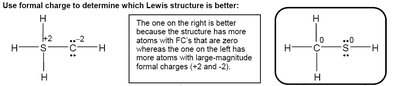
Fewer formal charges
Formal charges placed on atoms with matching electronegativity (negative charges on more electronegative atoms, positive charges on less electronegative atoms)
The most stable structure has the most atoms with formal charge zero. Negative formal charges should be on the most electronegative atoms.
Exceptions to the Octet Rule
Types of Octet Rule Violations
While the octet rule is a useful guideline, there are several important exceptions:
Incomplete Octet: Some elements, such as boron and beryllium, form stable compounds with fewer than eight electrons in their valence shell.
Expanded Octet: Elements in period 3 or higher can have more than eight electrons due to available d orbitals.
Odd-Electron Species: Molecules with an odd number of valence electrons, such as free radicals, do not satisfy the octet rule.
Incomplete Octets and Formal Charge
Some stable compounds, such as BeCl2 and BF3, have incomplete octets. The major resonance structure may break the octet rule to comply with the rules of formal charge, especially for molecules containing boron and beryllium.


Odd-Electron Species (Free Radicals)
Free radicals are molecules with an odd number of electrons. Examples include nitrogen(II) oxide (NO), nitrogen(IV) oxide (NO2), and chlorine dioxide (ClO2). These molecules are typically more reactive than those with paired electrons.
Expanded Octets
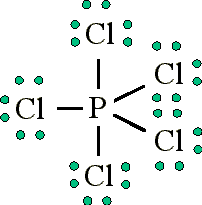
Expanded octets occur in elements with principal quantum number n ≥ 3, where d orbitals are available. For example, phosphorus in PCl5 has ten electrons in its valence shell. Expanded octets are not possible for n ≤ 2.

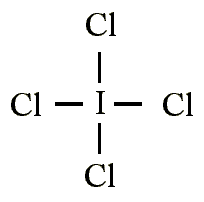
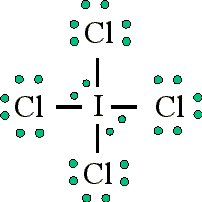
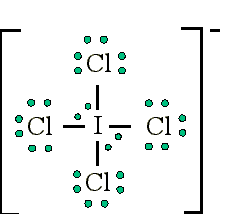
Resonance Structures for SO2 and ICl4-
Resonance structures for SO2 illustrate the importance of formal charge and octet satisfaction. The most favorable structure has no formal charge and satisfies the octet rule for all atoms. For ICl4-, the central iodine atom has twelve valence electrons, demonstrating an expanded octet.

Bond Length and Bond Strength
Bond Strength
Bond strength is measured by the energy required to break a bond, known as bond enthalpy. The stronger the bond, the higher the bond enthalpy. Bond enthalpy is always positive (endothermic), while bond formation is exothermic (energy released).

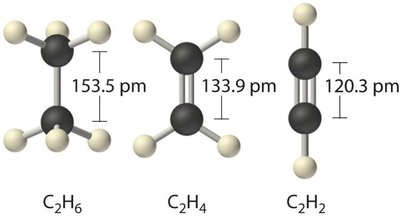
Bond Length and Bond Order
Bond length and strength vary with bond order. Higher bond order (double, triple bonds) results in shorter and stronger bonds. Bond lengths can be measured experimentally using x-ray, electron, and neutron diffraction.

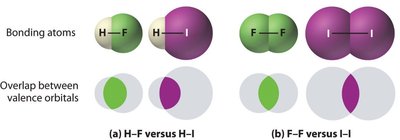
Orbital Overlap and Bond Strength
The strength of covalent bonds depends on the overlap between the valence orbitals of the bonded atoms. Greater overlap results in stronger bonds.
Typical Bond Lengths and Energies
The following table summarizes typical bond lengths and bond energies for common bonds:
Bond | Length (pm) | Energy (kJ/mol) |
|---|---|---|
H–H | 74 | 436 |
C–C | 154 | 348 |
C=C | 134 | 614 |
C≡C | 120 | 839 |
O=O | 121 | 498 |
N≡N | 110 | 945 |
Cl–Cl | 199 | 243 |
H–O | 96 | 459 |
H–F | 92 | 568 |
H–Cl | 127 | 432 |
Bond Energies and Reaction Enthalpy
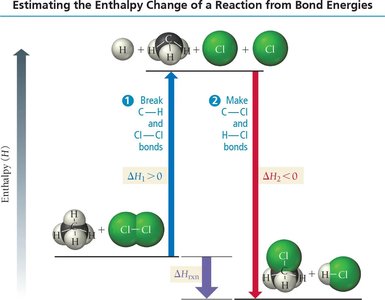
Estimating Reaction Enthalpy
Bond enthalpy and Hess' Law can be used to estimate the enthalpy change of a reaction:
Formula:

Example: Formation of Water
For the reaction 2H2(g) + O2(g) → 2H2O(g):
Bonds broken: 2 H–H bonds and 1 O=O bond
Bonds formed: 4 O–H bonds
Calculation:
Tabulated value: -241.8 kJ/mol
Summary
This study guide covers exceptions to the octet rule, resonance structures, formal charge, bond length and strength, and the estimation of reaction enthalpy using bond energies. Understanding these concepts is essential for predicting molecular structure, stability, and reactivity in general chemistry.
