 Back
BackLesson 6.2: Factors Affecting Reaction Rates in Chemical Kinetics
Study Guide - Smart Notes
 Tailored notes based on your materials, expanded with key definitions, examples, and context.
Factors Affecting Reaction Rates (5)
Introduction
Chemical kinetics is the study of the rates at which chemical reactions occur and the factors that influence these rates. Understanding these factors is essential for controlling reactions in industrial, laboratory, and biological contexts. The main factors affecting reaction rates include the chemical nature of the reactants, concentration, surface area, temperature, and the presence of catalysts.
Chemical Nature of the Reactants
Effect of Chemical Properties on Reaction Rate
Chemical properties determine how readily a substance undergoes a chemical reaction. For example, some metals react rapidly with oxygen, while others are much less reactive.
Highly reactive metals, such as sodium and potassium, oxidize quickly and are not found in their elemental state in nature. In contrast, metals like gold and platinum are much less reactive and resist oxidation, making them ideal for jewelry and electronics.
The tendency of a substance to undergo chemical change is a key factor in determining reaction rate.
Reactions that involve the breaking of fewer bonds or weaker bonds proceed faster, as the activation energy (Ea) is lower
reactions that involve breaking more bonds or stronger bonds proceed slower, as the activation energy (Ea) required to break the bond is higher

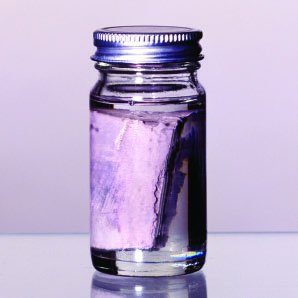
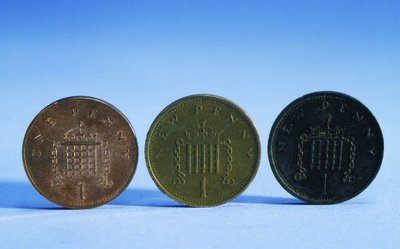
Example: Sodium metal must be stored under oil to prevent rapid oxidation, while gold remains untarnished even when exposed to air for long periods.
Concentration of Reactants
Influence of Reactant Concentration on Reaction Rate
Increasing the concentration of reactants generally increases the rate of a chemical reaction. This is because more reactant particles are present, leading to a higher frequency of collisions, therefore more effective collisions, and, therefore, more reactions per unit time.
For example, combustion reactions are much more vigorous in pure oxygen than in air, which contains only about 20% oxygen.
In laboratory reactions, such as the reaction between zinc and hydrochloric acid, increasing the acid concentration increases the rate of hydrogen gas production.
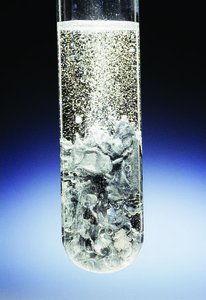
Example: Hospitals warn against open flames near oxygen tanks because higher oxygen concentrations can make combustion reactions dangerously fast.
Surface Area
Effect of Surface Area on Reaction Rate
When reactants are in different physical states, increasing the surface area of a solid reactant increases the reaction rate. This is because more particles are exposed and available to react.
Finely divided solids (e.g., powdered sugar or kindling) react more quickly than larger chunks (e.g., sugar cubes or logs).
In industrial settings, fine powders can be hazardous due to the risk of rapid, explosive reactions (e.g., flour dust explosions in mills).

Example: Kindling ignites more easily and burns faster than a large log due to its greater surface area.
Temperature of the Reaction System
Temperature Effects on Reaction Rate
Increasing the temperature generally increases the rate of a chemical reaction. Higher temperatures provide reactant particles with more kinetic energy (Ek), resulting in more frequent collisions, and therefore more effective collisions.
As a rule of thumb, the rate of many reactions doubles for every 10 °C increase in temperature and halves for every 10 °C decrease.
Temperature control is crucial in food preservation, industrial processes, and biological systems.
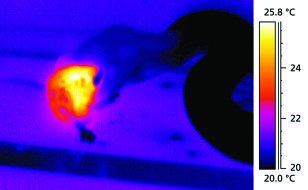
Example: Food spoils more slowly in a refrigerator because lower temperatures slow down the chemical reactions responsible for spoilage.
Presence of a Catalyst
Role of Catalysts in Chemical Reactions
A catalyst is a substance that increases the rate of a chemical reaction without being consumed in the process. Catalysts work by providing an alternative reaction pathway with a lower activation energy.
Only small amounts of catalyst are needed, and they can be reused.
Catalysts are essential in industrial processes (e.g., polymer production, catalytic converters in vehicles) and biological systems (e.g., enzymes in living cells).
Enzymes are biological catalysts, usually proteins, that speed up biochemical reactions under mild conditions.
Catalysts can be classified as:
Heterogeneous catalysts: Catalyst and reactants are in different phases (e.g., solid catalyst with gaseous reactants).
Homogeneous catalysts: Catalyst and reactants are in the same phase (e.g., all in solution).
Lowers activation energy, which allows more entities to reach the energy required for an effective collision

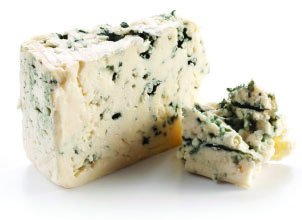
Example: Catalytic converters in cars use metal catalysts to convert toxic exhaust gases into less harmful substances. Enzymes in blue cheese help ripen the cheese by catalyzing specific reactions.
Summary Table: Factors Affecting Reaction Rates
Factor | Effect on Reaction Rate | Example |
|---|---|---|
Chemical Nature | Some substances react faster due to their inherent properties | Sodium oxidizes rapidly; gold resists oxidation |
Concentration | Higher concentration increases rate | Combustion in pure oxygen vs. air |
Surface Area | Greater surface area increases rate | Powdered sugar dissolves faster than cubes |
Temperature | Higher temperature increases rate | Food spoils faster at room temperature |
Catalyst | Increases rate without being consumed | Catalytic converters, enzymes |
Summary Points
The rate of any reaction depends on the chemical nature and physical properties of the substances reacting.
An increase in reactant concentration increases the rate of a reaction.
When reactants are in different states of matter, an increase in reactant surface area increases the rate of a reaction.
An increase in temperature increases the rate of a reaction.
A catalyst increases reaction rate without being consumed in the reaction.
Biological catalysts control most biological reactions, and most are enzymes.
