 Back
BackFoundations of Scientific Thinking and Biological Organization for Veterinary Technicians
Study Guide - Smart Notes
 Tailored notes based on your materials, expanded with key definitions, examples, and context.
Introduction to Scientific Thinking in Veterinary Technology
Connecting Science to Veterinary Practice
Veterinary technicians rely on foundational scientific principles to provide effective patient care, support clinical assessments, and communicate with both veterinarians and clients. Understanding the building blocks of biology and the scientific method is essential for safe, evidence-based practice and professional growth.
Scientific knowledge underpins all aspects of veterinary care, from monitoring vital signs to explaining treatments.
Mastery of these concepts is critical for success on certification exams and in clinical settings.
Biological Organization: From Atoms to Organisms
Levels of Biological Hierarchy
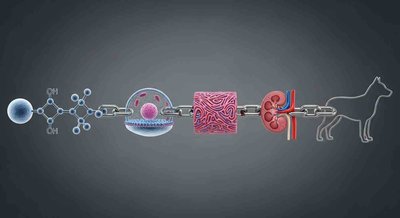
Living systems are organized into hierarchical levels, each with increasing complexity. Veterinary technicians observe and interact with these levels daily, from microscopic cells to whole animal patients.
Atom: The smallest unit of an element, retaining its chemical properties.
Molecule: Two or more atoms bonded together, forming the basis of compounds.
Cell: The fundamental unit of life, capable of carrying out all life processes.
Tissue: Groups of similar cells performing a common function (e.g., muscle, connective, epithelial, nervous tissue).
Organ: Structures composed of multiple tissue types working together (e.g., heart, kidney).
Organ System: Groups of organs coordinating to maintain body functions (e.g., cardiovascular, digestive systems).
Organism: A complete living individual, such as a dog or cat.
Population: Members of the same species in a shared environment.
Community: Different species living and interacting in the same area.
Ecosystem: All living and nonliving factors in an area.
Biosphere: The sum of all ecosystems on Earth.
Emergent Properties
Emergent properties are new characteristics that arise at each level of biological organization due to increased complexity. For example, individual heart muscle cells cannot pump blood, but together as heart tissue, they create a coordinated heartbeat.
Understanding emergent properties helps explain how small changes at the cellular level can impact the entire organism.
Clinical Example: Canine Cardiovascular System
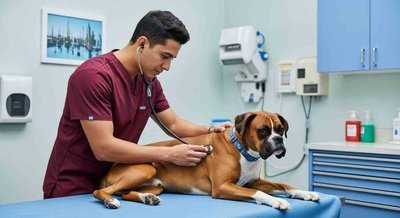
When a veterinary technician listens to a dog's heart, they are assessing the function of cardiac muscle tissue (tissue level), the heart (organ level), and the cardiovascular system (organ system level), all contributing to the health of the organism (the dog).
Characteristics of Living Things
Key Characteristics
All living organisms share certain characteristics, which are essential for recognizing normal and abnormal patient conditions:
Metabolism: The sum of all chemical reactions in the body, converting nutrients into energy and building materials.
Homeostasis: The maintenance of stable internal conditions (e.g., temperature, fluid balance).
Growth and Development: Predictable changes in size and function over time.
Reproduction: The ability to produce new life.
Response to Stimuli: Reacting to environmental changes.
The Scientific Method in Veterinary Practice
Steps of the Scientific Method
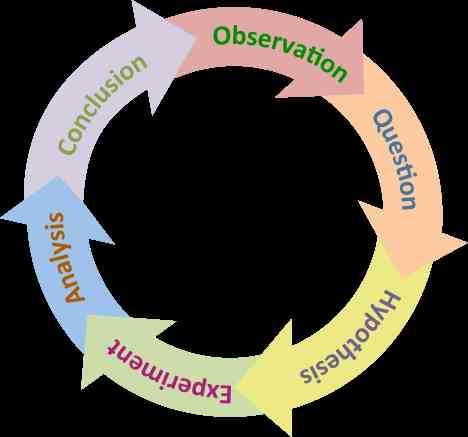
The scientific method is a systematic approach to problem-solving, essential for clinical reasoning and evidence-based veterinary care.
Observation: Noticing and recording patient symptoms or changes.
Question Formation: Asking specific questions about observations.
Hypothesis Development: Proposing a testable explanation based on evidence.
Prediction: Stating expected outcomes if the hypothesis is correct.
Experimentation: Testing the hypothesis through diagnostic procedures or trials.
Analysis: Reviewing and interpreting results.
Conclusion: Summarizing findings and planning next steps.
Variables in Clinical Testing
Independent Variable: The factor intentionally changed (e.g., medication type).
Dependent Variable: The outcome measured (e.g., pain score).
Control Variables: Factors kept the same to ensure fair testing.
Observations vs. Inferences in Veterinary Documentation
Definitions and Importance
Accurate veterinary documentation distinguishes between observations (directly measured or sensed facts) and inferences (interpretations based on observations and prior knowledge).
Observation: "Dog's temperature is 103.2°F" (objective, measurable fact).
Inference: "Dog has a fever" (interpretation requiring clinical judgment).

Examples in Clinical Scenarios
Observation: "Cat hiding in carrier, pupils dilated"
Inference: "Cat is stressed"
Observation: "Surgical site has 2cm redness"
Inference: "Incision may be infected"
Professional Documentation Table
Type | Example Statement | Professional Value | Legal Importance |
|---|---|---|---|
Observation | "Temperature 103.2°F" | Provides measurable data | Legally defensible record |
Inference | "Patient has fever" | Suggests medical concern | Requires veterinary diagnosis |
Observation | "Limping on right rear leg" | Documents specific behavior | Objective evidence of condition |
Inference | "Leg appears painful" | Indicates need for examination | Must be supported by clinical findings |
Evaluating Research in Veterinary Practice
Types of Scientific Literature
Primary Literature: Original research articles presenting new data.
Secondary Literature: Summaries or reviews of multiple primary studies.
Tertiary Literature: General overviews or textbooks summarizing established knowledge.
Peer Review and Replication
Peer review ensures research quality and reliability. Replication of studies confirms findings and supports evidence-based practice.
Structure of a Primary Research Article
Introduction: States the research question and significance.
Materials and Methods: Describes how the study was conducted.
Results: Presents findings objectively.
Discussion: Interprets results and clinical implications.
Applying Research to Clinical Practice
Veterinary technicians use research findings to improve patient care, educate clients, and advocate for evidence-based protocols.
Critical evaluation of research quality, clinical relevance, and statistical significance is essential for advanced practice.
Key Terms and Concepts
Term | Definition | Clinical Application |
|---|---|---|
Atom | Smallest unit of an element | Basis of all matter in the body |
Cell | Basic unit of life | Observed in blood samples |
Homeostasis | Stable internal conditions | Monitored via vital signs |
Hypothesis | Testable explanation | Guides clinical testing |
Peer Review | Expert evaluation of research | Ensures study reliability |
Summary
Veterinary technicians must master the scientific method, understand biological organization, and distinguish between observations and inferences to provide high-quality, evidence-based care. These foundational skills support clinical reasoning, professional communication, and lifelong learning in veterinary medicine.
