 Back
BackGeneral Chemistry: Aqueous Reactions, Thermochemistry, and Kinetics
Study Guide - Smart Notes
 Tailored notes based on your materials, expanded with key definitions, examples, and context.
Theme 7: Types of Chemical Reactions and Reactions in Aqueous Solution
7.4 Aqueous Reactions and Chemical Analysis
Aqueous reactions are chemical processes that occur in water as the solvent. Chemical analysis in aqueous solutions is essential for determining the amount or concentration of substances present. Several analytical methods are used, including gravimetric analysis, titrations, and stoichiometric calculations involving solutions.
7.4.1 Quantitative Chemical Analysis (Gravimetric Analysis)
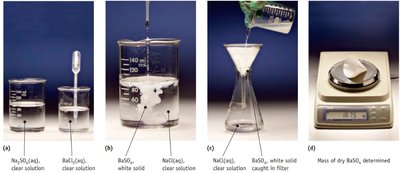
Gravimetric analysis is a quantitative technique where an analyte is converted into a pure, stable compound (often by precipitation), which is then isolated and weighed.
Example: To determine the amount of sulfate ion in a sample, barium chloride is added to precipitate barium sulfate, which is then filtered, dried, and weighed.
Key Steps:
Add a reagent to precipitate the analyte as an insoluble compound.
Filter and wash the precipitate.
Dry and weigh the precipitate to determine the analyte's quantity.
Example Reaction:
7.4.2 The pH Scale — A Concentration Scale for Solutions of Acids and Bases
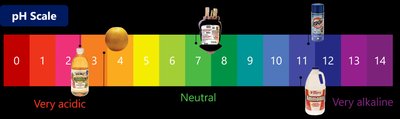
Acids are proton donors, forming hydronium ions () in water; bases are proton acceptors, forming hydroxide ions ().
pH is defined as the negative base-10 logarithm of the hydronium ion concentration:
pOH is similarly defined:
The relationship between pH and pOH: (at 25°C)
To find concentrations:
Neutral solutions have pH = 7.00 and pOH = 7.00.
7.4.3 Stoichiometry of Reactions in Aqueous Solution
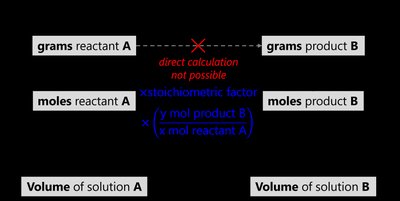
Stoichiometry in solutions involves using the volume and concentration of a solution to determine the amount of reactant or product. The balanced chemical equation is used to relate moles of reactants and products.
Key Steps:
Convert volume of solution to moles using molarity ().
Use the balanced equation to find the mole ratio between reactants and products.
Convert moles back to desired units (mass, volume, etc.).
Acid-Base Titrations
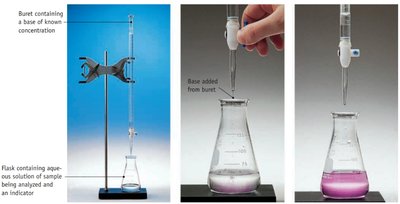
Titration is a technique to determine the concentration of an unknown solution by reacting it with a solution of known concentration.
The equivalence point is reached when stoichiometrically equivalent amounts of acid and base have reacted.
An indicator is used to signal the endpoint, often by a color change.
Calculation: for monoprotic acid-base reactions.
Oxidation-Reduction (Redox) Titrations
Redox titrations involve the transfer of electrons between species. The equivalence point is detected by a color change or an indicator.
Example: Titration of iron(II) with potassium permanganate.
Net ionic equation example:
Theme 8: Energy and Chemical Reactions (Thermochemistry)
8.2 The Basic Definitions of Energy and Energy Changes
Energy is the capacity to do work. It exists as kinetic energy (motion), potential energy (position), and thermal energy (molecular motion).
Law of Conservation of Energy: Energy cannot be created or destroyed, only transformed.
8.2.1 The Universe Consists of a System and the Surroundings
System: The part of the universe under study.
Surroundings: Everything outside the system.
Energy can be exchanged as heat () or work ().
8.2.2 Types of Systems
Isolated system: No exchange of energy or matter with surroundings.
Closed system: Exchanges energy but not matter.
Open system: Exchanges both energy and matter.
Exothermic process: System loses heat ().
Endothermic process: System gains heat ().
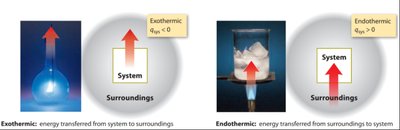
8.3 How Much Heat Can an Object Absorb? — Heat Capacity
Heat capacity (C): Amount of heat required to change an object's temperature by 1 K (J/K).
Specific heat capacity (): Heat required to raise 1 g of a substance by 1 K (J/g·K).
Formula:
8.3.1 What Happens When Energy is Absorbed and a Substance Changes State?
Heat of fusion (): Energy to convert solid to liquid.
Heat of vaporization (): Energy to convert liquid to gas.
During a phase change, temperature remains constant as energy is used to overcome intermolecular forces.
8.4 The First Law of Thermodynamics
First Law: The change in internal energy () of a system is the sum of heat and work exchanged:
Work (pressure-volume):
Sign conventions:
Heat to system: (endothermic)
Heat from system: (exothermic)
Work done on system:
Work done by system:

8.5 The Enthalpy Change and Chemical Reactions
Enthalpy (H): (at constant pressure)
Exothermic: (heat released)
Endothermic: (heat absorbed)
Enthalpy and internal energy are state functions (depend only on initial and final states).
8.6 How do We Measure Changes in Enthalpy and Internal Energy?
Calorimetry is used to measure heat changes in chemical reactions.
Coffee-cup calorimeter: Measures enthalpy change at constant pressure.
Bomb calorimeter: Measures internal energy change at constant volume.
8.7 Enthalpy Calculations
Hess’s Law: The enthalpy change for a reaction is the sum of the enthalpy changes for any sequence of reactions that leads to the same overall reaction.
Standard enthalpy of formation (): Enthalpy change for forming 1 mol of a compound from its elements in their standard states.
Formula:
Theme 9: Physical Properties of Gases
9.2 How Do We Model Gases and Gas Pressure?
Pressure (p): Force per unit area. Common units: atm, mmHg, kPa, bar.
Standard atmospheric pressure:
9.4 The Ideal Gas Law
Ideal Gas Law:
R (gas constant):
Relates pressure, volume, temperature, and amount of gas.
9.4.1 The Density of a Gas
Density formula: , where is molar mass.
9.4.2 Calculating Molar Mass from Gas Data
Given mass, pressure, volume, and temperature, molar mass can be determined using the ideal gas law.
9.6 Partial Pressures and Dalton’s Law
Dalton’s Law: The total pressure of a gas mixture is the sum of the partial pressures of each component:
Mole fraction ():
Partial pressure:
Theme 10: Physical Properties of Liquids
10.3 Vapourisation and Condensation of Liquids
Vapourisation (evaporation): Liquid to gas; endothermic, requires energy ().
Condensation: Gas to liquid; exothermic, releases energy ().
10.4 Vapour Pressure
Vapour pressure: Pressure exerted by a vapor in equilibrium with its liquid at a given temperature.
Clausius-Clapeyron Equation:
Used to estimate enthalpy of vaporization from vapor pressure data at two temperatures.
10.5 Other Properties of Liquids
Boiling point: Temperature at which vapor pressure equals external pressure.
Critical point: Temperature and pressure above which the liquid and gas phases are indistinguishable.
Surface tension: Energy required to increase the surface area of a liquid due to intermolecular forces.
Viscosity: Resistance to flow; increases with stronger intermolecular forces.
Capillary action: Movement of liquid in narrow tubes due to adhesive and cohesive forces.
Theme 11: Physical Properties of Solutions
11.2 How Are Solutions Made?
Solution: Homogeneous mixture of solute and solvent.
Solubility: Maximum amount of solute that can dissolve in a solvent at equilibrium.
Like dissolves like: Polar solutes dissolve in polar solvents; non-polar in non-polar.
11.3 Units of Concentration
Molarity (M):
Molality (m):
Mole fraction ():
Mass percent:
ppm:
11.4 Pressure and Temperature Affect the Solubility of Compounds
Henry’s Law: (solubility of a gas is proportional to its partial pressure)
Gas solubility decreases with increasing temperature (usually exothermic dissolution).
11.5 Colligative Properties
Depend on the number of solute particles, not their identity.
Raoult’s Law:
Boiling point elevation:
Freezing point depression:
Osmotic pressure:
van’t Hoff factor (i): Accounts for dissociation of electrolytes in solution.
Theme 12: Chemical Kinetics
12.2 How Fast Does a Reaction Occur? — The Rates of Reactions
Chemical kinetics studies the rates of chemical reactions and the factors affecting them.
Collision theory: Reactions occur when molecules collide with sufficient energy and proper orientation.
Activation energy (): Minimum energy required for a reaction to occur.
Factors affecting rate: Concentration, temperature, physical state, and catalysts.
12.3 Rate Equations and Reaction Order
Rate law:
Order: Exponents and (determined experimentally, not from stoichiometry).
Units of k: Depend on overall reaction order.
12.4 Integrated Rate Laws and Half-Life
First-order: ;
Second-order: ;
Zeroth-order: ;
12.5 Temperature and Reaction Rate: The Arrhenius Equation
Arrhenius equation:
Plotting vs yields a straight line with slope .
Can calculate from rate constants at two temperatures:
Additional info: This summary covers the main topics and subtopics from Themes 7.4 to 12, as outlined in the provided course notes for General Chemistry. Practice problems and worked examples are referenced in the original material and are recommended for further study.
