 Back
General Chemistry Exam 3 Study Guide – Step-by-Step Guidance
Study Guide - Smart Notes
 Tailored notes based on your materials, expanded with key definitions, examples, and context.
Q1. Draw the orbital diagram for the electron configuration of oxygen (atomic number 8). How many unpaired electrons does an oxygen atom possess?
Background
Topic: Electronic Structure of Atoms
This question tests your understanding of electron configurations, orbital diagrams, and the concept of unpaired electrons in atoms.
Key Terms and Formulas:
Electron configuration: The arrangement of electrons in an atom's orbitals.
Orbital diagram: A visual representation showing how electrons fill atomic orbitals.
Hund's Rule: Electrons occupy orbitals singly before pairing up.
Pauli Exclusion Principle: No two electrons in an atom can have the same set of quantum numbers.
Step-by-Step Guidance
Try solving on your own before revealing the answer!
Final Answer:
The orbital diagram for oxygen shows two unpaired electrons in the 2p orbitals.
Electron configuration:
Hund's Rule ensures that two of the 2p electrons remain unpaired.
Q2. Referring to the periodic table, arrange the atoms B, C, Al, and Si in order of increasing size.
Background
Topic: Periodic Properties of Elements
This question tests your understanding of atomic radius trends across periods and down groups in the periodic table.
Key Terms and Formulas:
Atomic radius: The distance from the nucleus to the outermost electron shell.
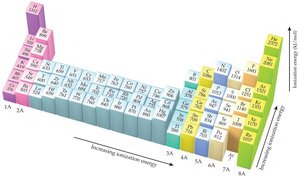
Periodic trend: Atomic radius decreases across a period (left to right) and increases down a group (top to bottom).
Step-by-Step Guidance
Try solving on your own before revealing the answer!
Final Answer:
Order of increasing atomic radius: C < B < Si < Al
C is smallest, Al is largest, based on periodic trends.
Q3. Referring to the periodic table, arrange the atoms Ne, Na, P, Ar, K in order of increasing first ionization energy.
Background
Topic: Periodic Trends in Ionization Energy
This question tests your understanding of how ionization energy changes across periods and down groups.
Key Terms and Formulas:
Ionization energy: The energy required to remove an electron from a gaseous atom.
Periodic trend: Ionization energy increases across a period and decreases down a group.
Step-by-Step Guidance
Try solving on your own before revealing the answer!
Final Answer:
Order of increasing first ionization energy: K < Na < P < Ar < Ne
This follows the periodic trends for ionization energy.
Q4. Given the Lewis symbols for nitrogen and fluorine, draw the Lewis structure of the compound NF3. How many valence electrons are in each element? How many bonding pairs and how many nonbonding pairs does each element have?
Background
Topic: Lewis Structures and Chemical Bonding
This question tests your ability to draw Lewis structures, count valence electrons, and identify bonding and nonbonding pairs.
Key Terms and Formulas:
Lewis structure: Diagram showing valence electrons as dots and bonds as lines.
Valence electrons: Electrons in the outermost shell involved in bonding.
Bonding pairs: Shared pairs of electrons between atoms.
Nonbonding pairs (lone pairs): Pairs of electrons not involved in bonding.
Step-by-Step Guidance

Try solving on your own before revealing the answer!
Final Answer:
N has 5 valence electrons, F has 7. In NF3, there are 3 bonding pairs (N–F bonds) and each F has 3 nonbonding pairs; N has 1 nonbonding pair.
The Lewis structure shows N at the center with three F atoms bonded and lone pairs on each atom.
Q5. In each case, which bond is more polar? Indicate in each case which atom has the partial negative charge.
Background
Topic: Bond Polarity and Electronegativity
This question tests your understanding of how differences in electronegativity determine bond polarity and partial charges.
Key Terms and Formulas:
Bond polarity: Measure of how equally electrons are shared in a bond.
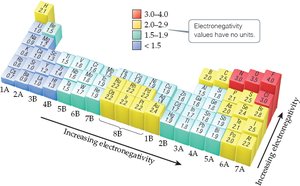
Electronegativity: Tendency of an atom to attract electrons in a bond.
Partial negative charge: The atom with higher electronegativity in a polar bond.
Step-by-Step Guidance
Try solving on your own before revealing the answer!
Final Answer:
The more polar bond is the one with the greatest difference in electronegativity. The atom with higher electronegativity (Cl or F) carries the partial negative charge.
For example, in B–Cl vs. C–Cl, Cl is more electronegative than B or C, so Cl has the partial negative charge.
Q6. Draw the Lewis structure for phosphorus trichloride (PCl3). How many bonding pairs and nonbonding pairs are present?
Background
Topic: Lewis Structures and Chemical Bonding
This question tests your ability to draw Lewis structures and identify bonding and nonbonding pairs.
Key Terms and Formulas:
Lewis structure: Diagram showing valence electrons and bonds.
Bonding pairs: Shared pairs of electrons between atoms.
Nonbonding pairs: Lone pairs of electrons not involved in bonding.
Step-by-Step Guidance
Try solving on your own before revealing the answer!
Final Answer:
PCl3 has 3 bonding pairs (P–Cl bonds) and 1 nonbonding pair (lone pair on P).
Each Cl atom has 3 nonbonding pairs.
Q7. Three possible Lewis structures for the thiocyanate ion (SCN−) are given. (a) Determine the formal charges in each structure. (b) Based on the formal charges, which Lewis structure is the dominant one?
Background
Topic: Lewis Structures and Formal Charges
This question tests your ability to calculate formal charges and use them to determine the most stable Lewis structure.
Key Terms and Formulas:
Formal charge:
Dominant Lewis structure: Structure with formal charges closest to zero and negative charges on the most electronegative atom.
Step-by-Step Guidance
Try solving on your own before revealing the answer!
Final Answer:
The dominant Lewis structure is the one with formal charges closest to zero and the negative charge on the nitrogen atom.
This structure is most stable according to formal charge guidelines.
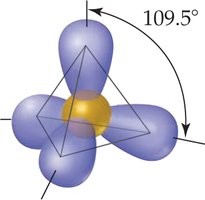
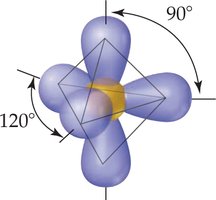
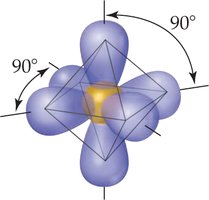
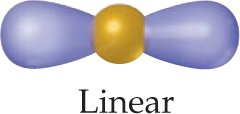
Q8. Use the VSEPR model to predict the molecular geometry of a molecule or polyatomic ion given its formula.
Background
Topic: Molecular Geometry and VSEPR Theory
This question tests your ability to use the VSEPR model to predict shapes of molecules based on electron domains.
Key Terms and Formulas:
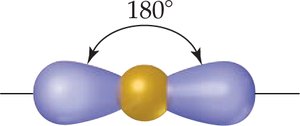
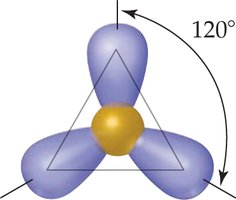
VSEPR model: Valence Shell Electron Pair Repulsion theory predicts molecular geometry based on repulsion between electron domains.
Electron domain: Region where electrons are likely to be found (bonding or nonbonding).
Common geometries: Linear, trigonal planar, tetrahedral, trigonal bipyramidal, octahedral.
Step-by-Step Guidance
Try solving on your own before revealing the answer!
Final Answer:
The molecular geometry is predicted by the number of electron domains and their arrangement according to VSEPR theory.
For example, 3 domains = trigonal planar; 4 domains = tetrahedral.
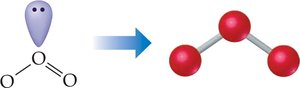
Q9. Predict whether these molecules are polar or nonpolar.
Background
Topic: Molecular Polarity
This question tests your ability to use molecular geometry and bond polarity to determine if a molecule is polar or nonpolar.
Key Terms and Formulas:
Polar molecule: Has a net dipole moment due to unequal sharing of electrons.
Nonpolar molecule: Bond dipoles cancel due to symmetry.
Dipole moment: Measure of charge separation in a molecule.
Step-by-Step Guidance
Try solving on your own before revealing the answer!
Final Answer:
A molecule is polar if it has polar bonds and the geometry does not allow the dipoles to cancel. For example, BrCl is polar, SO2 is polar (bent geometry), SF6 is nonpolar (octahedral geometry).
