 Back
BackGeneral Chemistry Exam Study Guide: Structures, Isomers, Reactions, and Electrochemistry
Study Guide - Smart Notes
 Tailored notes based on your materials, expanded with key definitions, examples, and context.
Q1. Draw the structure of 2,5-heptadiene
Background
Topic: Organic Chemistry – Alkenes
This question tests your ability to interpret IUPAC nomenclature and draw the correct structure for a diene (a molecule with two double bonds) based on its name.
Key Terms:
Heptadiene: A seven-carbon chain with two double bonds.
2,5-: Indicates the positions of the double bonds (between carbons 2-3 and 5-6).
Step-by-Step Guidance
Draw a straight chain of seven carbon atoms.
Identify the positions for the double bonds: place one between C2 and C3, and another between C5 and C6.
Add hydrogens to each carbon so that each carbon has four bonds total.
Check that the structure matches the name: two double bonds at the correct positions.
Try solving on your own before revealing the answer!
Q2. How many isomers are possible for C5H12?
Background
Topic: Structural Isomerism
This question tests your understanding of structural isomers, which are compounds with the same molecular formula but different connectivity of atoms.
Key Terms:
Isomer: Molecules with the same formula but different structures.
C5H12: Pentane, a saturated hydrocarbon (alkane).
Step-by-Step Guidance
Recall that alkanes can have straight-chain and branched structures.
Draw the straight-chain pentane (n-pentane).
Draw the possible branched isomers (isopentane and neopentane).
Count the distinct structures you have drawn.
Try solving on your own before revealing the answer!
Q3. The addition of HBr to 2-butene produces:
Background
Topic: Reactions of Alkenes
This question tests your knowledge of electrophilic addition reactions, specifically Markovnikov's rule for the addition of hydrogen halides to alkenes.
Key Terms:
2-butene: An alkene with a double bond between carbons 2 and 3.
HBr: Hydrogen bromide, adds across the double bond.
Markovnikov's rule: The hydrogen attaches to the carbon with more hydrogens, the bromine to the other.
Step-by-Step Guidance
Draw the structure of 2-butene.
Identify the double bond and the carbons involved.
Apply Markovnikov's rule to determine which carbon gets the H and which gets the Br.
Draw the resulting product and check which option matches.
Try solving on your own before revealing the answer!
Q4. Esters can be made by condensation of which molecules?
Background
Topic: Organic Chemistry – Esters
This question tests your understanding of ester formation, which is a condensation reaction between two functional groups.
Key Terms:
Condensation: A reaction where two molecules combine and release a small molecule (often water).
Ester: Functional group with the formula RCOOR'.
Step-by-Step Guidance
Recall the functional groups involved in ester formation.
Identify which pair of molecules can react to form an ester.
Write the general reaction equation for esterification.
Check which answer choice matches the correct pair.
Try solving on your own before revealing the answer!
Q5. Draw the following structures: Propyl Ethanoate and 3-hydroxy-2-pentanone
Background
Topic: Organic Chemistry – Nomenclature and Structure Drawing
This question tests your ability to interpret IUPAC names and draw the correct structures for organic molecules.
Key Terms:
Propyl Ethanoate: An ester with a propyl group and an ethanoate group.
3-hydroxy-2-pentanone: A five-carbon ketone with a hydroxy group on carbon 3.
Step-by-Step Guidance
Break down the name into its components (parent chain, functional groups, substituents).
Draw the carbon skeleton for each molecule.
Add the functional groups at the correct positions.
Check for correct bonding and valency.
Try solving on your own before revealing the answer!
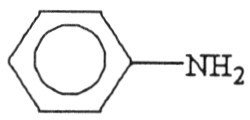
Q6. Name the below molecule:
CH3CHCHCH2CHBr2
Background
Topic: Organic Chemistry – Nomenclature
This question tests your ability to name organic molecules based on their structure and substituents.
Key Terms:
Alkyl groups, halogen substituents, IUPAC naming rules.
Step-by-Step Guidance
Identify the longest carbon chain.
Number the chain to give the substituents the lowest possible numbers.
Identify and name the substituents (e.g., bromine atoms).
Combine the names according to IUPAC rules.
Try solving on your own before revealing the answer!
Q7. What fraction of radioactive atoms remains in a sample after four half-lives?
Background
Topic: Nuclear Chemistry – Radioactive Decay
This question tests your understanding of half-life and exponential decay.
Key Terms and Formula:
Half-life (): The time required for half the atoms in a sample to decay.
Fraction remaining after n half-lives:
Step-by-Step Guidance
Identify the number of half-lives elapsed (n = 4).
Use the formula to calculate the fraction remaining.
Plug in n = 4 and simplify the expression.
Compare your result to the answer choices.
Try solving on your own before revealing the answer!
Q8. What fraction of radioactive atoms remains in a sample after three half-lives?
Background
Topic: Nuclear Chemistry – Radioactive Decay
This question tests your understanding of how the fraction of a radioactive sample changes with each half-life.
Key Terms and Formula:
Fraction remaining after n half-lives:
Step-by-Step Guidance
Identify the number of half-lives elapsed (n = 3).
Use the formula to calculate the fraction remaining.
Plug in n = 3 and simplify the expression.
Compare your result to the answer choices.
Try solving on your own before revealing the answer!
Q9. First Order Reactions: A0= 0.0314 M, k=6.40 x 10⁻³ min-1, t= 62.0 min at 25°C
Background
Topic: Kinetics – First Order Reactions
This question tests your ability to use the integrated rate law for first-order reactions to calculate the concentration of a reactant after a given time.
Key Formula:
Integrated rate law:
: Initial concentration
: Rate constant
: Time
Step-by-Step Guidance
Write down the integrated rate law for first-order reactions.
Plug in the values: M, min, min.
Calculate and .
Set up the equation and solve for .
Try solving on your own before revealing the answer!
Q10. What happens to the mass number and the atomic number of an element when it undergoes beta decay?
Background
Topic: Nuclear Chemistry – Radioactive Decay
This question tests your understanding of the changes in atomic and mass numbers during beta decay.
Key Terms:
Beta decay: A neutron converts to a proton, emitting an electron (beta particle).
Mass number: Total number of protons and neutrons.
Atomic number: Number of protons.
Step-by-Step Guidance
Recall what happens during beta decay (neutron to proton conversion).
Determine how this affects the atomic number and mass number.
Compare the changes to the answer choices.
Try solving on your own before revealing the answer!
Q11. At approximately what number of protons, or neutrons, does the 1:1 ratio of protons to neutrons start to produce unstable nuclei?
Background
Topic: Nuclear Chemistry – Stability of Nuclei
This question tests your understanding of nuclear stability and the neutron-to-proton ratio.
Key Terms:
Stable nuclei: Typically have a 1:1 neutron-to-proton ratio for small atoms.
Unstable nuclei: Occur when the ratio deviates, especially in larger atoms.
Step-by-Step Guidance
Recall the trend for nuclear stability as atomic number increases.
Identify the approximate atomic number where the 1:1 ratio becomes unstable.
Compare your answer to the choices given.
Try solving on your own before revealing the answer!
Q12. Which one is oxidized in the following redox equation?
Sn + 2HNO3 → SnO2 + 2NO2 + 2H2O (acidic solution)
Background
Topic: Redox Reactions
This question tests your ability to identify oxidation and reduction in a chemical reaction.
Key Terms:
Oxidation: Loss of electrons.
Reduction: Gain of electrons.
Oxidizing agent: Causes oxidation, is itself reduced.
Step-by-Step Guidance
Assign oxidation states to each element in the reactants and products.
Identify which element increases its oxidation state (is oxidized).
Identify which element decreases its oxidation state (is reduced).
Determine the oxidizing agent.
Try solving on your own before revealing the answer!
Q13. In the electrochemical cell using the redox reaction below, the cathode half-reaction is ________.
Sn + Cu2+ → Cu + Sn2+
Background
Topic: Electrochemistry – Electrochemical Cells
This question tests your understanding of cathode and anode reactions in electrochemical cells.
Key Terms:
Cathode: Site of reduction.
Anode: Site of oxidation.
Half-reaction: The part of the reaction showing either oxidation or reduction.
Step-by-Step Guidance
Identify which species is being reduced (gaining electrons).
Write the reduction half-reaction for the cathode.
Compare the options to the correct half-reaction.
Try solving on your own before revealing the answer!
Q14. Calculate the Standard reduction potential (E0 cell) of the above electrochemical cell
Sn + Cu2+ → Cu + Sn2+
Background
Topic: Electrochemistry – Cell Potentials
This question tests your ability to calculate the standard cell potential using reduction potentials.
Key Formula:
Standard reduction potentials: Sn = -0.14 V, Cu = 0.34 V
Step-by-Step Guidance
Identify which metal is the cathode (site of reduction).
Write the reduction potentials for both electrodes.
Plug the values into the formula for .
Simplify the expression, but stop before calculating the final value.
Try solving on your own before revealing the answer!
Q15. Calculate the reduction potential of the above electrochemical cell when the Cu2+ is 0.5M and Sn2+ is 0.3M
Standard reduction potential (E0 cell) of the above electrochemical cell is 0.48V.
Background
Topic: Electrochemistry – Nernst Equation
This question tests your ability to use the Nernst equation to calculate cell potentials under non-standard conditions.
Key Formula:
: Number of electrons transferred
: Reaction quotient ()
Step-by-Step Guidance
Write the Nernst equation for the cell.
Plug in the values for , , and .
Calculate using the concentrations given.
Set up the equation for , but stop before the final calculation.
Try solving on your own before revealing the answer!
Q16. Write the Balanced Oxidation reaction for Sn + Cu2+ → Cu + Sn2+
Background
Topic: Electrochemistry – Redox Reactions
This question tests your ability to write the oxidation half-reaction for a redox process.
Key Terms:
Oxidation: Loss of electrons.
Half-reaction: Shows only the oxidation or reduction part.
Step-by-Step Guidance
Identify which species is oxidized (loses electrons).
Write the oxidation half-reaction for Sn.
Balance the electrons in the reaction.
Check for correct stoichiometry.
Try solving on your own before revealing the answer!
Q17. The beta decay of cesium-137 has a half-life of 30.0 years. How many years must pass to reduce a 25 mg sample of cesium 137 to 8.7 mg?
Background
Topic: Nuclear Chemistry – First Order Kinetics
This question tests your ability to use the first-order decay equation and half-life formula to solve for time.
Key Formulas:
Integrated rate law:
Step-by-Step Guidance
Calculate the rate constant using the half-life formula.
Write the integrated rate law for first-order decay.
Plug in the values for (initial mass), (final mass), and .
Set up the equation to solve for , but stop before the final calculation.
Try solving on your own before revealing the answer!
Q18. How long will it take to produce 78.0 g of Al metal by the reduction of Al3+ in an electrolytic cell with a current of 2.00 A?
Background
Topic: Electrochemistry – Electrolysis Calculations
This question tests your ability to use stoichiometry, Faraday's constant, and current to calculate the time required for electrolysis.
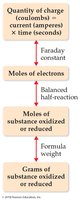
Key Terms and Formula:
Faraday constant (): C/mol e
Charge ():
Stoichiometry: Relate moles of Al to moles of electrons.
Step-by-Step Guidance
Calculate the moles of Al produced from the mass given.
Determine the moles of electrons required using the balanced half-reaction.
Calculate the total charge needed using Faraday's constant.
Set up the equation to solve for time using the current, but stop before the final calculation.
Try solving on your own before revealing the answer!
