 Back
BackGeneral Chemistry Foundations: Atoms, Molecules, and Bonding
Study Guide - Smart Notes
 Tailored notes based on your materials, expanded with key definitions, examples, and context.
Chapter 1: Moles, Atomic Structure, and Composition
Moles and Molar Mass
The mole is a fundamental unit in chemistry that represents a specific quantity of particles (atoms, molecules, ions, etc.), making it practical to count extremely small entities. One mole contains Avogadro's number of particles, which is .
Atomic mass unit (amu): A unit of mass used to express atomic and molecular weights. For example, carbon-12 has an amu of 12.
Molar mass: The mass of one mole of a substance, expressed in grams per mole (g/mol). For elements, the numerical value of the atomic mass (in amu) is the same as the molar mass (in g/mol).
Dimensional analysis: Used to convert between grams, moles, and number of particles.
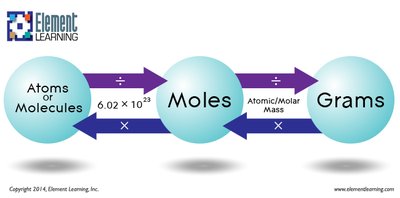
Example: To find the molar mass of :
Count atoms: 2 N, 4 O
Multiply by atomic masses: (N), (O)
Add: g/mol
Mass Spectroscopy of Elements
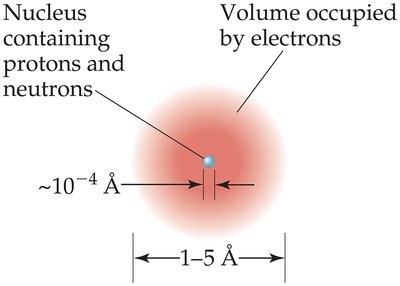
An atom consists of a dense nucleus (protons and neutrons) surrounded by an electron cloud. Most of the atom's volume is empty space.
Protons: +1 charge, 1 amu, define atomic number
Neutrons: 0 charge, 1 amu
Electrons: -1 charge, negligible mass
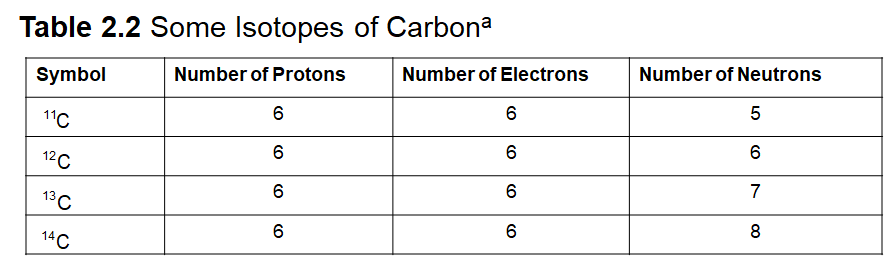
Isotopes are atoms of the same element with different numbers of neutrons, resulting in different masses.
Symbol | Number of Protons | Number of Electrons | Number of Neutrons |
|---|---|---|---|
6 | 6 | 5 | |
6 | 6 | 6 | |
6 | 6 | 7 | |
6 | 6 | 8 |
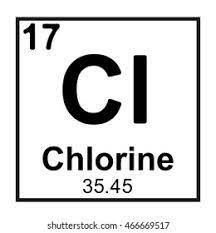
The atomic weight on the periodic table is the weighted average of all isotopes of an element.
Example: Chlorine has two main isotopes, and . The average atomic mass is calculated using their relative abundances and masses.
Mass spectroscopy is used to determine the isotopic composition and abundance in a sample. The average atomic mass can be calculated from the spectrum data.
Elemental Composition of Pure Substances
A pure substance has a fixed composition and distinct properties. It can be an element or a compound. The law of definite proportions states that a compound always contains the same elements in the same proportion by mass.
Formula weight: Sum of atomic weights in an ionic compound
Molecular weight: Sum of atomic weights in a covalent molecule
Percent composition:
Empirical formula: Simplest whole-number ratio of elements in a compound
Molecular formula: Actual number of atoms of each element in a molecule
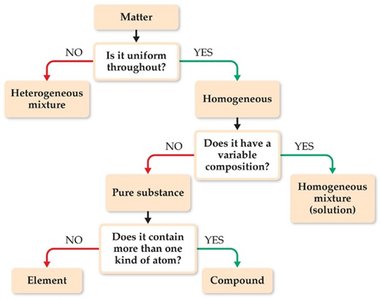
Classification of Matter
Matter can be classified based on its uniformity and composition. Mixtures can be homogeneous (solutions) or heterogeneous. Pure substances are either elements or compounds.
Chapter 2: Atomic Structure and Electron Configuration
Quantum Numbers and Orbitals
Quantum numbers describe the properties of atomic orbitals and the electrons in them:
Principal quantum number (n): Energy level (row on periodic table)
Angular quantum number (l): Shape of orbital (0=s, 1=p, 2=d, 3=f)
Magnetic quantum number (ml): Orientation of orbital
Spin quantum number (ms): Electron spin (+1/2 or -1/2)
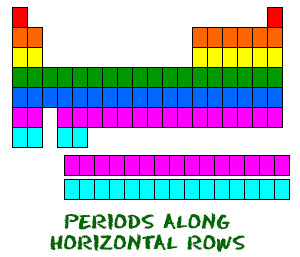
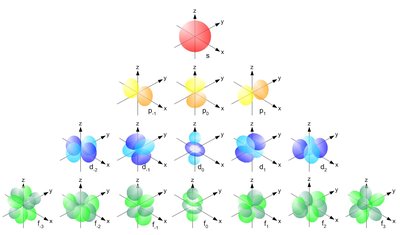
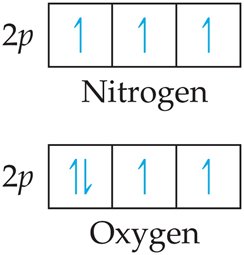
Each orbital can hold two electrons with opposite spins (Pauli Exclusion Principle). Hund's Rule states that electrons fill degenerate orbitals singly before pairing.
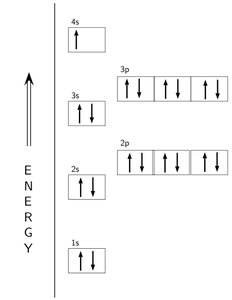
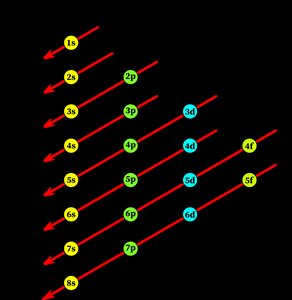
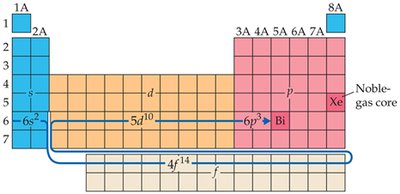
The Aufbau Principle determines the order in which orbitals are filled. Electron configurations can be abbreviated using the noble gas core notation.
Chapter 3: Periodic Trends and Properties
Coulomb’s Law and Effective Nuclear Charge
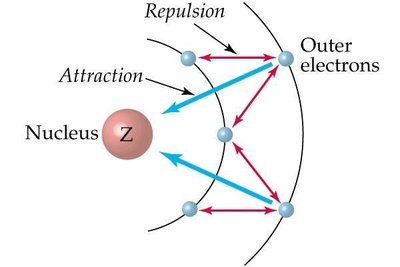
Coulomb’s Law describes the force between two charged particles. The effective nuclear charge (Zeff) is the net positive charge experienced by valence electrons, accounting for shielding by inner electrons:
(Z = atomic number, S = number of shielding electrons)
Zeff increases across a period and slightly down a group.
Ionization Energy
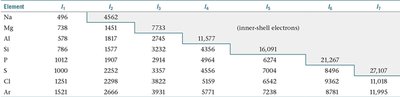
Ionization energy is the energy required to remove an electron from an atom. It increases across a period and decreases down a group. Large jumps in ionization energy occur when core electrons are removed.
Photoelectron Spectroscopy (PES)
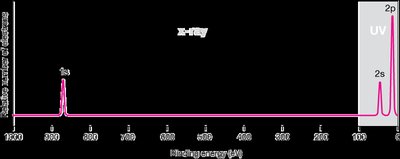
PES measures the binding energies of electrons in atoms, providing evidence for electron configuration and sublevels.
Periodic Trends
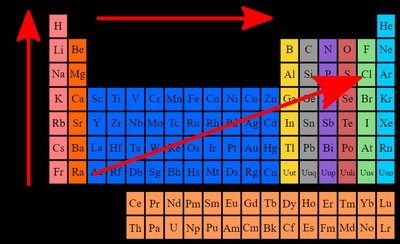
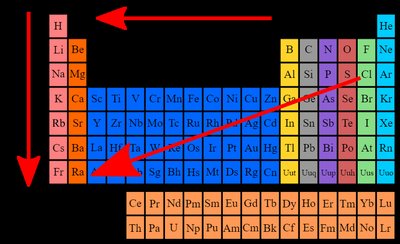
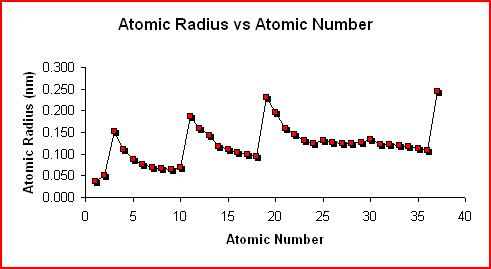
Atomic radius: Decreases across a period, increases down a group.
Ionic radius: Cations are smaller, anions are larger than their parent atoms. Isoelectronic ions decrease in size with increasing nuclear charge.
Electron affinity: Tendency to gain electrons; more negative values indicate greater affinity.
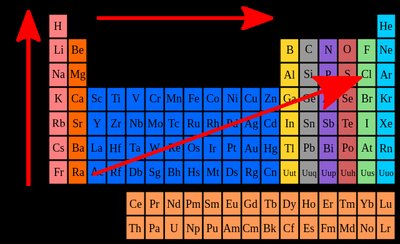
Electronegativity: Ability to attract electrons in a bond; increases across a period and up a group.

Chapter 4: Chemical Bonding and Molecular Structure
Types of Chemical Bonds
Atoms form bonds to achieve greater stability. The main types are:
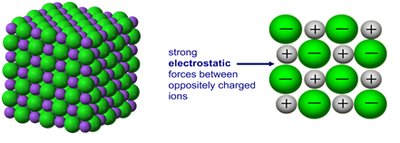
Ionic bonds: Transfer of electrons from metal to nonmetal, forming ions held by electrostatic attraction.
Covalent bonds: Sharing of electrons between nonmetals. Can be polar (unequal sharing) or nonpolar (equal sharing).
Metallic bonds: Delocalized electrons in a 'sea' around metal cations.

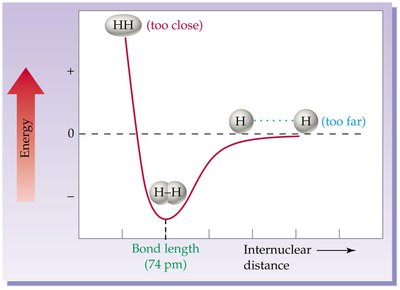
Intramolecular Forces and Potential Energy
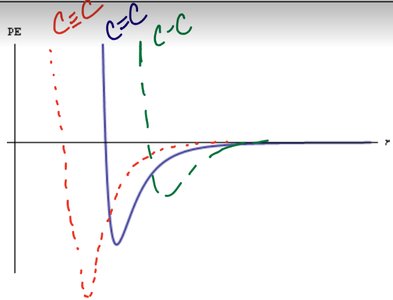
Covalent bonds can be single, double, or triple, with increasing bond strength and decreasing bond length. Bond energy is the energy required to break a bond.
Structure of Ionic Solids
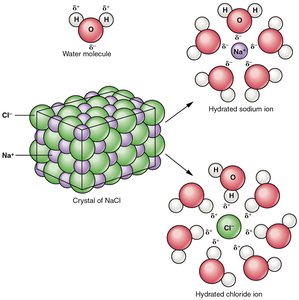
Ionic compounds form crystal lattices, maximizing attraction between oppositely charged ions. Lattice energy is the energy required to separate one mole of an ionic solid into gaseous ions.
Structure of Metals and Alloys
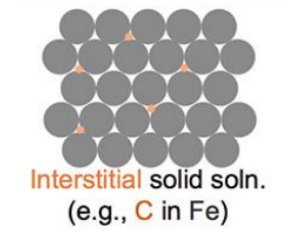
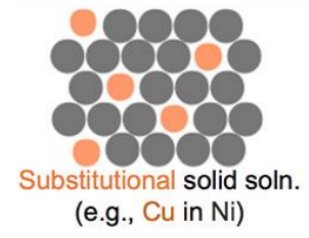
Alloys are mixtures of metals. Interstitial alloys have small atoms in the spaces between metal atoms, while substitutional alloys have similar-sized atoms replacing each other in the lattice.
Resonance and Formal Charge
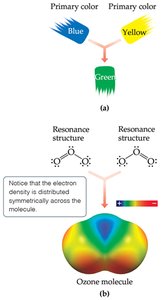
Some molecules are best represented by multiple Lewis structures (resonance). Formal charge helps determine the most stable structure; atoms prefer formal charges close to zero.
VSEPR and Molecular Geometry
The Valence Shell Electron Pair Repulsion (VSEPR) model predicts molecular shapes based on electron domain repulsion. Common geometries include linear, trigonal planar, tetrahedral, trigonal bipyramidal, and octahedral.
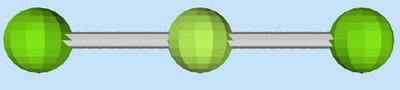
Additional info: For more complex shapes (e.g., seesaw, T-shaped, square planar), lone pairs further affect bond angles and geometry.
