 Back
BackGeneral Chemistry I (CHEM 1010) Syllabus and Course Overview
Study Guide - Smart Notes
 Tailored notes based on your materials, expanded with key definitions, examples, and context.
Course Overview
Introduction to General Chemistry I
This course, CHEM 1010 (General Chemistry I), provides an introduction to the foundational principles of chemistry. It covers essential topics such as atomic and molecular structure, chemical nomenclature, measurement, and stoichiometry. The course is designed for students beginning their study of college-level chemistry and prepares them for further coursework in the sciences.
Course Information
Course Title: General Chemistry I (CHEM 1010)
Credit Hours: 3 (Lecture only; no lab component)
Location & Time: Magnolia 101, MWF 10:00–10:50am
Instructor: Dr. Paige Spencer, Associate Professor
Contact: paige.spencer@sowela.edu
Office: Magnolia 140
Office Hours: Multiple times weekly, including virtual options
Required Materials
Textbook: Chemistry: A Molecular Approach (6th Edition) by Nivaldo Tro, Pearson
Online Platform: Mastering Chemistry (access included with tuition unless opted out)
Notes Packet: Provided in color print, available at the bookstore
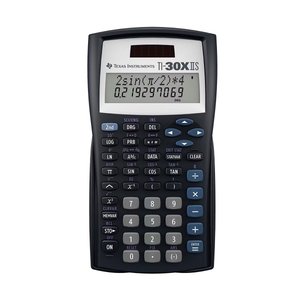
Calculator: Texas Instruments TI-30XIIS Scientific Calculator (required for exams; no graphing calculators allowed)
Other: Three-ring binder, computer, and reliable internet access
Program Learning Outcomes
Upon successful completion of the program, students will be able to:
Apply the scientific method to gather and analyze empirical data, form conclusions, and relate concepts to practical applications.
Demonstrate critical thinking by evaluating evidence, solving problems, and generating new concepts.
Utilize quantitative reasoning to interpret data, formulate solutions, and perform calculations.
Student Learning Outcomes (Course Level)
By the end of CHEM 1010, students should be able to:
Classify and identify different types of matter.
Interpret and make inferences from the periodic table of elements.
Generate and interpret chemical equations.
Perform metric and mole conversions.
Analyze laboratory data and apply proper laboratory techniques.
Identify materials used in laboratory procedures.
Assessment and Grading
Homework Assignments: 15% of final grade
Unit Exams (4 total): 65% of final grade
Cumulative Final Exam: 20% of final grade
Exam Format: Multiple choice and short answer/calculation questions; closed notes and in-person
Grading Scale
Letter Grade | Percentage | Description | Grade Points/Credit Hour |
|---|---|---|---|
A | 90–100% | Excellent | 4 |
B | 80–89% | Above Average | 3 |
C | 70–79% | Average | 2 |
D | 60–69% | Below Average | 1 |
F | 59% or below | Failure | 0 |
I | — | Incomplete | 0 |
Course Policies
Attendance
Regular attendance is essential for success.
Students are responsible for officially withdrawing from courses they do not attend.
No-Show students will be dropped and may lose financial aid eligibility.
Late Work and Make-Up Policy
Homework: 25% deduction per day late; no credit after grace period.
Exams: Make-up exams are available but are more difficult and must be taken in person during office hours.
Academic Integrity
Plagiarism, cheating, and unauthorized use of materials (including AI without approval) are strictly prohibited.
Violations result in a grade of 0% for the assignment and may lead to further disciplinary action.
Course Calendar (Key Dates)
Date | Assignment Name | Type | Points |
|---|---|---|---|
2/3/26 | Exam 1 | Quiz | 100 |
3/3/26 | Exam 2 | Quiz | 100 |
3/31/26 | Exam 3 | Quiz | 100 |
4/30/26 | Exam 4 | Quiz | 100 |
5/4/26 | Final Exam | Quiz | 100 |
Additional Policies and Resources
Accessibility: Reasonable accommodations are available for students with disabilities. Contact Accessibility Services for more information.
Student Conduct: Respectful behavior is required at all times. Disruptive or derogatory behavior will not be tolerated.
Illness Policy: Do not attend class if ill; communicate promptly with your instructor to discuss academic options.
Student Services: A variety of support services are available. See Student Services for details.
Course Transferability: Check the Louisiana Board of Regents Master Course Articulation Matrix for transfer information.
Topics Covered (Based on Syllabus and Textbook)
Matter, Measurement, and Problem Solving
Atoms and Elements
Molecules and Compounds
Chemical Reactions and Chemical Quantities
Introduction to Solutions and Aqueous Solutions
Gases
Thermochemistry
The Quantum-Mechanical Model of the Atom
Periodic Properties of the Elements
Chemical Bonding (Lewis Model, VSEPR, MO Theory)
Liquids, Solids, and Intermolecular Forces
Lab Techniques and Procedures (as applicable)
Mathematical Operations and Functions (as applicable)
Additional info: The syllabus provides a comprehensive overview of course expectations, policies, and resources, but does not include detailed content explanations. For in-depth study, refer to the course textbook and notes packet.
