 Back
General Chemistry I (Chemistry 161) – Course Syllabus and Academic Structure
Study Guide - Smart Notes
 Tailored notes based on your materials, expanded with key definitions, examples, and context.
Course Overview
Introduction to General Chemistry I
This syllabus outlines the structure, policies, and academic expectations for Chemistry 161 – General Chemistry I at Rutgers University. The course is designed to provide a foundational understanding of chemical principles, preparing students for advanced study in chemistry and related sciences. The curriculum emphasizes conceptual understanding, quantitative reasoning, and the application of chemistry to real-world problems.
Course Structure and Logistics
Lecture and Recitation Organization
Lecture Sections: Multiple sections are offered at various times throughout the week, each led by a designated instructor with posted office hours for student support.
Recitations and Active Learning Workshops: Recitations are small-group sessions focused on problem-solving and discussion. Some sections participate in Active Learning Workshops, which emphasize collaborative and evidence-based learning strategies.
Attendance: Participation in recitations and workshops is mandatory and contributes to the final grade.
Learning Goals
Core Curriculum and Departmental Objectives
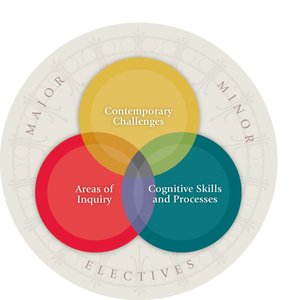
Scientific Principles: Understand and apply basic concepts in the physical sciences, including the structure of matter, chemical bonding, and energy transformations.
Scientific Reasoning: Assess the relationship among assumptions, methods, evidence, arguments, and theory in scientific analysis.
Modeling and Representation: Use macroscopic, submicroscopic, and symbolic representations to explain chemical phenomena.
Key Topics:
Atoms and their internal structure
Chemical bonding and molecular structure
Intermolecular forces and physical properties
Chemical reactions and stoichiometry
Thermodynamics and energy changes
Measurement, data analysis, and visualization

Required Materials
Textbook and Tools
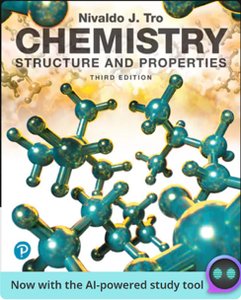
Textbook: Chemistry: Structure and Properties, 3rd Edition, by Nivaldo Tro. This text is the primary resource for lecture material and practice problems.
Molecular Modeling Kit: Required for hands-on learning of molecular geometry and bonding.
Pearson Mastering Chemistry: Online platform for homework assignments and access to the e-book.
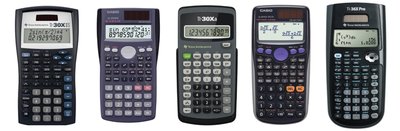
Calculator Policy: Only non-programmable, non-graphing scientific calculators are permitted for assessments. Calculators must support scientific notation, logarithms, and exponents.
Assessment and Grading
Evaluation Components
Mini-Exams: Five timed, multiple-choice assessments administered online via Canvas (30% of final grade).
Final Exam: Cumulative, in-person exam with nationally normed and in-house components (50% of final grade).
Online Homework: Graded assignments completed through Pearson Mastering Chemistry (10% of final grade).
Recitation Participation: Attendance and engagement in recitation or workshops (5% of final grade).
Surveys: Completion of course surveys for feedback and improvement (5% of final grade).
Grading Scale:
Letter Grade | Percentage Range |
|---|---|
A | ≥ 92% |
B+ | 86-91% |
B | 79-85% |
C+ | 72-78% |
C | 65-71% |
D | 58-64% |
F | < 58% |
Academic Integrity and Policies
Expectations and Conduct
Academic Integrity: All students must adhere to university policies regarding honesty and conduct. Use of unauthorized materials, devices, or generative AI on assessments is strictly prohibited.
Attendance: Regular attendance in lectures and recitations is strongly encouraged and required for recitation credit.
Absences and Make-ups: Procedures are in place for excused absences, including Absence and Verification Notices (AVN) and self-reported absence forms.
Student Support and Resources
Academic Assistance
Office Hours: Available for all instructors and recitation leaders for additional help.
Learning Centers: Offer tutoring and academic support throughout the week.
Disability Services: Accommodations are available for students with documented needs.
Summary Table: Major Course Components
Component | Description | Weight |
|---|---|---|
Mini-Exams | Five online, timed assessments | 30% |
Final Exam | Cumulative, in-person exam | 50% |
Online Homework | Pearson Mastering Chemistry assignments | 10% |
Recitation | Participation and quizzes | 5% |
Surveys | Course feedback and improvement | 5% |
Contact Information
Key Roles
Course Coordinator: Oversees course logistics and administration.
Course Administrator: Handles grading and assessment policies.
Recitation Coordinator: Manages recitation assignments and policies.
Teaching Intern Coordinator: Supervises teaching interns and support staff.
Survey Coordinator: Manages course surveys and feedback collection.
Additional info: This syllabus provides a comprehensive overview of course expectations, resources, and academic policies. Students are encouraged to regularly consult the Canvas course site for updates, announcements, and access to course materials.
