 Back
BackGeneral Chemistry I: Comprehensive Final Exam Study Guide
Study Guide - Smart Notes
 Tailored notes based on your materials, expanded with key definitions, examples, and context.
Chapter 1: Introduction – Matter, Energy, and Measurement
Classifications and Properties of Matter
Matter is anything that has mass and occupies space. It exists in three physical states: solid, liquid, and gas. Each state has distinct properties regarding shape, volume, and compressibility.
Solids: Definite shape and volume; particles are closely packed.
Liquids: Definite volume but no definite shape; particles are less tightly packed than in solids.
Gases: No definite shape or volume; particles are far apart and move freely.
Matter can be classified as pure substances (elements or compounds) or mixtures (homogeneous or heterogeneous). Physical changes do not alter the chemical identity, while chemical changes result in new substances.
Units of Measurement and Conversions
The SI system is the standard for scientific measurements. Key base units include meter (m) for length, kilogram (kg) for mass, and second (s) for time. Temperature can be measured in Kelvin (K), Celsius (°C), or Fahrenheit (°F). Prefixes (e.g., milli-, kilo-) indicate powers of ten.
Temperature conversions:
Dimensional analysis is used to convert between units using conversion factors. Significant figures reflect the precision of measurements; rules for counting and rounding significant figures must be followed in calculations.
Chapter 2: Atoms, Molecules, and Ions
Atomic Structure and Isotopes
Atoms are composed of protons, neutrons, and electrons. Protons and neutrons form the nucleus, while electrons occupy the surrounding space. Isotopes are atoms of the same element with different numbers of neutrons.
Atomic number (Z): Number of protons in the nucleus.
Mass number (A): Total number of protons and neutrons.
Average atomic mass: Weighted average based on isotopic abundance.
The Periodic Table and Chemical Formulas
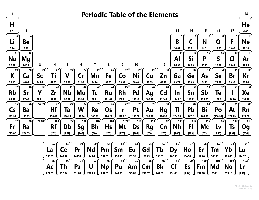
The periodic table organizes elements by increasing atomic number and similar chemical properties. Chemical formulas can be empirical (simplest ratio) or molecular (actual number of atoms).
Ions and Ionic Compounds
Ions are charged particles formed by gaining or losing electrons. Cations are positive (loss of electrons), anions are negative (gain of electrons). Ionic compounds are formed from cations and anions; their formulas are determined by charge balance.
Naming Compounds
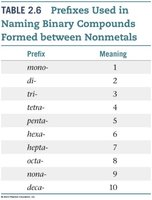
Binary ionic compounds, polyatomic ionic compounds, and molecular compounds have specific naming rules. Prefixes are used for molecular compounds to indicate the number of atoms.
Chapter 3: Chemical Reactions and Reaction Stoichiometry
Chemical Equations and Reaction Types
Chemical equations represent the law of conservation of mass. Equations must be balanced. Main reaction types include combination, decomposition, and combustion.
Mole Concept and Molar Mass
The mole is a counting unit for atoms/molecules (Avogadro’s number: ). Molar mass (g/mol) is used to convert between mass, moles, and number of particles.
Stoichiometry and Limiting Reactants
Stoichiometry involves using balanced equations to calculate quantities of reactants and products. The limiting reactant is the one consumed first, determining the maximum amount of product formed. Percent yield compares actual and theoretical yields.
Chapter 4: Reactions in Aqueous Solution
Properties of Aqueous Solutions
An aqueous solution has water as the solvent. Electrolytes conduct electricity (strong or weak), while nonelectrolytes do not.
Precipitation Reactions and Solubility
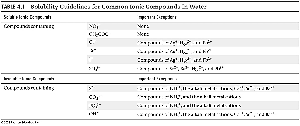
Precipitation reactions form insoluble products (precipitates) when solutions are mixed. Solubility rules help predict whether a compound will dissolve in water.
Acids, Bases, and Neutralization
Acids donate H+ ions; bases accept H+ or donate OH-. Strong acids/bases dissociate completely; weak acids/bases do not. Neutralization reactions produce water and a salt.
Oxidation-Reduction (Redox) Reactions
Oxidation is loss of electrons; reduction is gain of electrons (OIL RIG). Oxidation numbers are assigned to track electron transfer. Redox reactions involve changes in oxidation states.
Solution Concentration and Dilution
Molarity (M) is moles of solute per liter of solution. The dilution equation is .
Chapter 5: Thermochemistry
Energy, Work, and the First Law of Thermodynamics
Energy can be transferred as heat (q) or work (w). The first law states that energy is conserved: .
State function: Property dependent only on the current state, not the path taken.
Enthalpy and Calorimetry
Enthalpy (H) is the heat content at constant pressure. Endothermic processes absorb heat (); exothermic release heat (). Calorimetry measures heat flow using .
Hess’s Law and Enthalpies of Formation
Hess’s Law allows calculation of reaction enthalpy by combining steps. Standard enthalpy of formation () is used to calculate reaction enthalpy:
Chapter 6: Electronic Structure of Atoms
Nature of Light and the Electromagnetic Spectrum
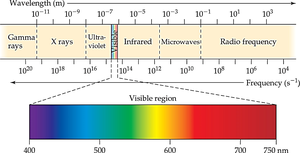
Light exhibits wave-particle duality. Key properties include wavelength (), frequency (), and speed (). The electromagnetic spectrum ranges from gamma rays to radio waves; visible light is a small portion.
Quantum Numbers and Atomic Orbitals
Quantum numbers describe electron properties:
n: Principal quantum number (energy level)
l: Angular momentum quantum number (subshell)
m_l: Magnetic quantum number (orbital orientation)
m_s: Spin quantum number (+1/2 or -1/2)
Electron configurations and orbital diagrams follow the Pauli Exclusion Principle and Hund’s Rule.
Chapter 7: Periodic Properties of the Elements
Periodic Trends and Effective Nuclear Charge
The periodic table arranges elements by atomic number and recurring properties. Effective nuclear charge () is the net positive charge experienced by valence electrons:
(Z = atomic number, S = shielding constant)
Trends include atomic radius, ionization energy, electron affinity, and metallic character.
Groups and Special Element Properties
Groups (columns) have similar properties. Notable groups include alkali metals (1A), alkaline earth metals (2A), halogens (7A), and noble gases (8A). Hydrogen is unique and not part of a specific group.
Chapter 8: Basic Concepts of Chemical Bonding
Lewis Structures and the Octet Rule
Lewis symbols represent valence electrons. The octet rule states that atoms tend to gain, lose, or share electrons to achieve eight valence electrons. Exceptions exist for some elements.
Ionic and Covalent Bonding
Ionic bonds involve electron transfer; covalent bonds involve electron sharing. Bond polarity depends on electronegativity differences. Lewis structures show bonding and lone pairs; formal charges help identify the most stable structure.
Bond Strength and Length
Single, double, and triple bonds differ in strength and length: triple bonds are strongest and shortest; single bonds are weakest and longest.
Chapter 9: Molecular Geometry and Bonding Theories
VSEPR Model and Molecular Shapes
The VSEPR model predicts molecular geometry based on electron domains. Five basic electron-domain geometries exist, leading to various molecular shapes and bond angles.
Molecular Polarity and Hybridization
Molecular polarity depends on shape and bond polarity. Hybridization explains the mixing of atomic orbitals to form new hybrid orbitals (sp, sp2, sp3). Sigma (σ) and pi (π) bonds are types of covalent bonds.
Chapter 10: Gases
Physical Properties and Gas Laws
Gases have indefinite shape and volume, are compressible, and fill their containers. Pressure units include atm, mm Hg, torr, Pa, and kPa. The ideal gas law relates pressure, volume, temperature, and moles:
Other gas laws include Boyle’s Law, Charles’s Law, and Avogadro’s Law. Dimensional analysis is essential for unit conversions.
Appendix: Useful Tables and Charts
Additional info: This guide covers the foundational topics for a first-semester general chemistry course, emphasizing conceptual understanding, problem-solving, and key equations. Practice with problems and familiarity with tables/charts are essential for exam success.
