Back

General Chemistry II: Aqueous Equilibria, Thermodynamics, Electrochemistry, and Main Group/Transition Elements

Study Guide - Learn with Videos

Curated lessons matched to your uploaded material – learn every topic step by step.

Acids Introduction

  • Guided course
    Acid Structure and Types
    02:29
  • Guided course
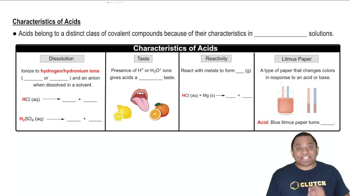
    Acid Characteristics
    02:59
  • Guided course
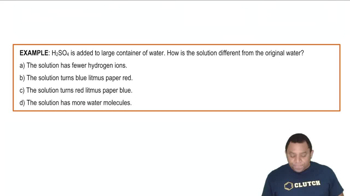
    Acid Characteristics Example
    01:23

Bases Introduction

  • Guided course
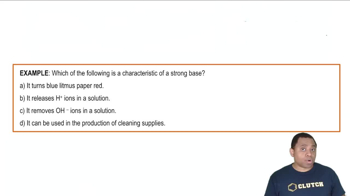
    Strong Bases Example
    01:12
  • Guided course
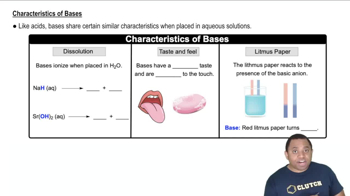
    Base Properties
    01:57
  • Guided course
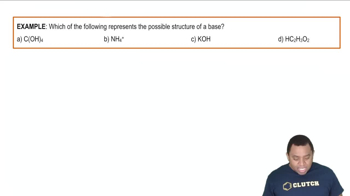
    Base Structure Example
    01:16

Bronsted-Lowry Acids and Bases

  • Guided course
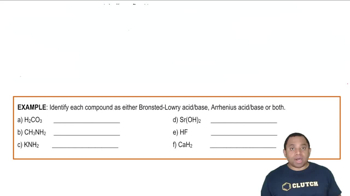
    Acid-Base Classification Example
    02:56
  • Guided course
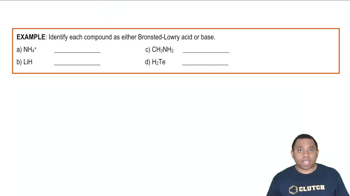
    Bronsted-Lowry Acids and Bases Example
    01:10
  • Guided course
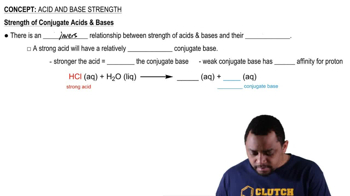
    Strength of Conjugate Acids and Bases
    00:50

pH of Strong Acids and Bases

  • Guided course
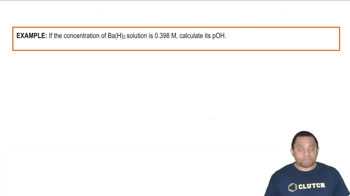
    pOH Calculation Example
    01:18
  • Guided course
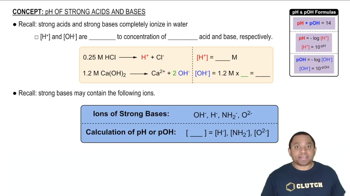
    pH of Strong Acids and Bases
    02:39

pH of Weak Acids

  • Guided course
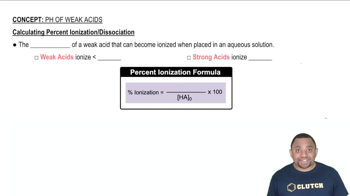
    Calculating Percent Ionization of Weak Acids
    01:15
  • Guided course
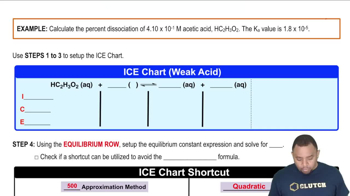
    Percent Dissociation Example
    04:52
  • Guided course
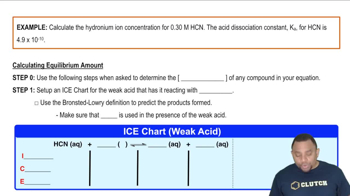
    Hydronium Ion Concentration Example
    06:25

pH of Weak Bases

  • Guided course
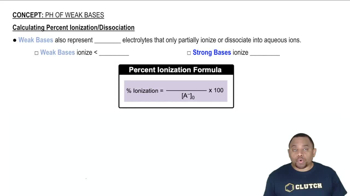
    Calculating Percent Ionization of Weak Bases
    01:00
  • Guided course
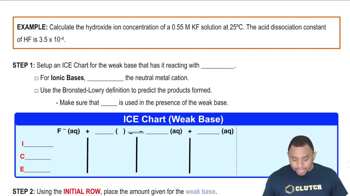
    Hydroxide Ion Concentration Example
    06:12
  • Guided course
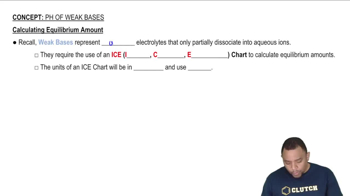
    ICE Charts of Weak Bases
    00:51

Intro to Buffers

  • Guided course
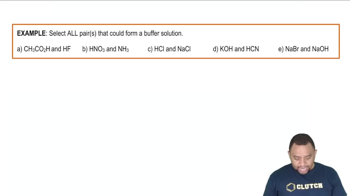
    Buffer Solution Example
    02:41
  • Guided course
    Buffer Capacity
    00:45
  • Guided course
    Buffer Creation Methods
    03:04

Henderson-Hasselbalch Equation

  • Guided course
    Buffer Range Calculation
    02:47
  • Guided course
    Buffering Range Example
    01:22
  • Guided course
    Henderson-Hasselbalch Equation
    02:40

Acid-Base Indicators

  • Guided course
    Acid-Base Indicators
    04:30
  • Guided course
    Best Indicator Example
    00:52

Titrations: Weak Acid-Strong Base

  • Guided course
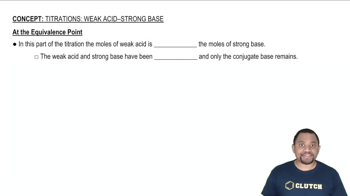
    At the Equivalence Point
    01:07
  • Guided course
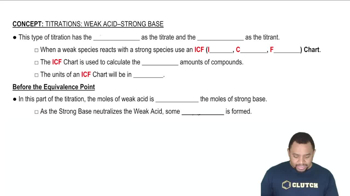
    Before the Equivalence Point
    01:30
  • Guided course
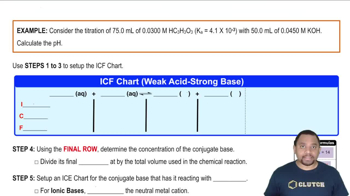
    pH at the Equivalence Point Example
    08:27

Titrations: Weak Base-Strong Acid

  • Guided course
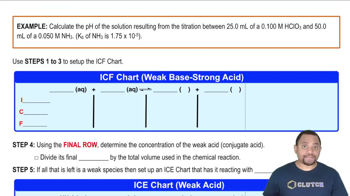
    pH Before the Equivalence Point Example
    05:10
  • Guided course
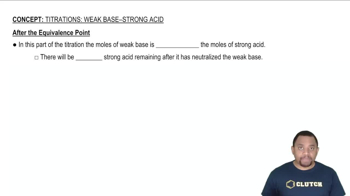
    After the Equivalence Point
    00:53
  • Guided course
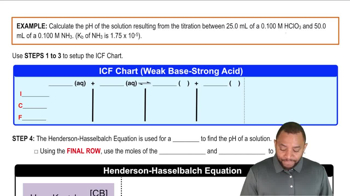
    pH at the Equivalence Point Example
    07:28

Titrations: Strong Acid-Strong Base

  • Guided course
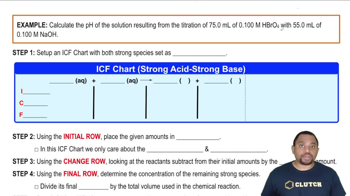
    Strong Acid-Strong Base Titration Example
    04:43
  • Guided course
    Strong Acid-Strong Base Titration
    01:09

Solubility Product Constant: Ksp

  • Guided course
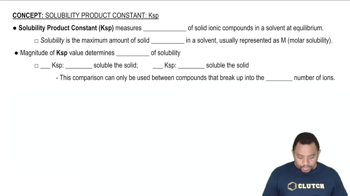
    Solubility Product Constant
    01:47
  • Guided course
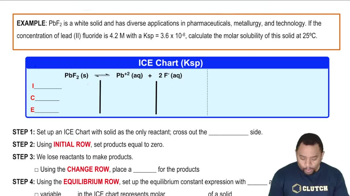
    Molar Solubility Example
    04:13
  • Guided course
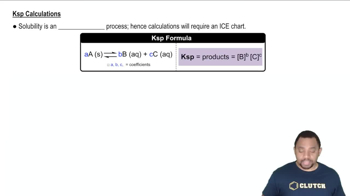
    Ksp Calculations
    01:51

Entropy

  • Guided course
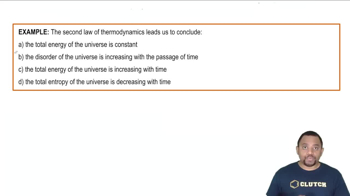
    Second Law of Thermodynamics Example
    00:48
  • Guided course
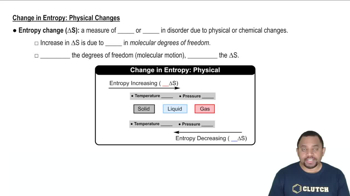
    Entropy and Physical Changes
    02:35
  • Guided course
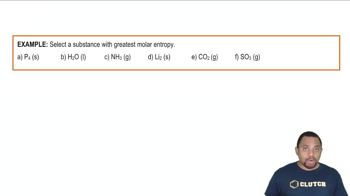
    Standard Molar Entropy Example
    01:17

Gibbs Free Energy

  • Guided course
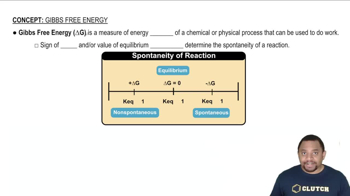
    Spontaneity of Reactions
    03:38
  • Guided course
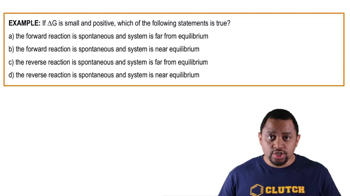
    ΔG and Spontaneity Example
    01:23
  • Guided course
    Spontaneity and Temperature Example
    02:42

Gibbs Free Energy Calculations

  • Guided course
    The Gibbs Free Energy Formula
    00:44
  • Guided course
    Standard Gibbs Free Energy and Temperature
    00:32
  • Guided course
    The Gibbs Free Energy Formula Example
    01:29

Gibbs Free Energy And Equilibrium

  • Guided course
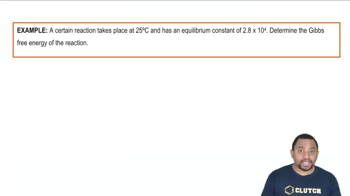
    ∆G° and K Example
    01:13
  • Guided course
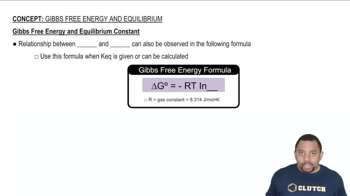
    ∆G° and K
    01:19
  • Guided course
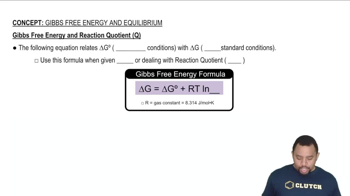
    ∆G, ∆G° and Q
    01:03

Redox Reactions

  • Guided course
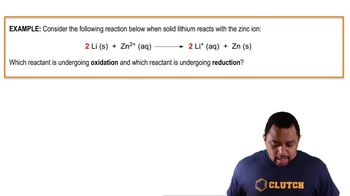
    Oxidation and Reduction Reaction Example
    02:17
  • Guided course
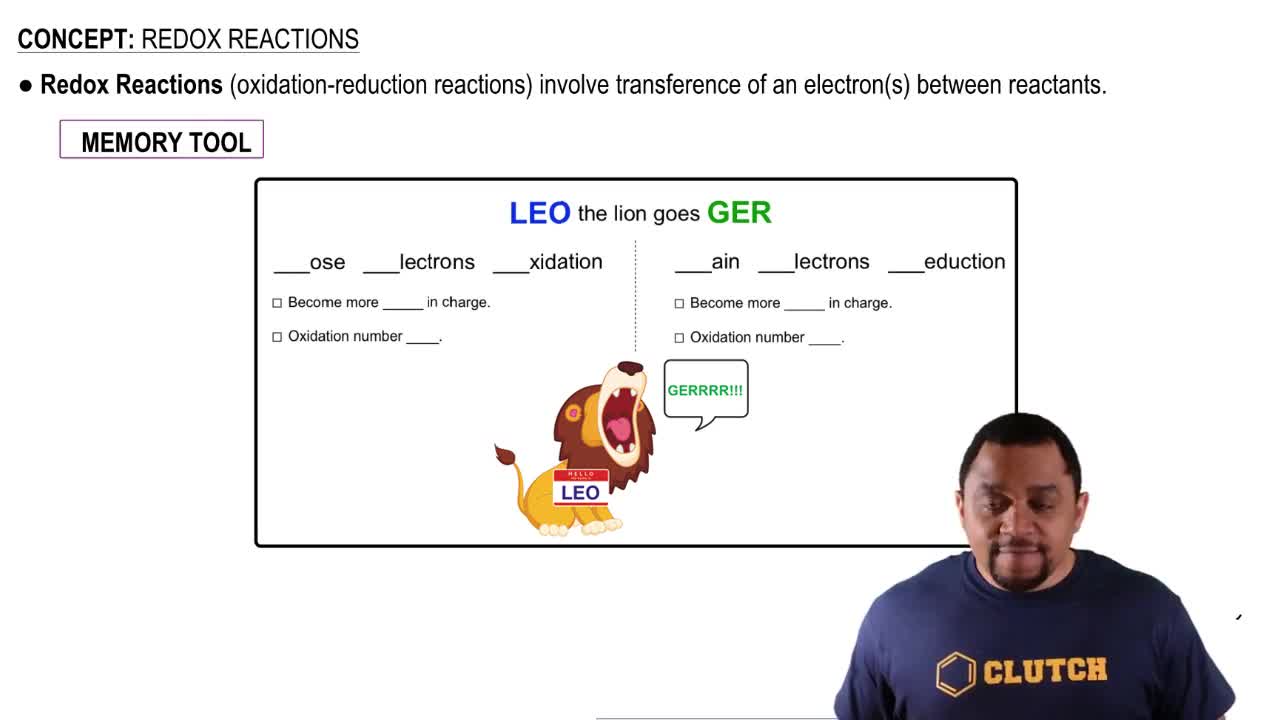
    Oxidation and Reduction Reactions
    01:53
  • Guided course
    Oxidizing and Reducing Agents
    01:01

Galvanic Cell

  • Guided course
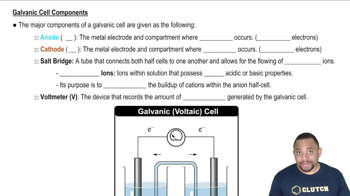
    Galvanic Cell Components
    03:55
  • Guided course
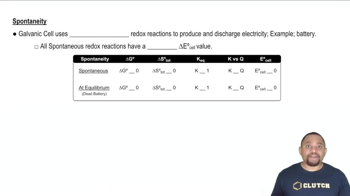
    Galvanic Cell and Spontaneity
    03:04
  • Guided course
    Galvanic Cell Components Example
    02:22

Cell Potential: Standard

  • Guided course
    Standard Cell Potential
    01:27
  • Guided course
    Standard Cell Potential and Spontaneity
    01:46
  • Guided course
    Standard Cell Potential Example
    01:34

Cell Potential: The Nernst Equation

  • Guided course
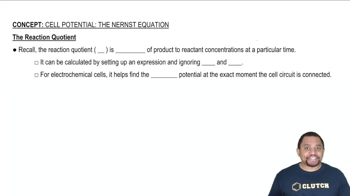
    The Reaction Quotient
    01:01
  • Guided course
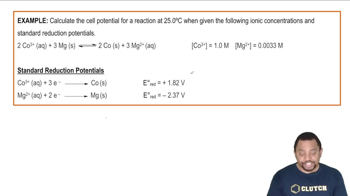
    The Nernst Equation Example
    04:38
  • Guided course
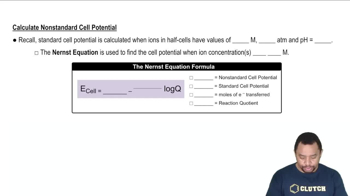
    The Nernst Equation
    01:17

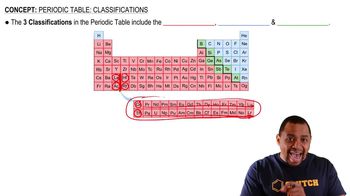
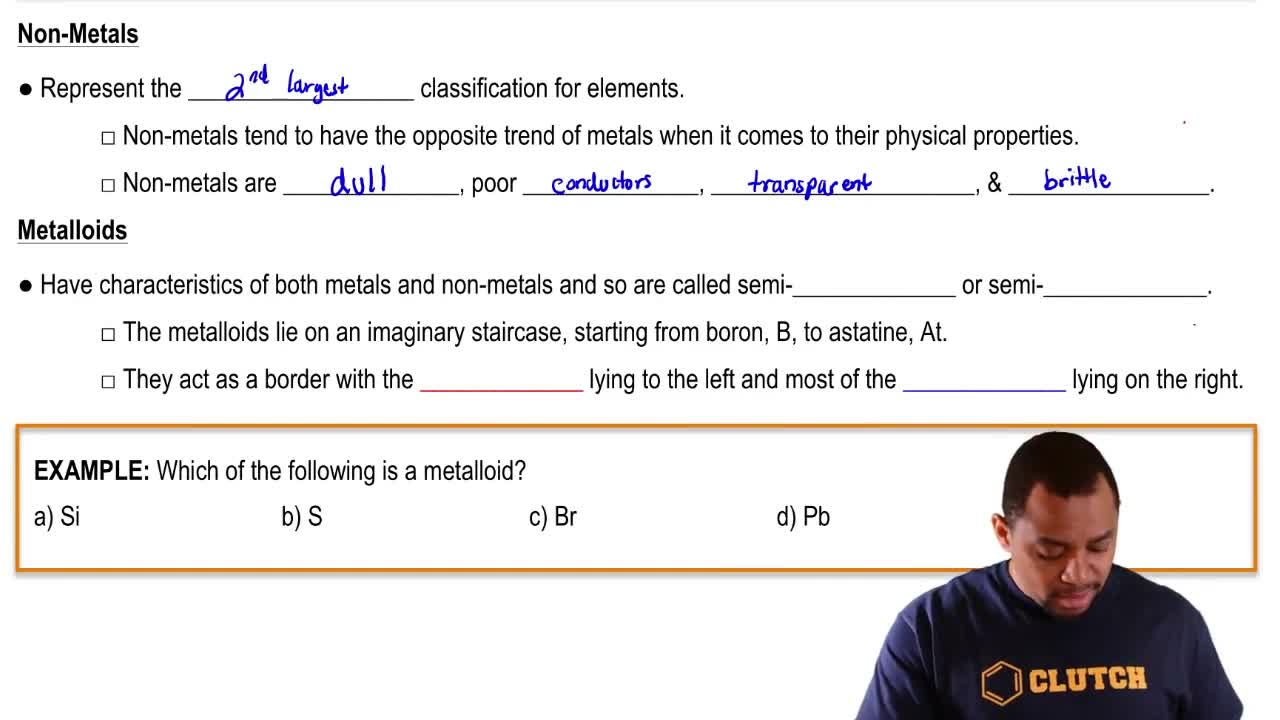
Periodic Table: Classifications

  • Guided course
    Nonmetal Properties
    01:12
  • Guided course
    Periodic Table Classifications
    02:40
  • Guided course
    Metalloid Properties
    03:37

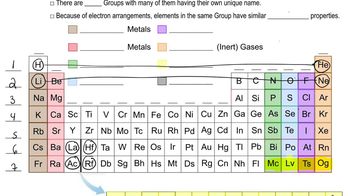
Periodic Table: Group Names

  • Guided course
    Periodic Table: Group Names
    05:33
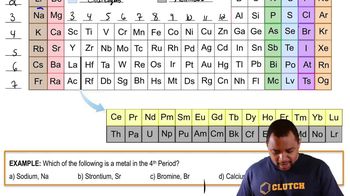
  • Guided course
    Periodic Table: Group Names Example
    01:17

Periodic Trend: Electronegativity

  • Guided course
    Electronegativity Trends
    02:10
  • Guided course
    Electronegativity Example
    00:35

Periodic Trend: Atomic Radius

  • Guided course
    Atomic Radius Trends
    01:42
  • Guided course
    Atomic Radius Example
    00:56
  • Guided course
    Atomic Radius
    02:02

Periodic Trend: Ionization Energy

  • Guided course
    Ionization Energy Trends
    01:08
  • Guided course
    Group 6A vs. Group 5A Elements
    01:32
  • Guided course
    Ionization Energy
    01:19

Main Group Elements: Periodic Trends

  • Guided course
    Main Group Elements: Periodic Trends Example
    00:59
  • Guided course
    Periodic Trends
    01:55

Electron Configurations of Transition Metals

  • Guided course
    Transition Metals
    03:12
  • Guided course
    Electron Configurations Of Transition Metals Example
    00:53

Paramagnetism and Diamagnetism

  • Guided course
    Paramagnetism and Diamagnetism Example
    01:47
  • Guided course
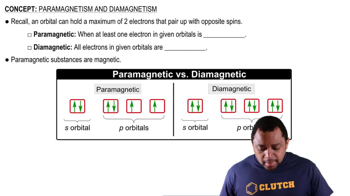
    Paramagnetism and Diamagnetism
    01:33

Atomic Radius & Density of Transition Metals

  • Guided course
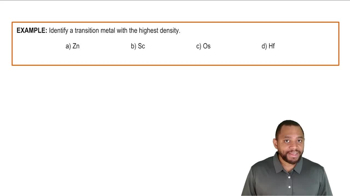
    Atomic Radius and Density of Transition Metals Example
    01:27
  • Guided course
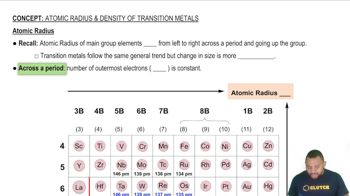
    Atomic Radius
    02:45
  • Guided course
    Atomic Radius and Density of Transition Metals Example
    01:38

Coordination Complexes

  • Guided course
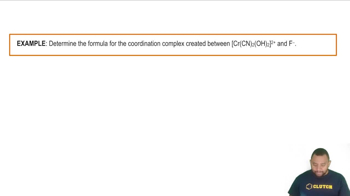
    Coordination Complexes Example
    00:43
  • Guided course
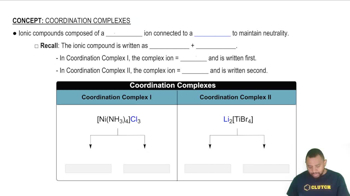
    Coordination Complexes I and II
    02:28

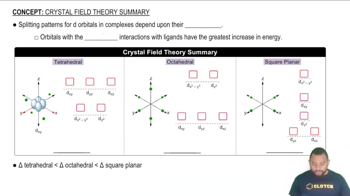
Crystal Field Theory Summary

  • Guided course
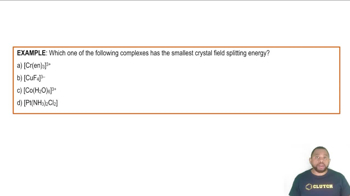
    Example
    02:46
  • Guided course
    The greatest ligand-orbital interactions result in the greatest increase in energy.
    03:01