 Back
BackGeneral Chemistry: Introduction and Measurement Fundamentals
Study Guide - Smart Notes
 Tailored notes based on your materials, expanded with key definitions, examples, and context.
Introduction to Chemistry
Classification of Matter
Chemistry is the study of matter and the changes it undergoes. Matter is anything that occupies space and has mass. Matter can be classified into three main types:
Element: The simplest type of matter, composed of one kind of atom.
Compound: Matter composed of two or more different elements that are chemically bonded together.
Mixture: Matter composed of elements and/or compounds that are physically mixed together.
Key Points:
Elements and compounds are pure substances; mixtures are not.
Mixtures can be homogeneous (uniform composition) or heterogeneous (variable composition).
Compounds can only be broken down by chemical means.
Physical and Chemical Changes
Physical changes alter the physical state of a substance without changing its composition, while chemical changes result in the formation of new substances with different chemical properties.
Physical Change: Examples include melting, boiling, dissolving, and tearing.
Chemical Change: Examples include burning, rusting, and reacting with acids.
Reversible changes (such as phase changes) can be undone, while irreversible changes (such as chemical reactions) cannot restore the original substance.
Chemical and Physical Properties
Chemical Properties
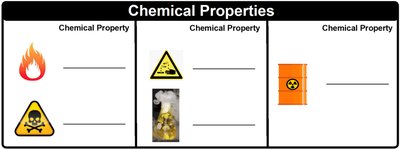
Chemical properties are observed during a chemical reaction and result in the formation of new substances.
Examples: Flammability, toxicity, reactivity, radioactivity.
Physical Properties
Physical properties can be measured or observed without changing the chemical structure of a substance.
Examples: Color, mass, density, melting point, boiling point, hardness.

Intensive and Extensive Properties
Intensive Properties
Intensive properties do not depend on the amount of substance present. They are useful for identifying substances.
Examples: Density, color, melting point, boiling point, luster.
Extensive Properties
Extensive properties depend on the size or amount of substance present.
Examples: Mass, volume, length, total energy.

Temperature and Heat
Temperature vs. Heat
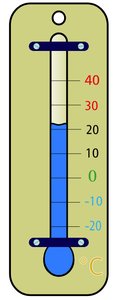
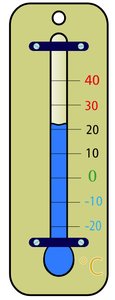
Temperature is the average kinetic energy of particles in a substance, while heat is the flow of thermal energy from a hotter object to a cooler one.
Temperature Units: Celsius (ºC), Fahrenheit (ºF), Kelvin (K).
Temperature Conversion Equations:
Scientific Notation and SI Units
Scientific Notation
Scientific notation is used to express very large or very small numbers in a compact form.
Format: where is the coefficient (≥ 1, < 10), and is the exponent.
Positive exponent: Move decimal to the right.
Negative exponent: Move decimal to the left.
SI Units
The International System of Units (SI) is based on seven base units for fundamental physical quantities.
Physical Quantity | Name | Symbol |
|---|---|---|
Mass | kilogram | kg |
Length | meter | m |
Time | second | s |
Temperature | kelvin | K |
Amount of substance | mole | mol |
Electric current | ampere | A |
Luminous intensity | candela | cd |




Metric Prefixes
Metric Prefixes and Multipliers
Metric prefixes are used to denote multiples or fractions of base units. They are essential for expressing measurements in appropriate units.
Prefix | Symbol | Multiplier |
|---|---|---|
kilo | k | |
centi | c | |
milli | m | |
micro | µ | |
nano | n | |
pico | p |
Significant Figures
Rules for Significant Figures
Significant figures indicate the precision of a measurement. The more significant figures, the more precise the value.
Non-zero digits are always significant.
Zeros between significant digits are significant.
Leading zeros are not significant.
Trailing zeros in a decimal number are significant.
Exact numbers have an infinite number of significant figures.
Significant Figures in Calculations
Multiplication/Division: The result should have the same number of significant figures as the value with the least significant figures.
Addition/Subtraction: The result should have the same number of decimal places as the value with the least decimal places.
Conversion Factors and Dimensional Analysis
Conversion Factors
Conversion factors are ratios that relate two different units and are used to convert measurements from one unit to another.
Example:
Example:
Dimensional Analysis
Dimensional analysis is a systematic method for converting between units using conversion factors. It ensures that units cancel appropriately to yield the desired unit.
Start with the given amount.
Multiply by conversion factors to cancel unwanted units.
End with the desired unit.
Density
Density and Its Calculation
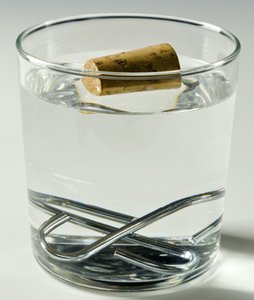
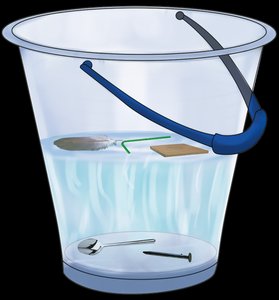
Density is the amount of mass per unit volume. It is a fundamental property used to characterize substances.
Formula:
Units for solids and liquids: g/cm3 or kg/m3
Units for gases: g/L or kg/m3
Density of Geometric and Non-Geometric Objects
For geometric objects, volume can be calculated using formulas. For non-geometric objects, water displacement is used to determine volume.
Cube:
Sphere:
Cylinder:
Example: Water displacement can be used to find the volume of an irregular object by measuring the change in water level.
Summary Table: Properties of Matter
Property Type | Definition | Examples |
|---|---|---|
Physical Property | Can be observed without changing substance | Color, mass, density, melting point |
Chemical Property | Observed during a chemical reaction | Flammability, toxicity, reactivity |
Intensive Property | Independent of amount | Density, color, boiling point |
Extensive Property | Dependent on amount | Mass, volume, length |
