 Back
BackGeneral Chemistry Midterm Study Guidance
Study Guide - Smart Notes
 Tailored notes based on your materials, expanded with key definitions, examples, and context.
Q1. From the list of binary compounds below, which compound is best described as predominantly ionic?
N2
SO2
HF
KBr
PCl3
Background
Topic: Ionic vs. Covalent Bonding
This question tests your ability to distinguish between ionic and covalent compounds based on their constituent elements.
Key Terms:
Ionic compound: Formed between metals and nonmetals, involves transfer of electrons.
Covalent compound: Formed between nonmetals, involves sharing of electrons.
Step-by-Step Guidance
Identify which compounds are made from a metal and a nonmetal (ionic) versus two nonmetals (covalent).
Recall that ionic compounds typically have a large difference in electronegativity between the elements.
Look for a compound containing an alkali metal or alkaline earth metal paired with a halogen or other nonmetal.
Try solving on your own before revealing the answer!
Q2. Which bond would have the largest bond dipole moment?
C–H
O–C
C–Cl
Na–C
Background
Topic: Bond Polarity and Dipole Moments
This question tests your understanding of how differences in electronegativity between atoms affect the dipole moment of a bond.
Key Terms:
Bond dipole moment: A measure of the separation of charge in a bond due to differences in electronegativity.
Electronegativity: The tendency of an atom to attract electrons in a bond.
Step-by-Step Guidance
Recall that the dipole moment increases with greater difference in electronegativity between the two atoms.
Compare the electronegativities of the atoms in each bond.
Identify which bond has the largest difference in electronegativity.
Try solving on your own before revealing the answer!
Q3. Of the atoms listed below, which is the least electronegative?
Mg
Si
Br
P
Al
Background
Topic: Electronegativity Trends
This question tests your knowledge of periodic trends, specifically electronegativity.
Key Terms:
Electronegativity: The ability of an atom to attract electrons in a chemical bond.
Periodic trend: Electronegativity increases across a period and decreases down a group.
Step-by-Step Guidance
Locate each element on the periodic table.
Recall the general trend: electronegativity increases from left to right and decreases from top to bottom.
Compare the positions of the elements to determine which is least electronegative.
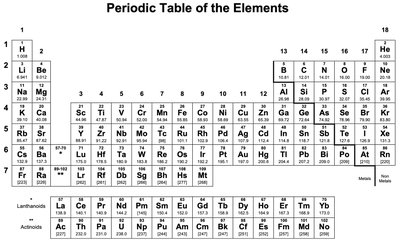
Try solving on your own before revealing the answer!
Q4. Write the correct formula for each compound:
Aluminium Sulfide
Dinitrogen Tetroxide
Background
Topic: Chemical Nomenclature and Formula Writing
This question tests your ability to translate chemical names into their correct formulas.
Key Terms:
Binary compound: A compound composed of two elements.
Prefixes: Indicate the number of atoms (di-, tetra-, etc.).
Step-by-Step Guidance
Identify the elements in each compound.
Use the prefixes to determine the number of atoms for each element.
Write the formula using the correct subscripts.
Try solving on your own before revealing the answer!
Q5. Which is the correct name for Ca₃(PO₄)₂?
A. Calcium phosphide
B. Calcium phosphate
C. Tricalcium diphosphate
D. Calcium (II) phosphate
E. Calcium phosphite
Background
Topic: Naming Ionic Compounds with Polyatomic Ions
This question tests your ability to correctly name compounds containing polyatomic ions.
Key Terms:
Polyatomic ion: An ion composed of more than one atom (e.g., PO43−).
Systematic naming: Use the correct name for the cation and anion.
Step-by-Step Guidance
Identify the cation (Ca2+) and the anion (PO43−).
Recall the name for PO43− is "phosphate."
Combine the names, ensuring correct stoichiometry is reflected in the name.
Try solving on your own before revealing the answer!
Final Answer Section
Here you would find the final answers and explanations for each question, once you have attempted them yourself.
