 Back
BackGeneral Chemistry Practice Test 1 – Step-by-Step Study Guidance
Study Guide - Smart Notes
 Tailored notes based on your materials, expanded with key definitions, examples, and context.
Q1. Convert 0.189 g Cu to moles.
Background
Topic: Mole Calculations and Molar Mass
This question tests your ability to convert a given mass of an element (copper, Cu) into moles using the molar mass.
Key Terms and Formulas
Mole: The amount of substance containing Avogadro's number (6.022 x 10²³) of particles.
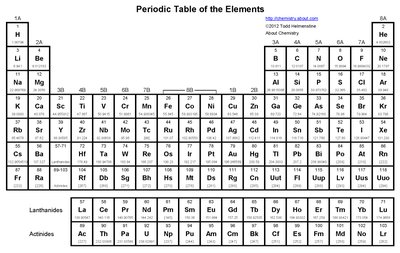
Molar Mass: The mass of one mole of a substance (for Cu, check the periodic table for its atomic mass).
Key formula:
Step-by-Step Guidance
Find the atomic mass of copper (Cu) on the periodic table (look for the value under the symbol Cu).
Write down the given mass: 0.189 g.
Set up the conversion using the formula above, placing the mass in the numerator and the molar mass in the denominator.
Plug in the values, but do not calculate the final answer yet.
Try solving on your own before revealing the answer!
Q2. How many Zn atoms are in 545 g Zn?
Background
Topic: Mass-to-Atoms Conversion
This question tests your ability to convert a mass of zinc (Zn) to the number of atoms, using molar mass and Avogadro's number.
Key Terms and Formulas
Avogadro's Number: atoms/mol
Molar Mass of Zn: Find on the periodic table.
Key formula:
Step-by-Step Guidance
Find the molar mass of Zn from the periodic table.
Divide the given mass (545 g) by the molar mass to get moles of Zn.
Multiply the number of moles by Avogadro's number to get the number of atoms.
Set up the calculation, but do not compute the final value yet.
Try solving on your own before revealing the answer!
Q3. How many moles of helium does a 71.3 g sample of helium contain?
Background
Topic: Mass-to-Mole Conversion
This question tests your ability to convert a mass of helium to moles using the molar mass.
Key Terms and Formulas
Molar Mass of He: Find on the periodic table (He).
Key formula:
Step-by-Step Guidance
Locate the molar mass of helium (He) on the periodic table.
Write down the given mass: 71.3 g.
Set up the calculation using the formula above.
Plug in the values, but do not solve for the final answer yet.
Try solving on your own before revealing the answer!
Q4. How many helium atoms does a 197 g sample of helium contain?
Background
Topic: Mass-to-Atoms Conversion
This question tests your ability to convert a mass of helium to the number of atoms using the molar mass and Avogadro's number.
Key Terms and Formulas
Avogadro's Number: atoms/mol
Molar Mass of He: Find on the periodic table.
Key formula:
Step-by-Step Guidance
Find the molar mass of helium (He) on the periodic table.
Divide the given mass (197 g) by the molar mass to get moles of He.
Multiply the number of moles by Avogadro's number to get the number of atoms.
Set up the calculation, but do not compute the final value yet.
Try solving on your own before revealing the answer!
Q5. What number of moles of helium contains helium atoms?
Background
Topic: Atoms-to-Moles Conversion
This question tests your ability to convert a number of atoms to moles using Avogadro's number.
Key Terms and Formulas
Avogadro's Number: atoms/mol
Key formula:
Step-by-Step Guidance
Write down the given number of atoms: .
Set up the calculation using the formula above.
Plug in the values, but do not solve for the final answer yet.
Try solving on your own before revealing the answer!
Q6. What is the mass of helium atoms?
Background
Topic: Atoms-to-Mass Conversion
This question tests your ability to convert a number of atoms to mass, using Avogadro's number and the molar mass.
Key Terms and Formulas
Avogadro's Number: atoms/mol
Molar Mass of He: Find on the periodic table.
Key formula:
Step-by-Step Guidance
Write down the given number of atoms: .
Convert atoms to moles using Avogadro's number.
Multiply the number of moles by the molar mass of helium to get the mass.
Set up the calculation, but do not compute the final value yet.
Try solving on your own before revealing the answer!
Q7. What is the noble gas core for Mo?
Background
Topic: Electron Configuration and Noble Gas Core Notation
This question tests your understanding of how to write the electron configuration of an element using the noble gas core abbreviation.
Key Terms and Concepts
Noble Gas Core: The electron configuration of the nearest noble gas with a lower atomic number than the element in question.
Mo: Molybdenum, atomic number 42.
Step-by-Step Guidance
Locate Mo (molybdenum) on the periodic table and note its atomic number.
Identify the noble gases with atomic numbers less than 42 (look for He, Ne, Ar, Kr, Xe, Rn).
The noble gas core is the symbol of the noble gas just before Mo in the periodic table.
Try solving on your own before revealing the answer!
Q8. Determine the numbers of protons, neutrons, and electrons in 37Cl.
Background
Topic: Atomic Structure
This question tests your ability to determine the number of protons, neutrons, and electrons in an isotope.
Key Terms and Formulas
Protons: Equal to the atomic number (Z) of Cl.
Neutrons:
Electrons: Equal to protons for a neutral atom.
Step-by-Step Guidance
Find the atomic number of Cl (chlorine) on the periodic table.
The mass number is given as 37.
Calculate the number of neutrons by subtracting the atomic number from the mass number.
For a neutral atom, the number of electrons equals the number of protons.
Try solving on your own before revealing the answer!
Q9. Determine the number of moles of C in 25.00 g of carbon.
Background
Topic: Mass-to-Mole Conversion
This question tests your ability to convert a mass of carbon to moles using the molar mass.
Key Terms and Formulas
Molar Mass of C: Find on the periodic table.
Key formula:
Step-by-Step Guidance
Find the molar mass of carbon (C) on the periodic table.
Write down the given mass: 25.00 g.
Set up the calculation using the formula above.
Plug in the values, but do not solve for the final answer yet.
Try solving on your own before revealing the answer!
Q10. Determine the mass in grams of 1.312 mol of He.
Background
Topic: Mole-to-Mass Conversion
This question tests your ability to convert moles of helium to mass using the molar mass.
Key Terms and Formulas
Molar Mass of He: Find on the periodic table.
Key formula:
Step-by-Step Guidance
Find the molar mass of helium (He) on the periodic table.
Write down the given number of moles: 1.312 mol.
Set up the calculation using the formula above.
Plug in the values, but do not solve for the final answer yet.
Try solving on your own before revealing the answer!
Q11. The wavelength of a laser commonly used in the treatment of vascular skin lesions has a wavelength of 532 nm. What is the frequency of this radiation?
Background
Topic: Electromagnetic Radiation – Wavelength and Frequency
This question tests your ability to convert wavelength to frequency using the speed of light.
Key Terms and Formulas
Speed of light, m/s
Wavelength (): 532 nm (convert to meters)
Frequency ():
Key formula:
Step-by-Step Guidance
Convert the wavelength from nanometers to meters (1 nm = m).
Write down the speed of light value.
Set up the calculation using the formula above.
Plug in the values, but do not solve for the final answer yet.
Try solving on your own before revealing the answer!
Q12. What are the possible values for the magnetic quantum numbers (ml) when the principal quantum number (n) is 3 and the angular momentum quantum number (l) is 1?
Background
Topic: Quantum Numbers
This question tests your understanding of quantum numbers and their allowed values.
Key Terms and Concepts
Principal quantum number (): Indicates the energy level.
Angular momentum quantum number (): For , this is a p-subshell.
Magnetic quantum number (): Ranges from to in integer steps.
Step-by-Step Guidance
For , list all integer values from to .
Write out the possible values.
Try solving on your own before revealing the answer!
Q13. How many orbitals are there in a subshell designated by the quantum numbers n = 3, l = 2?
Background
Topic: Quantum Numbers and Orbitals
This question tests your ability to determine the number of orbitals in a given subshell.
Key Terms and Concepts
For a given , the number of orbitals is .
Key formula:
Step-by-Step Guidance
Identify the value of (here, ).
Plug into the formula to find the number of orbitals.
Try solving on your own before revealing the answer!
Q14. How many subshells are there in the shell designated by n = 3?
Background
Topic: Quantum Numbers and Subshells
This question tests your understanding of how many subshells exist for a given principal quantum number ().
Key Terms and Concepts
For a given , can be 0 up to .
The number of subshells equals .
Step-by-Step Guidance
For , list all possible values (0, 1, 2).
Count the number of possible values to determine the number of subshells.
Try solving on your own before revealing the answer!
Q15. What is the total number of orbitals in the shell designated by n = 4?
Background
Topic: Quantum Numbers and Orbitals
This question tests your ability to determine the total number of orbitals in a shell.
Key Terms and Concepts
For a given , the total number of orbitals is .
Key formula:
Step-by-Step Guidance
For , use the formula above to calculate the total number of orbitals.
Try solving on your own before revealing the answer!
Q16. What is the minimum value of the principal quantum number for an orbital in which ml = +2?
Background
Topic: Quantum Numbers
This question tests your understanding of the relationship between and , and how $l$ relates to .
Key Terms and Concepts
can range from to .
For , must be at least 2, and must be at least .
Step-by-Step Guidance
Recognize that must be at least 2 for to be possible.
The minimum is .
Try solving on your own before revealing the answer!
Q17. How many orbitals are in the 5f subshell?
Background
Topic: Quantum Numbers and Orbitals
This question tests your ability to determine the number of orbitals in an f subshell.
Key Terms and Concepts
For an f subshell, .
The number of orbitals is .
Key formula:
Step-by-Step Guidance
For an f subshell, set .
Plug into the formula to find the number of orbitals.
Try solving on your own before revealing the answer!
Q18. The energy of an orbital in the hydrogen atom depends on which quantum number?
Background
Topic: Quantum Numbers and Atomic Structure
This question tests your understanding of which quantum number determines the energy of an orbital in a hydrogen atom.
Key Terms and Concepts
In hydrogen, the energy depends only on the principal quantum number ().
Step-by-Step Guidance
Recall that for hydrogen, all orbitals with the same have the same energy, regardless of , , or .
Identify which quantum number this is.
Try solving on your own before revealing the answer!
