 Back
BackGeneral Chemistry Study Guide: Matter, Measurement, Atoms, Compounds, and Chemical Quantities
Study Guide - Smart Notes
 Tailored notes based on your materials, expanded with key definitions, examples, and context.
Matter, Measurement & Problem Solving
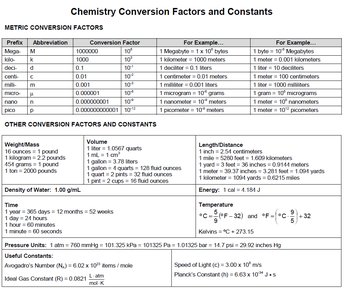
Metric System Prefixes and Conversion Factors
The metric system uses prefixes to denote multiples or fractions of base units, facilitating conversions and scientific calculations. Understanding these prefixes is essential for accurate measurement and unit analysis in chemistry.
Common Prefixes: Mega (M, ), Kilo (k, ), Deci (d, ), Centi (c, ), Milli (m, ), Micro (\mu, ), Nano (n, ), Pico (p, ).
Examples: 1 kilogram = 1,000 grams; 1 milliliter = 0.001 liters.
Conversion Factors: Used to convert between units, e.g., 1 inch = 2.54 cm.
Measurement and Significant Figures
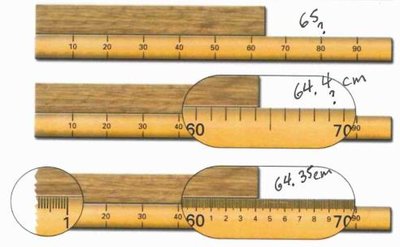
Measurements in chemistry are subject to uncertainty, and significant figures (sig figs) are used to express the precision of measured values. The number of significant digits reflects the confidence in the measurement.
Significant Figures: All non-zero digits are significant; zeros may be significant depending on their position (leading, embedded, trailing).
Rules: Leading zeros are not significant; embedded zeros are significant; trailing zeros are significant if after a decimal point.
Exact Numbers: Defined quantities (e.g., 1 gallon = 4 quarts) have infinite significant figures.
Calculations: For multiplication/division, the result has the same number of sig figs as the least precise value. For addition/subtraction, the result has the same number of decimal places as the least precise value.
Atoms & Elements
Metals, Nonmetals, and Phases of Matter
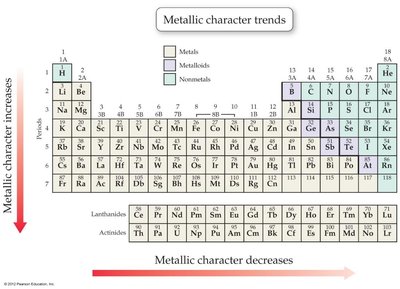
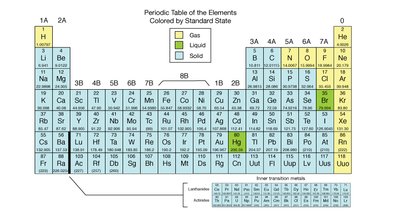
Elements are classified as metals, metalloids, or nonmetals based on their properties. The periodic table also shows the physical state (solid, liquid, gas) of elements at standard conditions.
Metals: Conduct electricity, malleable, ductile.
Nonmetals: Poor conductors, often gases or brittle solids.
Periodic Trends: Metallic character increases down a group and decreases across a period.
Phases: Most elements are solids; a few are liquids (e.g., Hg, Br); some are gases (e.g., H, N, O).
Molecules and Compounds
Chemical Bonds
Chemical bonds arise from interactions between charged particles (protons and electrons) in atoms. Two main types of bonds exist: ionic and covalent.
Ionic Bonds: Formed by transfer of electrons between metals and nonmetals, resulting in charged ions.
Covalent Bonds: Formed by sharing electrons between nonmetals.
Electrostatic Forces: Like charges repel, opposite charges attract.

Chemical Formulas: Empirical, Molecular, and Structural
Chemical formulas represent the composition of compounds. There are three main types:
Empirical Formula: Shows the simplest ratio of elements in a compound.
Molecular Formula: Shows the actual number of atoms of each element in a molecule.
Structural Formula: Shows the arrangement and bonding of atoms in a molecule.
Classification of Matter
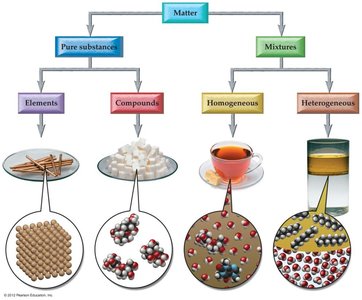
Matter can be classified as pure substances (elements and compounds) or mixtures (homogeneous and heterogeneous).
Elements: Substances consisting of one type of atom.
Compounds: Substances composed of two or more elements chemically bonded.
Mixtures: Physical combinations of substances; homogeneous mixtures are uniform, heterogeneous mixtures are not.
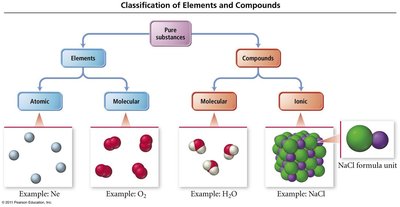
Classification of Elements and Compounds
Elements can be atomic or molecular; compounds can be molecular or ionic.
Atomic Elements: Exist as single atoms (e.g., Ne).
Molecular Elements: Exist as molecules (e.g., O2).
Molecular Compounds: Composed of molecules (e.g., H2O).
Ionic Compounds: Composed of ions (e.g., NaCl).
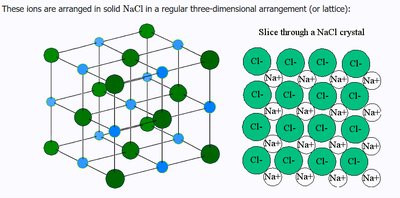
Ionic Compounds and Lattice Structure
Ionic compounds form regular three-dimensional arrangements called lattices, where ions are held together by electrostatic forces.
Example: NaCl forms a cubic lattice with alternating Na+ and Cl- ions.
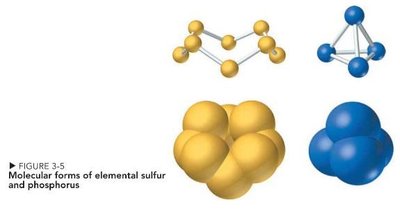
Diatomic and Polyatomic Elements; Allotropy
Some elements exist as diatomic or polyatomic molecules. Allotropy refers to elements existing in more than one molecular form.
Diatomic Elements: H2, N2, O2, F2, Cl2, Br2, I2.
Polyatomic Elements: S8, P4.
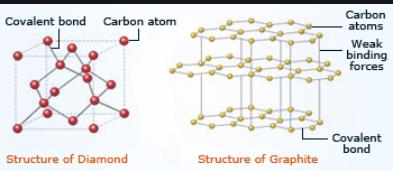
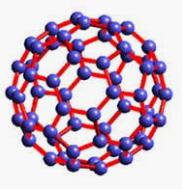
Allotropes: Different structural forms of the same element (e.g., diamond, graphite, and fullerene for carbon).
Chemical Reactions and Chemical Quantities
Dimensional Analysis (Factor Label Method)
Dimensional analysis is a systematic method for converting units using conversion factors. It is essential for solving quantitative problems in chemistry.
Steps: Identify the starting unit, apply conversion factors, and solve for the desired unit.
Example: Convert 55.0 mph to meters per minute.
Using Density, Molar Mass, and Avogadro’s Number as Conversion Factors
Density, molar mass, and Avogadro’s number are used to relate mass, volume, and number of particles in chemical calculations.
Density:
Molar Mass: Mass of one mole of a substance (g/mol).
Avogadro’s Number: particles per mole.
Composition of Compounds
Chemical formulas provide quantitative relationships between elements and compounds. Calculations include conversion factors, mass percent composition, and determination of empirical and molecular formulas.
Mass Percent Composition:
Empirical Formula: Simplest whole-number ratio of elements.
Molecular Formula: Actual number of atoms, found using

Combustion Analysis
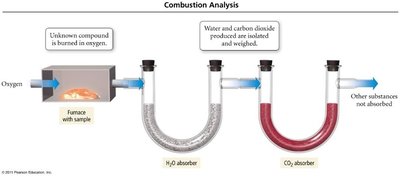
Combustion analysis is used to determine the empirical formula of compounds containing carbon and hydrogen. The sample is burned in oxygen, and the resulting CO2 and H2O are measured.
Process: All C atoms are found in CO2, all H atoms in H2O, O atoms are determined indirectly.
Application: Used for unknown compounds, especially organic substances.
Writing and Balancing Chemical Equations
Chemical equations represent reactions and must be balanced to obey the law of conservation of mass. Balancing involves adjusting stoichiometric coefficients without changing subscripts.
Steps: Write unbalanced equation, add coefficients, balance atoms, treat polyatomic ions as units, leave hydrogen and oxygen until last.
Example: C2H6 + O2 → CO2 + H2O
