 Back
General Chemistry Study Guide: Molecular Geometry, Polarity, Hybridization, MO Theory, Chemical Reactions, and Solutions
Study Guide - Smart Notes
 Tailored notes based on your materials, expanded with key definitions, examples, and context.
Molecular Geometry and VSEPR Theory
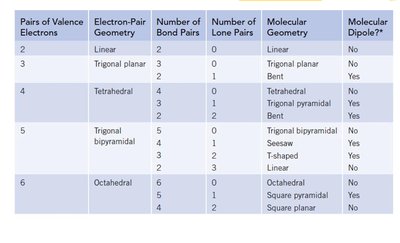
Electron-Pair and Molecular Geometry
The arrangement of atoms and electron pairs around a central atom determines the shape and properties of molecules. The Valence Shell Electron Pair Repulsion (VSEPR) theory predicts molecular geometry based on repulsion between electron pairs.
Electron-Pair Geometry: Considers both bonding pairs and lone pairs.
Molecular Geometry: Considers only the arrangement of atoms, treating lone pairs as invisible.
Common Geometries:
Linear: 180° bond angle
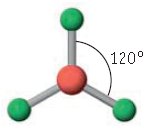
Trigonal planar: 120° bond angle
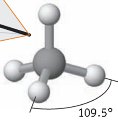
Tetrahedral: 109.5° bond angle
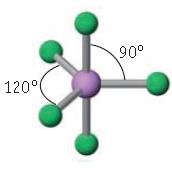
Trigonal bipyramidal: 90° and 120° bond angles
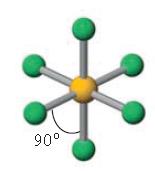
Octahedral: 90° bond angles
Example: Trigonal planar geometry (e.g., BF3) has 120° bond angles.
Example: Trigonal bipyramidal geometry (e.g., PF5) has both 90° and 120° bond angles.
Example: Octahedral geometry (e.g., SF6) has 90° bond angles.
Example: Tetrahedral geometry (e.g., CH4) has 109.5° bond angles.
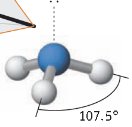
Example: Trigonal pyramidal geometry (e.g., NH3) has 107.5° bond angles.
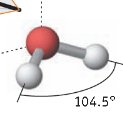
Example: Bent geometry (e.g., H2O) has 104.5° bond angles.
Example: Square planar geometry (e.g., XeF4) has 90° bond angles.
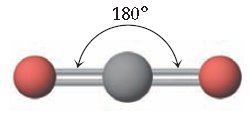
Example: Linear geometry (e.g., CO2) has 180° bond angles.
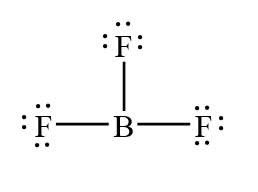
Table: Electron-Pair and Molecular Geometry
Pairs of Valence Electrons | Electron-Pair Geometry | Number of Bond Pairs | Number of Lone Pairs | Molecular Geometry | Molecular Dipole? |
|---|---|---|---|---|---|
2 | Linear | 2 | 0 | Linear | No |
3 | Trigonal planar | 3 | 0 | Trigonal planar | No |
3 | Trigonal planar | 2 | 1 | Bent | Yes |
4 | Tetrahedral | 4 | 0 | Tetrahedral | No |
4 | Tetrahedral | 3 | 1 | Trigonal pyramidal | Yes |
4 | Tetrahedral | 2 | 2 | Bent | Yes |
5 | Trigonal bipyramidal | 5 | 0 | Trigonal bipyramidal | No |
5 | Trigonal bipyramidal | 4 | 1 | Seesaw | Yes |
5 | Trigonal bipyramidal | 3 | 2 | T-shaped | Yes |
5 | Trigonal bipyramidal | 2 | 3 | Linear | No |
6 | Octahedral | 6 | 0 | Octahedral | No |
6 | Octahedral | 5 | 1 | Square pyramidal | Yes |
6 | Octahedral | 4 | 2 | Square planar | No |
Molecular Polarity
Determining Molecular Polarity
Molecular polarity arises when there is an uneven distribution of electron density, resulting in a dipole moment. For a molecule to be polar:
At least some bonds must be polar (electronegativity difference).
Net pull on electrons must be greatest in one direction.
Equal pull in opposite directions cancels out dipoles.
Polar molecules have a dipole with a positive and negative end.
Magnitude of charge difference between the ends is the dipole moment.
Example: CO2 is nonpolar because the dipoles cancel out due to its linear geometry.
Example: BF3 is nonpolar due to its trigonal planar symmetry.
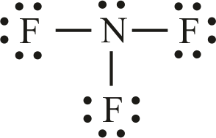
Example: NF3 is polar because the trigonal pyramidal shape prevents dipole cancellation.

Orbital Hybridization
Concept and Types of Hybridization
Hybridization is the mixing of atomic orbitals to form new hybrid orbitals suitable for bonding and achieving the correct molecular geometry. Hybrid orbitals combine characteristics of the original orbitals and are named based on the types and numbers of orbitals mixed.
sp3 Hybridization: Mixing 1 s and 3 p orbitals forms 4 sp3 hybrids (tetrahedral geometry).
sp2 Hybridization: Mixing 1 s and 2 p orbitals forms 3 sp2 hybrids (trigonal planar geometry).
sp Hybridization: Mixing 1 s and 1 p orbital forms 2 sp hybrids (linear geometry).
Example: CH4 (methane) uses sp3 hybridization for tetrahedral geometry.
Example: NH3 (ammonia) uses sp3 hybridization for trigonal pyramidal geometry.
Example: H2O (water) uses sp3 hybridization for bent geometry.
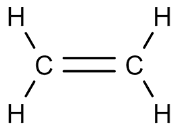
Example: Ethene (C2H4) uses sp2 hybridization for trigonal planar geometry.
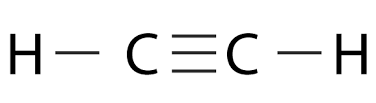
Example: Acetylene (C2H2) uses sp hybridization for linear geometry.
Molecular Orbital (MO) Theory
Bonding and Anti-Bonding Orbitals
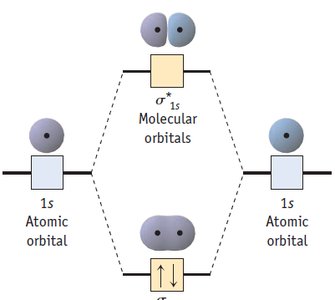
Molecular orbital theory describes how atomic orbitals combine to form molecular orbitals that extend across the entire molecule. Two types of MOs are formed:
Bonding MO: Lower in energy, electrons are held between both nuclei.
Anti-Bonding MO: Higher in energy, has a node between nuclei.
Bond Order Formula:
Example: H2 MO diagram shows bonding and anti-bonding orbitals.
MO Diagrams for p-Block Diatomics
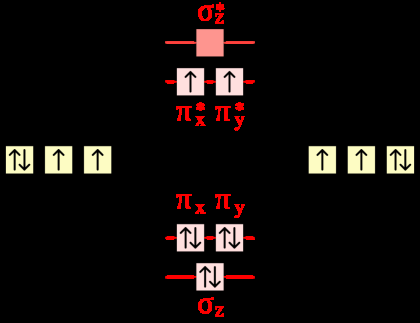
For diatomic molecules with p orbitals, six MOs are formed due to different orientations:
Sigma (σ) MOs: Formed by head-on overlap.
Pi (π) MOs: Formed by side-on overlap.
Example: O2 MO diagram shows the order and occupancy of σ and π orbitals.
Chemical Reactions and Stoichiometry
Balancing Chemical Equations
Balancing chemical equations ensures the law of conservation of matter is obeyed. The number of atoms of each element must be equal on both sides of the equation.
Use stoichiometric coefficients to balance equations.
Never change subscripts in chemical formulas.
Check for lowest possible coefficients.
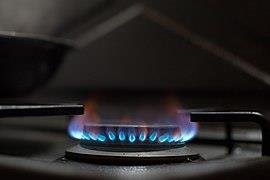
Example: Combustion of methane:
Stoichiometry Calculations
Stoichiometry uses balanced equations to calculate the amounts of reagents and products. Coefficients provide ratios for dimensional analysis.
Convert mass to moles using molar mass.
Use mole ratios from the balanced equation.
Convert moles back to mass if needed.
Limiting Reagent and Percent Yield
The limiting reagent is the reactant that is completely consumed first, limiting the maximum amount of product formed. Percent yield quantifies reaction efficiency:
Chemical Equilibrium
Concept of Equilibrium
Chemical equilibrium occurs when the forward and reverse reaction rates are equal, resulting in no net change in concentrations of reactants and products.
Reactions progress spontaneously to equilibrium.
Equilibrium can be product-favored or reactant-favored.
Solutions and Concentration
Formation of Solutions
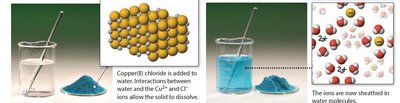
A solution is a homogeneous mixture of solute and solvent. Dissolution is the process of breaking ionic or molecular interactions to form a solution.
Solute: Minority component, undergoes dissolution.
Solvent: Majority component, medium in which solute dissolves.
Example: Dissolution of CuCl2 in water.
Concentration Units and Calculations
Concentration expresses the amount of solute per unit volume of solution. The most common unit is molarity (M):
Dilution
Dilution involves increasing the solvent volume without adding more solute, decreasing concentration. The relationship is:
Where and are the initial concentration and volume, and and are the final concentration and volume.
Summary Table: Key Geometries and Properties
Geometry | Bond Angle | Example | Hybridization |
|---|---|---|---|
Linear | 180° | CO2 | sp |
Trigonal planar | 120° | BF3 | sp2 |
Tetrahedral | 109.5° | CH4 | sp3 |
Trigonal bipyramidal | 90°, 120° | PF5 | sp3d |
Octahedral | 90° | SF6 | sp3d2 |
