 Back
BackIntermolecular Forces and Properties of Liquids and Solids
Study Guide - Smart Notes
 Tailored notes based on your materials, expanded with key definitions, examples, and context.
States of Matter and Intermolecular Forces
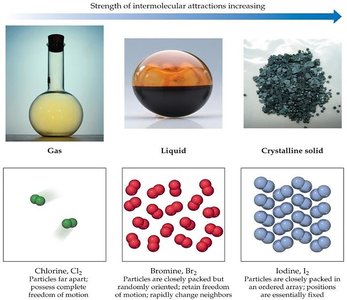
Comparison of Gases, Liquids, and Solids
The physical state of a substance—gas, liquid, or solid—depends on the balance between the kinetic energy of its particles and the strength of the intermolecular forces acting between them. As the strength of intermolecular attractions increases, substances transition from gases to liquids to solids.
Gases: Particles are far apart and move freely; intermolecular forces are very weak.
Liquids: Particles are closer together, allowing for fluidity but with significant intermolecular attractions.
Solids: Particles are closely packed in an ordered arrangement; intermolecular forces are strongest.
Intramolecular vs. Intermolecular Forces
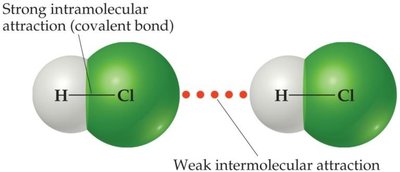
Intramolecular forces are the chemical bonds (covalent, ionic, or metallic) that hold atoms together within a molecule. Intermolecular forces are the weaker forces that exist between molecules and are responsible for the physical properties of substances.
When a substance melts or boils, intermolecular forces are broken, not intramolecular bonds.
When a substance condenses or freezes, intermolecular forces are formed.
Types of Intermolecular Forces
Overview of Intermolecular Forces
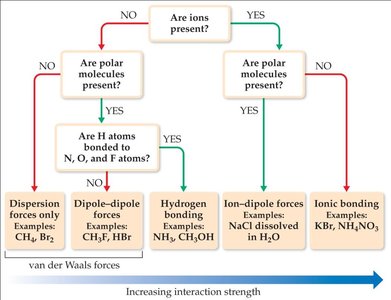
All intermolecular forces are electrostatic in nature but are much weaker than covalent or ionic bonds. The main types are:
Dispersion (London) Forces
Dipole-Dipole Interactions
Hydrogen Bonding
Ion-Dipole Interactions (important in solutions)
Dispersion (London) Forces
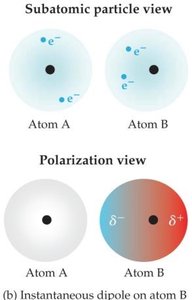
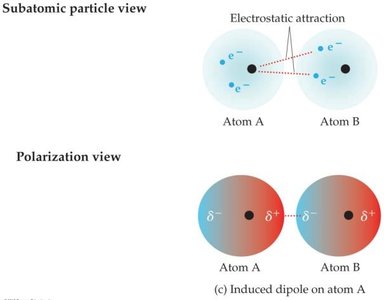
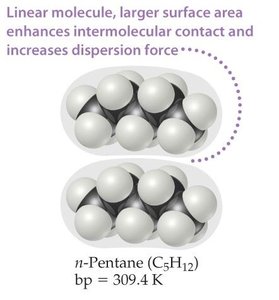
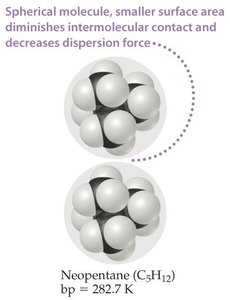
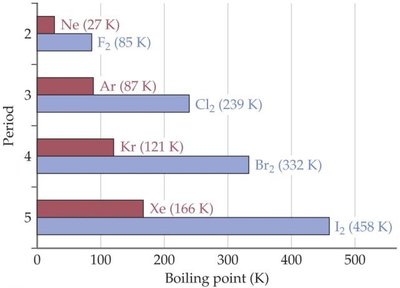
Dispersion forces arise from temporary fluctuations in electron distribution, creating instantaneous dipoles that induce dipoles in neighboring atoms or molecules. These forces are present in all molecules, regardless of polarity.
Strength increases with molecular size (molar mass) and polarizability.
Greater surface area enhances dispersion forces.
Dipole-Dipole Interactions
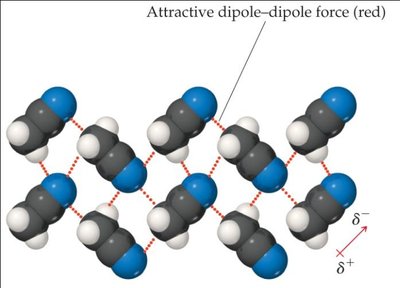
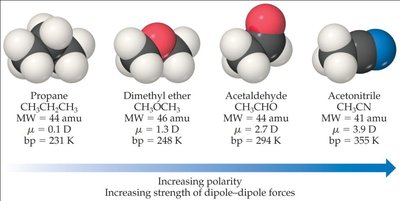
Dipole-dipole forces occur between neutral polar molecules. The positive end of one molecule is attracted to the negative end of another.
Strength increases with molecular polarity.
For molecules of similar size and mass, higher polarity leads to higher boiling points.
Hydrogen Bonding
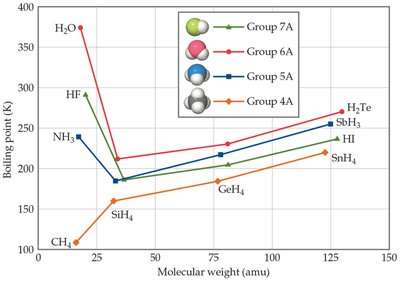
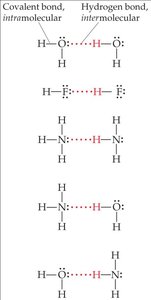
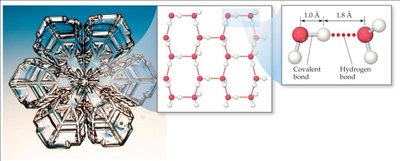
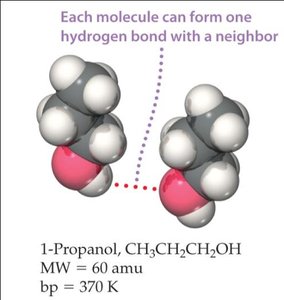
Hydrogen bonding is a special, unusually strong type of dipole-dipole interaction. It occurs when hydrogen is bonded to a highly electronegative atom (N, O, or F) and is attracted to a lone pair on another electronegative atom.
Responsible for many unique properties of water and biological molecules.
Hydrogen bonds are much stronger than other dipole-dipole interactions but still weaker than covalent bonds.
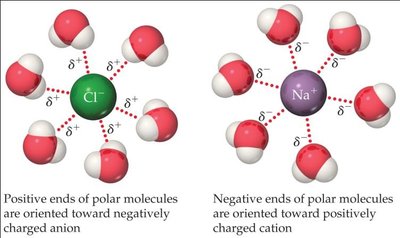
Ion-Dipole Forces
Ion-dipole forces are the attractions between an ion and the partial charges on a polar molecule. These are especially important in solutions of ionic compounds in polar solvents (e.g., NaCl in water).
Strength increases with higher ion charge and greater dipole moment.
Smaller ions with higher charge density interact more strongly with dipoles.
Comparing Intermolecular Forces
The relative strength of intermolecular forces determines many physical properties, such as boiling and melting points. The order of increasing strength is:
Dispersion < Dipole-Dipole < Hydrogen Bonding < Ion-Dipole < Ionic/Covalent Bonds
Properties of Liquids
Viscosity
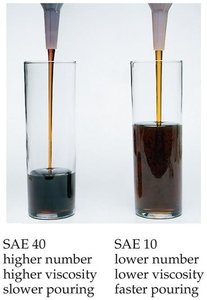
Viscosity is the resistance of a liquid to flow. It depends on the strength of intermolecular forces and the molecular structure.
Stronger intermolecular forces lead to higher viscosity.
Viscosity generally increases with molecular weight.
Viscosity decreases as temperature increases.
Substance | Formula | Viscosity (kg/m·s) |
|---|---|---|
Hexane | CH3CH2CH2CH2CH2CH3 | 3.26 × 10⁻⁴ |
Heptane | CH3CH2CH2CH2CH2CH2CH3 | 4.09 × 10⁻⁴ |
Octane | CH3CH2CH2CH2CH2CH2CH2CH3 | 5.42 × 10⁻⁴ |
Nonane | CH3CH2CH2CH2CH2CH2CH2CH2CH3 | 7.11 × 10⁻⁴ |
Decane | CH3CH2CH2CH2CH2CH2CH2CH2CH2CH3 | 1.42 × 10⁻³ |
Surface Tension
Surface tension is the energy required to increase the surface area of a liquid. It results from the imbalance of intermolecular forces at the surface.
Liquids with strong intermolecular forces (e.g., water with hydrogen bonding) have high surface tension.
Surface tension causes phenomena such as water beading on surfaces and insects walking on water.
Capillary Action
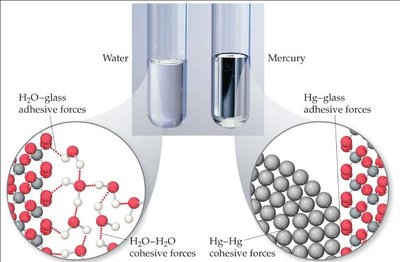
Capillary action is the rise of a liquid in a narrow tube due to the interplay of cohesive (liquid-liquid) and adhesive (liquid-surface) forces.
Adhesive forces attract the liquid to the tube walls.
Cohesive forces attract the liquid molecules to each other.
Water rises in glass due to strong adhesive forces; mercury does not due to stronger cohesive forces.
Phase Changes and Heating Curves
Phase Changes
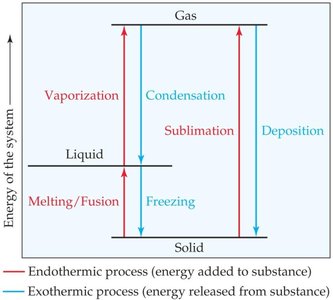
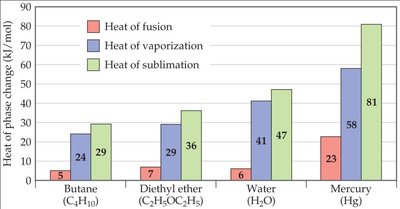
Phase changes involve the transformation between solid, liquid, and gas states. These processes are associated with energy changes:
Melting (Fusion): (endothermic)
Vaporization: (endothermic)
Sublimation: (endothermic)
Freezing: (exothermic)
Condensation: (exothermic)
Deposition: (exothermic)
Heating Curves
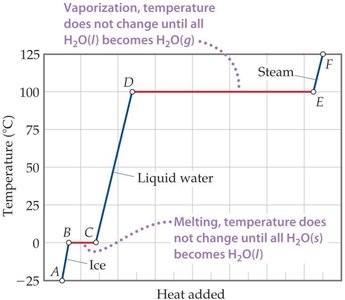
A heating curve is a plot of temperature versus heat added, showing the temperature changes and phase transitions as a substance is heated.
During phase changes (melting, boiling), temperature remains constant as energy is used to break intermolecular forces.
Sloped regions correspond to temperature changes within a single phase.
Vapor Pressure and Boiling Point
Vapor Pressure
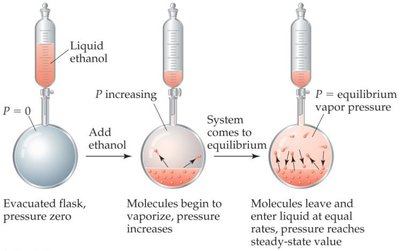
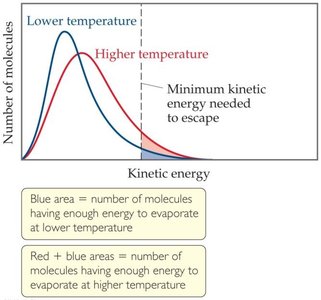
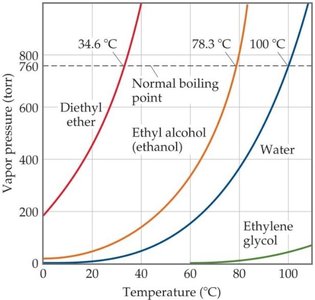
Vapor pressure is the pressure exerted by a vapor in equilibrium with its liquid at a given temperature. It increases with temperature as more molecules have enough kinetic energy to escape the liquid phase.
Dynamic equilibrium is established when the rate of evaporation equals the rate of condensation.
Boiling Point
The boiling point is the temperature at which the vapor pressure of a liquid equals the external pressure. Substances with weaker intermolecular forces have higher vapor pressures and lower boiling points.
Normal boiling point: Boiling point at 1 atm pressure.
Phase Diagrams
Understanding Phase Diagrams
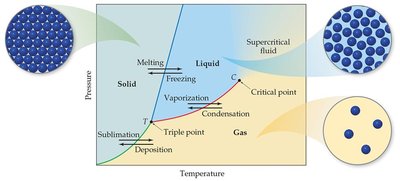
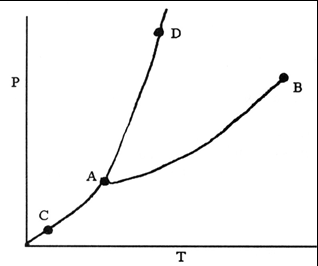
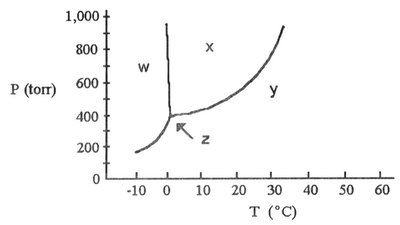
A phase diagram is a plot of pressure versus temperature that shows the conditions under which the different phases of a substance exist and the equilibria between them.
Sublimation curve: Solid-gas equilibrium
Vapor-pressure curve: Liquid-gas equilibrium
Melting curve: Solid-liquid equilibrium
Triple point (T): All three phases coexist in equilibrium
Critical point (C): Beyond this, liquid and gas phases are indistinguishable
Summary Table: Types of Intermolecular Forces and Examples
Type of Force | Occurs Between | Example | Relative Strength |
|---|---|---|---|
Dispersion (London) | All molecules/atoms | CH4, Br2 | Weakest |
Dipole-Dipole | Polar molecules | CH3F, HBr | Stronger |
Hydrogen Bonding | H with N, O, or F | NH3, CH3OH | Much stronger |
Ion-Dipole | Ions and polar molecules | NaCl in H2O | Very strong |
Ionic Bonding | Cations and anions | KBr, NH4NO3 | Strongest |
