 Back
BackLesson 4.7: Intermolecular Forces: Types, Effects, and Physical Properties
Study Guide - Smart Notes
 Tailored notes based on your materials, expanded with key definitions, examples, and context.
Intermolecular Forces
Introduction to Intermolecular Forces
Intermolecular forces are the forces of attraction or repulsion that act between neighboring molecules, atoms, or ions. These forces are responsible for many physical properties of substances, such as boiling point, melting point, viscosity, and surface tension. Unlike intramolecular bonds (such as covalent bonds within a molecule), intermolecular forces operate between molecules and are generally much weaker.
Intramolecular bonds: Chemical bonds within a molecule (e.g., covalent bonds).
Intermolecular forces: Forces between molecules, not within them.
van der Waals forces: A collective term for various intermolecular forces, including dipole–dipole forces, London dispersion forces, and hydrogen bonding.
Changes in the state of matter (solid, liquid, gas) are due to changes in intermolecular forces, not the breaking of intramolecular bonds. For example, when ice melts or water boils, the water molecules remain intact, but the forces between them change.

Types of Intermolecular Forces
Dipole–Dipole Forces
Dipole–dipole forces occur between polar molecules, which have permanent dipoles due to differences in electronegativity between atoms. These forces align the positive end of one molecule with the negative end of another, resulting in attraction.
Dipole–dipole force: The intermolecular force caused when the dipoles of polar molecules position their positive and negative ends near each other.
These forces are about 1% as strong as covalent or ionic bonds and weaken rapidly with increasing distance between molecules.
Hydrogen Bonding
Hydrogen bonding is a special, stronger type of dipole–dipole interaction that occurs when hydrogen is covalently bonded to a highly electronegative atom (nitrogen, oxygen, or fluorine). The large difference in electronegativity and the small size of these atoms allow for unusually strong attractions between molecules.
Hydrogen bond: The strong dipole–dipole force that occurs when a hydrogen atom bonded to N, O, or F is attracted to a partially negative atom on a nearby molecule.
Hydrogen bonds are 10–20 times weaker than covalent bonds but much stronger than other intermolecular forces.
Hydrogen bonding is responsible for the high boiling points of substances like water (H2O), ammonia (NH3), and hydrogen fluoride (HF).
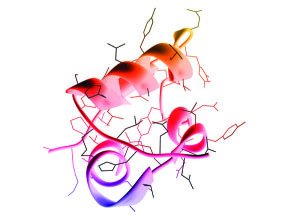
Hydrogen bonds are crucial in biological systems, such as the structure of proteins and DNA.

London Dispersion Forces
London dispersion forces are present in all molecules, whether polar or non-polar. They arise from temporary fluctuations in electron distribution, creating instantaneous dipoles that induce dipoles in neighboring molecules. These forces are generally weak but become significant in large atoms or molecules with many electrons.
London dispersion forces: Intermolecular forces that exist in non-polar molecules; they increase as molecular mass increases.
All substances experience London dispersion forces, but their effects are most noticeable in non-polar molecules and noble gases.
Polarizability: The ease with which an electron cloud can be distorted to form a dipole; larger atoms/molecules are more polarizable.
Intermolecular Forces and Physical Properties
The strength and type of intermolecular forces present in a substance greatly influence its physical properties, such as boiling point, melting point, viscosity, and surface tension.
Molecules with hydrogen bonds have the highest boiling and melting points among molecular substances.
Molecules with dipole–dipole forces have higher boiling and melting points than those with only London dispersion forces.
Larger molecules with more electrons have stronger London dispersion forces and thus higher boiling and melting points.
Sample Problem: Predicting Boiling Points
To predict which molecule has the highest boiling point among H2, I2, F2, Br2, or Cl2:
All are non-polar, so London dispersion forces dominate.
The molecule with the largest molecular mass (I2) has the strongest London dispersion forces and thus the highest boiling point.
Physical Properties of Liquids
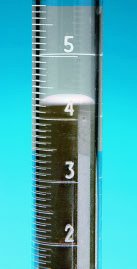
Liquids have higher densities and are less compressible than gases. Their properties, such as surface tension, capillary action, and viscosity, are direct consequences of intermolecular forces.
Surface tension: The resistance of a liquid to increase its surface area, caused by cohesive intermolecular forces.
Capillary action: The spontaneous rising of a liquid in a narrow tube, due to the balance of cohesive (liquid–liquid) and adhesive (liquid–container) forces.
Viscosity: The measure of a liquid’s resistance to flow; higher in substances with strong intermolecular forces or long, entangled molecules.
Summary Table: Types of Intermolecular Forces
Type of Force | Occurs Between | Relative Strength | Example |
|---|---|---|---|
London Dispersion | All molecules (especially non-polar) | Weakest | CH4, noble gases |
Dipole–Dipole | Polar molecules | Intermediate | HCl, SO2 |
Hydrogen Bonding | H bonded to N, O, or F | Strongest (of intermolecular) | H2O, NH3, HF |
Key Equations and Concepts
Boiling point increases with stronger intermolecular forces.
Polarizability increases with atomic/molecular size, enhancing London dispersion forces.
Hydrogen bonds are responsible for the unique properties of water and many biological molecules.
Practice and Application
Predict physical properties (boiling point, viscosity, solubility) based on the types of intermolecular forces present.
Identify all intermolecular forces present in a given molecule (e.g., alcohols have both hydrogen bonding and London dispersion forces).
Summary Points
Intermolecular forces occur between, not within, molecules.
Hydrogen bonds are the strongest intermolecular forces, followed by dipole–dipole and London dispersion forces.
Physical properties such as boiling point, melting point, viscosity, and surface tension increase with the strength of intermolecular forces.
