 Back
BackIntroduction to Solutions and Aqueous Reactions: Study Notes
Study Guide - Smart Notes
 Tailored notes based on your materials, expanded with key definitions, examples, and context.
Introduction to Solutions and Aqueous Reactions
Types of Aqueous Solutions and Solubility
When substances dissolve in water, the process depends on the interactions between solute and solvent particles. The ability of a solute to dissolve in a solvent is determined by the relative strengths of solute-solute, solvent-solvent, and solute-solvent interactions.
Solute-solute interactions: Forces holding solute particles together.
Solvent-solvent interactions: Forces holding solvent molecules together.
Solute-solvent interactions: Forces between solute and solvent particles. If these are strong enough, the solute will dissolve.
Solution formation: Occurs when solute-solvent attractions overcome solute-solute and solvent-solvent attractions.
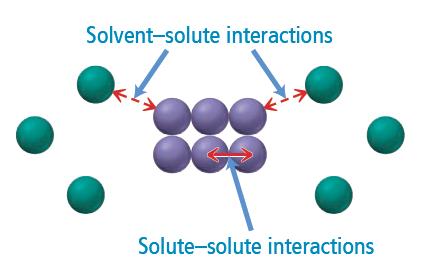
Example: Table salt (NaCl) dissolving in water involves the attraction of water molecules to Na+ and Cl− ions, pulling them away from the crystal lattice.
Charge Distribution in a Water Molecule
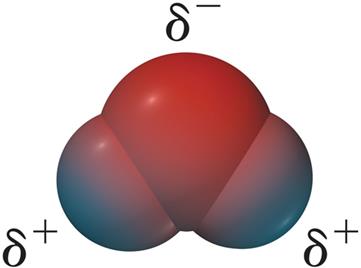
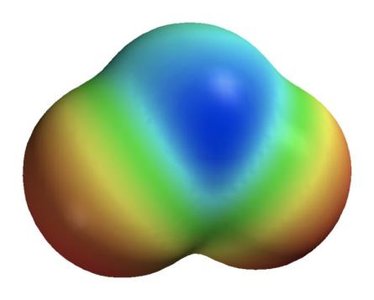
Water is a polar molecule due to its bent shape and the difference in electronegativity between hydrogen and oxygen. This results in an uneven distribution of electron density, giving the oxygen atom a partial negative charge (δ−) and the hydrogen atoms partial positive charges (δ+).
Polarity: Responsible for water's ability to dissolve many ionic and polar substances.
Dissolution of Ionic Compounds
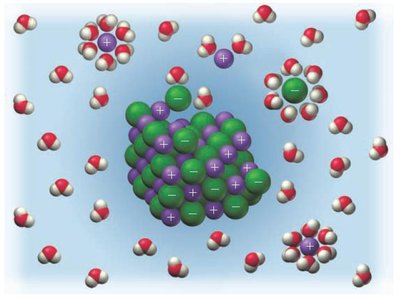
When an ionic compound dissolves in water, each ion is attracted to the surrounding water molecules and is pulled away from the crystal lattice. The ions become surrounded by water molecules, forming a solvation sphere, and are insulated from each other, allowing them to move freely and conduct electricity.
Solvation: The process of surrounding solute particles with solvent molecules.
Electrolyte solution: Contains free-moving ions that conduct electricity.
Sugar (Molecular) Dissolution in Water
Molecular compounds like sugar dissolve in water through interactions between the partial charges on the sugar and water molecules. These interactions are not strong enough to break covalent bonds, so the molecules remain intact in solution.
Nonelectrolyte: A substance that dissolves in water but does not produce ions.
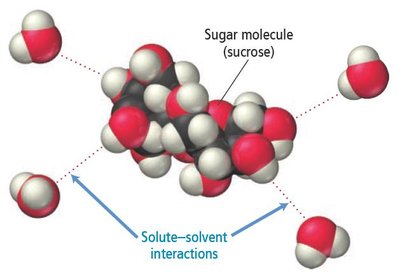
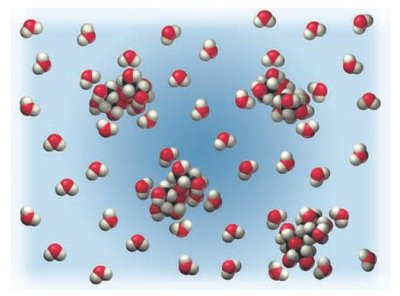
Electrolyte and Nonelectrolyte Solutions
Conductivity of Solutions
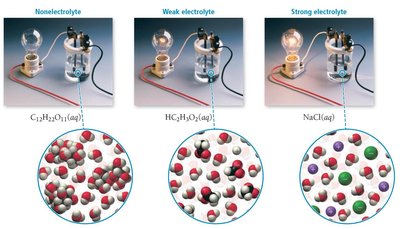
Substances that dissolve in water to form ions are called electrolytes and conduct electricity. Substances that dissolve without forming ions are nonelectrolytes and do not conduct electricity.
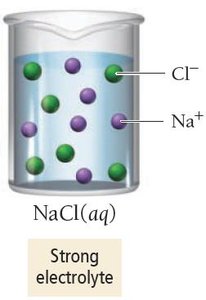
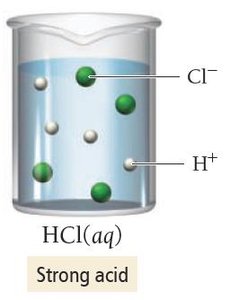
Strong electrolytes: Completely dissociate into ions (e.g., NaCl, strong acids).
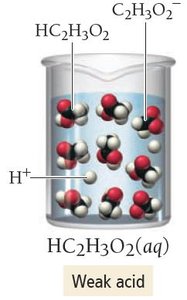
Weak electrolytes: Partially dissociate into ions (e.g., weak acids like acetic acid).
Nonelectrolytes: Do not form ions (e.g., sugar).
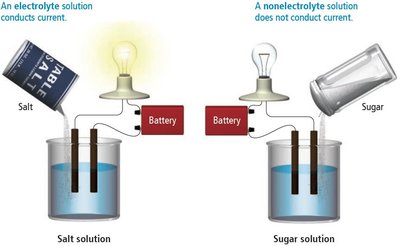
Examples of Electrolytes and Nonelectrolytes
Strong electrolytes: NaCl(aq), HCl(aq)
Weak electrolytes: HC2H3O2(aq) (acetic acid)
Nonelectrolytes: C12H22O11(aq) (sucrose)
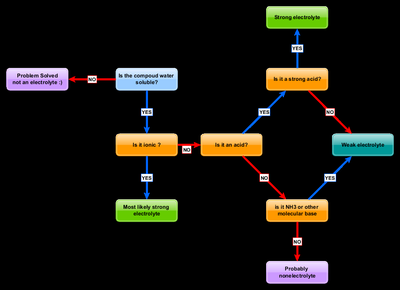
Electrolyte Classification Flowchart
The classification of a substance as a strong, weak, or nonelectrolyte depends on its chemical nature and solubility in water. The flowchart below summarizes the decision process.
Solubility and Solubility Rules
Soluble and Insoluble Compounds
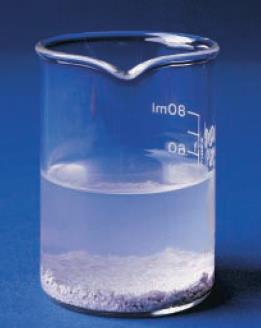
Some ionic compounds are highly soluble in water, while others are not. For example, AgNO3 is soluble, but AgCl is insoluble. Solubility depends on the balance of lattice energy and solvation energy.
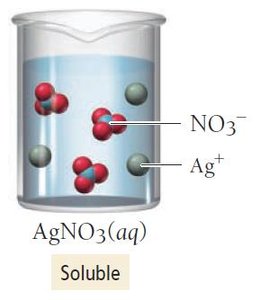
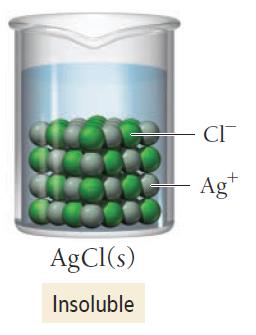
Solubility Rules for Ionic Compounds
Solubility rules are empirical guidelines for predicting whether an ionic compound will dissolve in water.
Compounds Containing the Following Ions Are Generally Soluble | Exceptions |
|---|---|
Li+, Na+, K+, NH4+ | None |
NO3−, C2H3O2− | None |
Cl−, Br−, I− | Ag+, Hg22+, Pb2+ |
SO42− | Sr2+, Ba2+, Pb2+, Ag+, Ca2+ |
Compounds Containing the Following Ions Are Generally Insoluble | Exceptions |
|---|---|
OH−, S2− | Li+, Na+, K+, NH4+, Ca2+, Sr2+, Ba2+ |
CO32−, PO43− | Li+, Na+, K+, NH4+ |
Temperature Dependence of Solubility
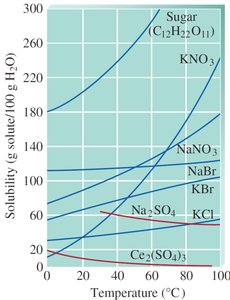
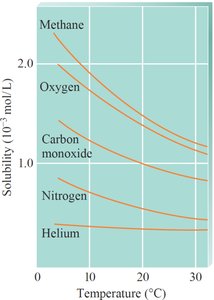
Solubility of most solids increases with temperature, while the solubility of gases decreases as temperature increases.
Solution Concentration
Definitions and Molarity
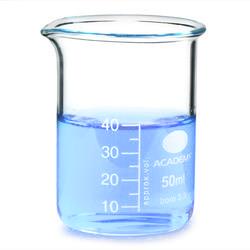
A solution is a homogeneous mixture of two or more substances. The solute is the substance present in a smaller amount, and the solvent is present in a larger amount. The concentration of a solution is often expressed as molarity (M), which is the number of moles of solute per liter of solution:
where is the amount of solute in moles and is the volume of solution in liters.
Preparing Solutions of Known Concentration
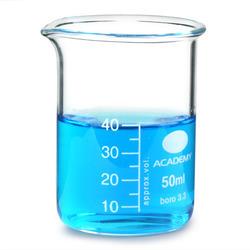
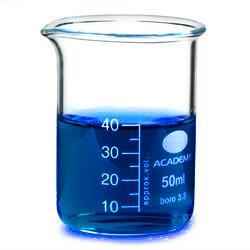
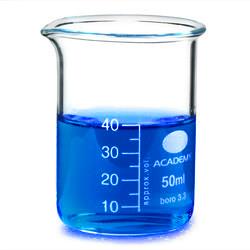
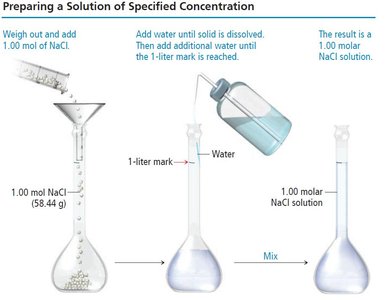
To prepare a solution of a specific concentration, a known mass of solute is dissolved in a small amount of solvent, then diluted to a precise final volume.
Diluting Solutions
To make a less concentrated solution from a stock solution, more solvent is added. The amount of solute remains constant, so:
where and are the concentration and volume of the stock solution, and and are those of the diluted solution.
Solution Stoichiometry
Using Molarity in Chemical Reactions
In aqueous reactions, the volume and concentration of a reactant can be used to calculate the amount in moles, which can then be related to other reactants or products using stoichiometric coefficients.
General plan: Volume of A → Moles of A → Moles of B (using mole ratio) → Output
Precipitation Reactions
Formation of a Precipitate
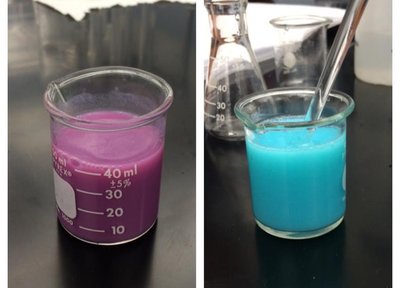
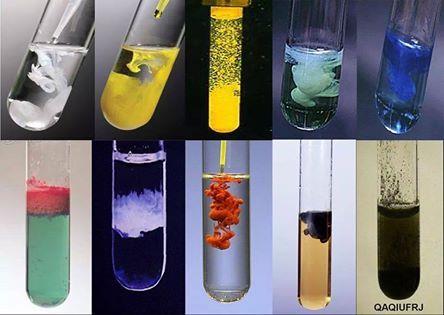
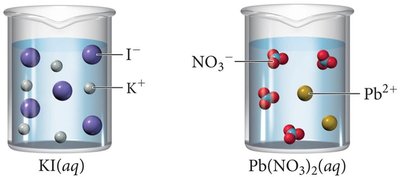
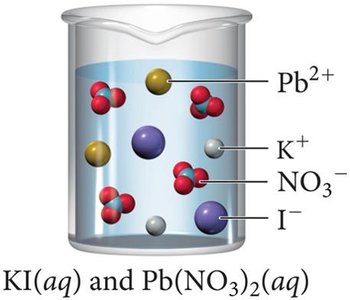
When two solutions are mixed and an insoluble product forms, the reaction is called a precipitation reaction. The solid formed is the precipitate.
Predicting Precipitation Reactions
To predict whether a precipitation reaction will occur:
List the ions in each reactant.
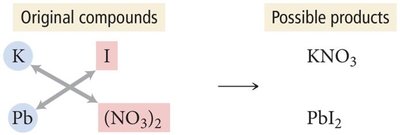
Exchange ions to form possible products.
Determine the solubility of each product using solubility rules.
If neither product is insoluble, write "no reaction" (N.R.).
If a product is insoluble, write the complete balanced equation.
Molecular, Complete Ionic, and Net Ionic Equations
Molecular equation: Shows complete neutral formulas for each compound.
Complete ionic equation: Shows all strong electrolytes as ions.
Net ionic equation: Shows only the species that actually participate in the reaction (spectator ions are omitted).
Acid–Base Reactions
Arrhenius Acid–Base Definition
Acid: Produces H+ (or H3O+) in aqueous solution.
Base: Produces OH− in aqueous solution.
Polyprotic acids: Contain more than one ionizable proton, released sequentially (e.g., H2SO4).
Neutralization Reactions
When an acid reacts with a base, they neutralize each other, forming water and a salt. The net ionic equation for a strong acid and strong base is:
Strong and Weak Acids/Bases
Strong acids: HCl, HBr, HI, H2SO4, HNO3, HClO4
Strong bases: Group 1A and 2A hydroxides
Weak acids/bases: Partially dissociate, equilibrium is established
Titration
Titration is a laboratory technique to determine the concentration of an unknown solution by reacting it with a solution of known concentration (titrant). The equivalence point is when stoichiometric amounts of acid and base have reacted.
Gas-Evolving Reactions
Some reactions produce a gas either directly or by decomposition of a product. For example:
Oxidation–Reduction (Redox) Reactions
Electron Transfer and Oxidation States
Redox reactions involve the transfer of electrons between substances. Oxidation is the loss of electrons, and reduction is the gain of electrons. Oxidation states (numbers) are assigned to track electron flow.
Oxidation: Increase in oxidation state (loss of electrons)
Reduction: Decrease in oxidation state (gain of electrons)
Reducing agent: Causes reduction, is itself oxidized
Oxidizing agent: Causes oxidation, is itself reduced
Rules for Assigning Oxidation Numbers
The sum of oxidation numbers in a neutral molecule is 0; in an ion, it equals the ion's charge.
Pure elements have oxidation number 0.
Monatomic ions: oxidation number equals the ion's charge.
Fluorine: always −1 in compounds.
Hydrogen: +1 (except −1 in hydrides).
Oxygen: −2 (except −1 in peroxides).
Cl, Br, I: usually −1, except with O or F.
Activity Series of Metals
The activity series ranks metals by their tendency to lose electrons (undergo oxidation). Metals at the top are more reactive and better reducing agents. The series helps predict whether a redox reaction will occur.
