 Back
Ions, Electron Configurations, and Periodic Table Organization
Study Guide - Smart Notes
 Tailored notes based on your materials, expanded with key definitions, examples, and context.
Ions and Electron Configurations
Electron Configurations of Elements
Electron configuration describes the arrangement of electrons in an atom's orbitals. It is fundamental to understanding chemical properties and reactivity.
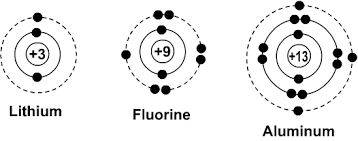
Aluminum (Al): 1s22s22p63s23p1
Calcium (Ca): 1s22s22p63s23p64s2
Iron (Fe): 1s22s22p63s23p64s23d6
Key Point: The electron configuration determines the chemical behavior of an element, including its tendency to form ions.
Periodic Table Organization
The periodic table is organized by increasing atomic number and grouped into blocks and families based on electron configurations.
Families: Groups of elements with similar chemical properties, often found in columns (e.g., alkali metals, halogens).
S Block: Contains elements whose outermost electrons are in s orbitals (Groups 1 and 2).
P Block: Contains elements whose outermost electrons are in p orbitals (Groups 13-18).
Key Point: Elements in the same family have similar valence electron configurations, leading to similar chemical properties.
Metals vs. Nonmetals and Ion Formation
Differences Between Metals and Nonmetals
Metals and nonmetals differ in their physical and chemical properties, as well as their tendencies to form ions.
Metals: Usually shiny, malleable, and good conductors. Tend to lose electrons and form cations (positively charged ions).
Nonmetals: Usually dull, brittle, and poor conductors. Tend to gain electrons and form anions (negatively charged ions).
Ion Formation
An ion is an atom or molecule with a net electric charge due to the loss or gain of electrons. Changing the number of electrons affects the atom's charge, size, and properties.
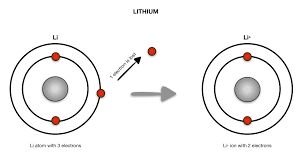
Cations: Formed when metals lose electrons. Example: Lithium (Li) loses one electron to become Li+.
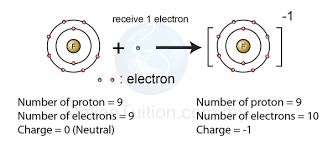
Anions: Formed when nonmetals gain electrons. Example: Fluorine (F) gains one electron to become F-.
Bohr Models and the Octet Rule
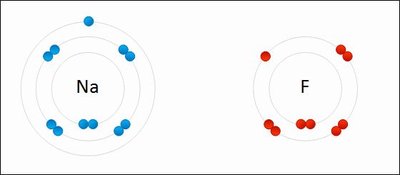
The Bohr model visually represents electrons in energy levels around the nucleus. The octet rule states that atoms tend to gain, lose, or share electrons to achieve eight electrons in their outermost shell, leading to stability.
Lithium: Has one electron in its highest energy level; loses it to form a stable ion.
Fluorine: Has seven electrons in its highest energy level; gains one to complete the octet.
Isotopes and Atomic Structure
Isotopes
Isotopes are atoms of the same element with different numbers of neutrons. Changing the number of protons changes the element's identity, while changing electrons forms ions.
Key Point: Isotopes affect atomic mass but not chemical behavior; ions affect charge and reactivity.
Summary Table: Ion Formation in Metals and Nonmetals
Type | Process | Resulting Ion | Example |
|---|---|---|---|
Metal | Loses electrons | Cation (+) | Li → Li+ |
Nonmetal | Gains electrons | Anion (-) | F → F- |
Key Equations
Electron Configuration Notation: (for Aluminum)
Ion Charge Calculation:
Additional info:
Electron configuration and ion formation are foundational concepts for understanding chemical bonding and periodic trends.
Bohr models are simplified representations; actual electron distributions are described by quantum mechanics.
