 Back
BackLesson 7.4: Le Châtelier’s Principle and Qualitative Changes in Chemical Equilibrium (12 Chem)
Study Guide - Smart Notes
 Tailored notes based on your materials, expanded with key definitions, examples, and context.
Chemical Equilibrium
Dynamic Equilibrium in Chemical Systems
Chemical equilibrium occurs when the rates of the forward and reverse reactions in a closed system are equal, resulting in constant concentrations of reactants and products. This state is dynamic, meaning that reactions continue to occur, but there is no net change in the amounts of substances present.
Dynamic equilibrium: The condition in which the rate of the forward reaction equals the rate of the reverse reaction.
Disturbance: Any change in conditions (concentration, temperature, pressure) that disrupts equilibrium.
Equilibrium shift: The system's response to a disturbance, resulting in new concentrations of reactants and products.
Le Châtelier’s Principle
Definition and Application
Le Châtelier’s principle states that if a system at equilibrium is disturbed by a change in concentration, temperature, or pressure, the system will adjust to partially counteract the disturbance and restore a new equilibrium.
Le Châtelier’s principle: "When a chemical system at equilibrium is disturbed by a change in a property, the system adjusts in a way that opposes the change."
This principle allows chemists to predict the qualitative effects of changes on equilibrium systems.
Widely used in industrial chemistry to maximize product yield (e.g., ammonia synthesis, nitric acid production).
Effects of Concentration Changes
Shifting Equilibrium by Changing Concentrations
Changing the concentration of reactants or products in a system at equilibrium causes the system to shift to oppose the change:
Adding reactant: Shifts equilibrium to the right (toward products). (favors what uses / decreases the reactant)
Removing reactant: Shifts equilibrium to the left (toward reactants).
Adding product: Shifts equilibrium to the left.
Removing product: Shifts equilibrium to the right.
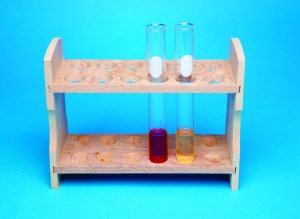
Example: The reaction between iron(III) ions and thiocyanate ions:
Adding more SCN− increases the concentration of FeSCN2+ (red color intensifies).
Removing FeSCN2+ shifts equilibrium to the right, forming more product.
Collision Theory and Concentration
According to collision theory, increasing the concentration of a reactant increases the frequency of collisions, thus increasing the rate of the forward reaction. The system shifts to restore equilibrium by forming more products or reactants, depending on the change.
More reactant = more successful collisions = shift toward products.
More product = more successful collisions in reverse = shift toward reactants.
Applications of Le Châtelier’s Principle
Industrial and Biological Examples
Nitric acid production: Continuous removal of product shifts equilibrium to the right, increasing yield.
Gasification of carbon: Coupled reactions force equilibrium to favor hydrogen production.
Hemoglobin and oxygen: High O2 in lungs shifts equilibrium to oxyhemoglobin; low O2 in tissues shifts equilibrium to release O2.
Effects of Temperature Changes
Endothermic and Exothermic Reactions
Temperature changes affect equilibrium depending on whether the reaction is endothermic or exothermic:
Endothermic reaction:
Exothermic reaction:
Predictions:
Increasing temperature shifts equilibrium toward the endothermic rxn (absorbs energy).
Decreasing temperature shifts equilibrium toward the exothermic rxn (releases energy).
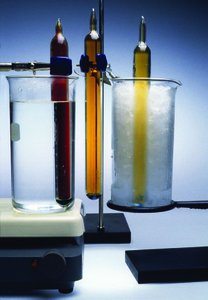
Example (Endothermic):
Heating shifts equilibrium to the right (more NO2, darker color).
Cooling shifts equilibrium to the left (more N2O4, lighter color).
Example (Exothermic):
Cooling shifts equilibrium to the right (more SO3 produced).
Heating shifts equilibrium to the left (more SO2 and O2).
Effects of Pressure and Volume Changes (Gases)
Le Châtelier’s Principle and Gas Volume
Changing the volume of a container with gaseous reactants and products affects equilibrium:
Decreasing volume (increasing pressure): Shifts equilibrium toward the side with fewer gas molecules.
Increasing volume (decreasing pressure): Shifts equilibrium toward the side with more gas molecules.
Tip! The principle explains that the eq'm will favor whatever was removed
Example:
Decreasing volume shifts equilibrium to the right (fewer gas molecules).
Changes That Do Not Affect Equilibrium Position
Catalysts, Inert Gases, and State of Reactants
Catalyst: Lowers activation energy, increases rate of both forward and reverse reactions equally, but does not change equilibrium position.
Inert gas: Adding an inert gas at constant volume increases total pressure but does not affect partial pressures of reactants or products; equilibrium position remains unchanged.
State of reactants: Only changes in the concentration of substances in the same phase as the reaction affect equilibrium. Adding more solid or liquid does not shift equilibrium if that phase is already present.
Summary Table: Effects on Equilibrium Position
Change | Effect on Equilibrium Position |
|---|---|
Increase [Reactant] | Shifts right (toward products) |
Increase [Product] | Shifts left (toward reactants) |
Increase Temperature (Endothermic) | Shifts right |
Increase Temperature (Exothermic) | Shifts left |
Decrease Volume (Gases) | Shifts toward fewer gas molecules |
Add Catalyst | No effect on position |
Add Inert Gas (constant volume) | No effect on position |
Key Terms
Le Châtelier’s principle
Equilibrium shift
Partial pressure
Ideal gas
Catalyst
Inert gas
Practice Questions
Given the equilibrium: , predict the effect of:
(a) Decreasing volume
(b) Increasing temperature
(c) Removing C2H6(g)
(d) Adding more H2(g)
For the equilibrium , what effect does adding chloride ions have on the equilibrium position?
The decomposition of ammonium carbonate is endothermic: . Would the smell of ammonia increase or decrease as temperature increases?
How does a change in temperature affect the equilibrium constant, K, for exothermic and endothermic reactions?
