 Back
Lewis Model of Bonding and Chemical Bonding Concepts
Study Guide - Smart Notes
 Tailored notes based on your materials, expanded with key definitions, examples, and context.
Lewis Model of Bonding
Introduction to Lewis Theory
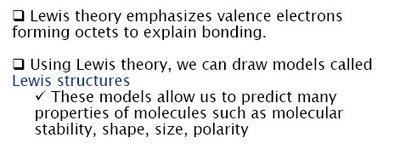
Lewis theory is a foundational model in chemistry that explains how atoms bond by focusing on their valence electrons. It emphasizes the formation of octets, where atoms achieve stability by having eight electrons in their outer shell, similar to noble gases.
Valence Electrons: Electrons in the outermost shell of an atom, crucial for chemical bonding.
Octet Rule: Atoms tend to gain, lose, or share electrons to achieve a full set of eight valence electrons.

Lewis Structures
Using Lewis theory, chemists draw models called Lewis structures to represent molecules. These models help predict molecular stability, shape, size, and polarity.
Lewis Structure: A diagram showing the arrangement of valence electrons around atoms in a molecule.
Applications: Predicts properties such as molecular stability, shape, size, and polarity.

Chemical Bonding
Types of Chemical Bonds
Chemical bonding arises from electrostatic interactions between atoms, resulting from the transfer or sharing of electrons. There are three main types of chemical bonds:
Ionic Bond: Involves the transfer of electrons from one atom to another, creating ions. One atom loses electrons (cation), and another gains electrons (anion).
Covalent Bond: Involves the sharing of electrons between atoms, resulting in a stable molecule.
Metallic Bond: Involves a 'sea' of shared electrons among metal atoms.

Electrostatic Phenomena
Electrostatic forces are fundamental to bonding, being much stronger than gravitational forces at the atomic scale. Examples include the attraction of plastic wrap, explosions in grain silos, and the operation of photocopiers.
Electrostatic Force: The force between charged particles, such as electrons and protons.
Lewis Theory in Practice
Lewis Symbols and Dot Structures
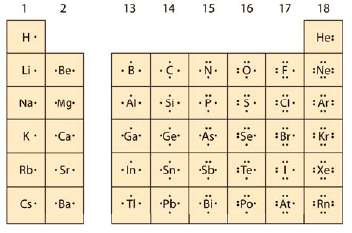
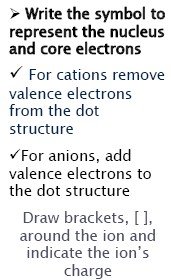
Lewis symbols represent the nucleus and core electrons of an atom, with dots indicating valence electrons.
Cations: Remove valence electrons from the dot structure.
Anions: Add valence electrons to the dot structure.
Notation: Use brackets and indicate the ion's charge.

Example: Ionic Bond Formation
Atoms bond by transferring electrons to achieve noble gas configurations. For example, lithium (Li) transfers an electron to fluorine (F), forming Li+ and F- ions.
Equation:
Noble Gas Configuration: Both ions achieve the electron configuration of noble gases (He and Ne).

Periodic Trends Relevant to Bonding
Ionization Energy
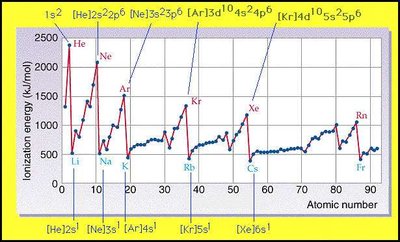
Ionization energy is the energy required to remove an electron from an atom. It shows a periodic trend, increasing across a period and decreasing down a group.
Trend: Highest for noble gases, lowest for alkali metals.
Significance: Indicates how easily an atom can lose an electron.

Electron Affinity
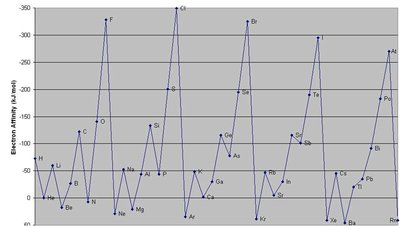
Electron affinity is the energy change when an atom gains an electron. It also follows a periodic trend, with halogens having the highest affinities.
Trend: Highest (most negative) for halogens, lowest for noble gases.
Significance: Indicates how easily an atom can gain an electron.

Bonding and Molecular Structure
Ionic Bonding
Ionic bonding results in the formation of a lattice structure, such as sodium chloride (NaCl), where positive and negative ions are arranged in a repeating pattern.
Lattice Structure: Maximizes electrostatic attraction and stability.

Covalent Bonding
Covalent bonds involve the sharing of electrons between atoms, resulting in molecules with specific shapes and bond energies.
Bond Energy: The energy required to break a bond; related to bond strength.
Bond Length: The distance between nuclei of bonded atoms.
Lewis Structures and Molecular Properties
Drawing Lewis Structures
Lewis structures show bonding pairs and non-bonding pairs (lone pairs) of electrons.
Bonding Pairs: Shared electrons between atoms.
Non-bonding Pairs: Electrons not involved in bonding.
Bond Polarity and Electronegativity
Polar Covalent Bond: Unequal sharing of electrons due to differences in electronegativity.
Electronegativity: The ability of an atom to attract bonding electrons; follows a periodic trend similar to ionization energy.
Polarity Indication: Arrow points to the more negative end, with a "+" at the more positive end.
Central Atom in Lewis Structures
The central atom is usually the one with the lowest subscript in the formula and can form the most bonds. If all atoms form the same number of bonds, the least electronegative atom is usually central.
Examples: CH2O, NOCl, SCl2
Summary Table: Types of Chemical Bonds
Bond Type | Electron Behavior | Example |
|---|---|---|
Ionic | Transfer | NaCl |
Covalent | Sharing | H2O |
Metallic | Delocalized | Fe |
Conclusion
The Lewis model provides a powerful framework for understanding chemical bonding, molecular structure, and periodic trends. Mastery of Lewis structures and the concepts of ionic, covalent, and metallic bonding is essential for predicting the properties and behaviors of molecules in general chemistry.
