 Back
Lewis Model of Bonding and Periodic Trends in General Chemistry
Study Guide - Smart Notes
 Tailored notes based on your materials, expanded with key definitions, examples, and context.
Lewis Model of Bonding
Introduction to Chemical Bonding
Chemical bonding is a fundamental concept in chemistry, describing the interactions that hold atoms together in compounds. Electrostatic forces between charged particles are central to bonding, and these forces are much stronger than gravitational forces at the atomic scale. The transfer or sharing of electrons between atoms leads to the formation of chemical bonds.
Electrostatic phenomena are responsible for everyday effects such as static cling, explosions in grain silos, and the operation of photocopiers.
Bonding results from the force of interaction between atoms, due to the transfer or sharing of electrons.
Types of Chemical Bonds
There are three primary types of chemical bonds, each defined by the nature of electron interaction:
Ionic Bond: Involves the transfer of electrons from one atom to another, resulting in the formation of ions. One atom loses electrons (cation), and another gains electrons (anion).
Covalent Bond: Involves the sharing of electrons between atoms, typically between nonmetals.
Metallic Bond: Involves a 'sea' of shared electrons among metal atoms.
Lewis Theory of Bonding
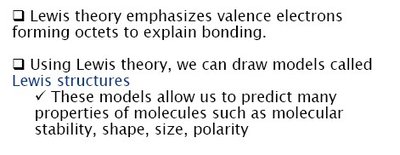
The Lewis theory emphasizes the role of valence electrons in chemical bonding. Atoms tend to form bonds in such a way that they achieve an octet of electrons in their valence shell, mimicking the stable configuration of noble gases.
Lewis structures are models that represent the arrangement of valence electrons around atoms.
These models help predict molecular stability, shape, size, and polarity.
Periodic Trends Relevant to Bonding
Periodic trends such as ionization energy and electron affinity influence how atoms bond and their chemical reactivity.
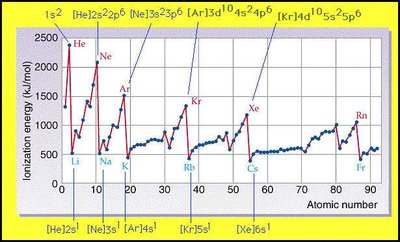
Ionization Energy
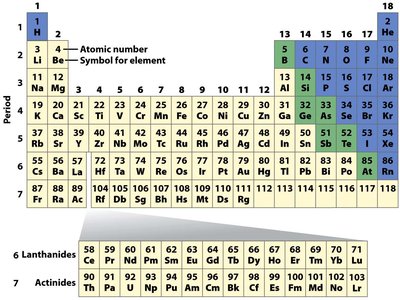
Ionization energy is the energy required to remove an electron from an atom in the gas phase. It generally increases across a period and decreases down a group.
High ionization energy indicates an atom is less likely to lose electrons.
Periodic trend is similar to electronegativity.


Electron Affinity
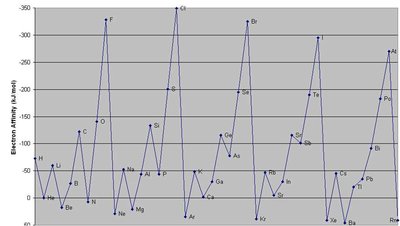
Electron affinity is the energy change when an atom gains an electron. It varies across the periodic table and is related to the electron configuration of the elements.
Atoms with high electron affinity tend to gain electrons easily.
Patterns in electron affinity can be explained by electron configurations.
Noble Gases and Stability
Noble gases are chemically inert due to their stable electron configurations. Other atoms bond to achieve similar stability.
Valency refers to the combining power of an atom, determined by its ability to form bonds.
Lewis Structures and Electron Dot Symbols
Drawing Lewis Structures
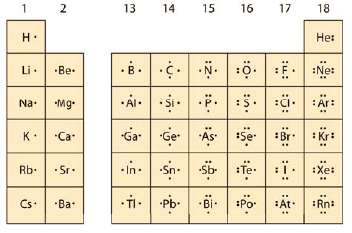
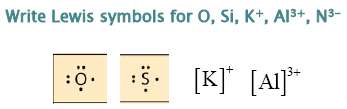
Lewis structures represent atoms and their valence electrons using dots. The symbol of the element represents the nucleus and core electrons, while dots represent valence electrons.
For cations, remove valence electrons from the dot structure.
For anions, add valence electrons to the dot structure.
Brackets are used to indicate the ion's charge.


Ionic Bonding and Lewis Structures
Ionic bonding is illustrated by the transfer of electrons, resulting in ions with noble gas configurations. The Lewis structure shows the electron transfer and the resulting ions.
Example:
Both ions achieve noble gas configurations (He for Li+, Ne for F-).

Covalent Bonding and Lewis Structures
Covalent bonds involve the sharing of electrons between atoms. Lewis structures show shared pairs (bonding pairs) and lone pairs (non-bonding pairs).
Bonding pairs are shared between atoms.
Non-bonding pairs are not shared and belong to a single atom.
Bond Polarity and Electronegativity
Bond Polarity
Bond polarity arises from unequal sharing of electrons in covalent bonds, leading to partial charges on atoms. This is due to differences in electronegativity.
Polarity is indicated by an arrow pointing to the more negative end, with a '+' at the more positive end.
Electronegativity
Electronegativity is the ability of an atom to attract bonding electrons. It follows a periodic trend similar to ionization energy.
Atoms with higher electronegativity attract electrons more strongly.
Central atom in Lewis structure is usually the least electronegative atom that can form the most bonds.
Summary Table: Types of Chemical Bonds
Bond Type | Electron Interaction | Example | Lewis Structure Representation |
|---|---|---|---|
Ionic | Transfer | NaCl | [Na]+ [Cl]- |
Covalent | Sharing | H2O | H:O:H (with shared pairs) |
Metallic | Delocalized | Fe | Sea of electrons |
Additional info: The notes cover the Lewis Model of Bonding, periodic trends (ionization energy, electron affinity), and the drawing of Lewis structures, all of which are core topics in General Chemistry.
