 Back
Lewis Structures, Resonance, and Formal Charge: Study Guide for General Chemistry
Study Guide - Smart Notes
 Tailored notes based on your materials, expanded with key definitions, examples, and context.
Lewis Structures, Resonance, and Formal Charge
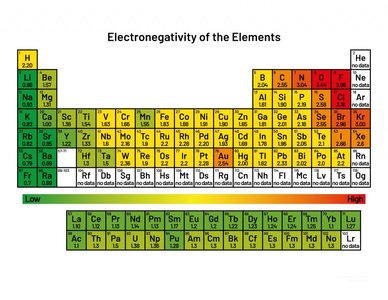
Bond Polarity and Electronegativity
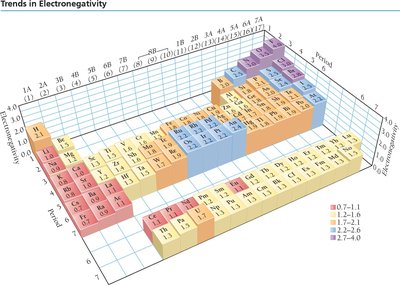
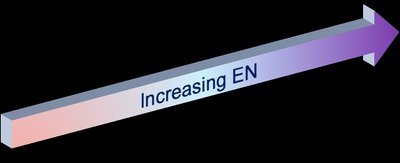
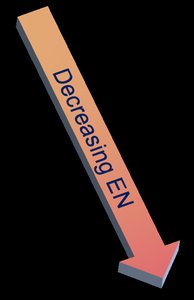
Bond polarity arises from differences in electronegativity between atoms in a molecule. Electronegativity (EN) is the ability of an atom to attract electrons when bonding with other atoms. The greater the difference in EN between two atoms, the more polar the bond.
Electronegativity (EN): Ability of an atom to attract electrons in a chemical bond.
Electron Affinity (EA): Energy released when an atom accepts an additional electron; not the same as EN.
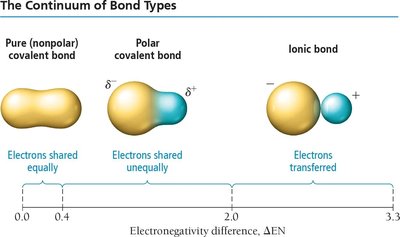
Bond Polarity: Determined by the difference in EN between bonded atoms.
Types of Bonds: Pure covalent (nonpolar), polar covalent, and ionic bonds.
Example: The bond in HCl is polar because Cl is more electronegative than H.
Lewis Structures: Rules and Construction
Lewis structures are diagrams that show the bonding between atoms and the arrangement of valence electrons. They are essential for understanding molecular structure and predicting chemical behavior.
Skeletal Structure: Hydrogen is always terminal; central atom is usually the one with the lowest EN or smallest subscript.
Valence Electrons: Count all valence electrons for the molecule.
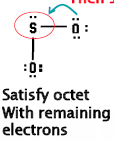
Electron Distribution: Complete octets for terminal atoms (except H), place remaining electrons on the central atom, and form multiple bonds if needed.
Octet Rule: Second-row elements (C, N, O, F) almost always have an octet; third-row and higher elements can have expanded octets.
Formal Charges and Resonance: Show formal charges and resonance forms as needed.
Example: Lewis structure for formaldehyde (CH2O):

Example: Lewis structure for ozone (O3):

Multiple Bonds: Double bonds involve sharing two pairs of electrons; triple bonds involve three pairs.

Resonance Structures
Resonance structures are different possible arrangements of electrons in a molecule that cannot be represented by a single Lewis structure. The actual molecule is a resonance hybrid, which is a blend of all contributing structures.
Resonance: Occurs when more than one valid Lewis structure can be drawn for a molecule.
Resonance Hybrid: The true structure is a weighted average of all resonance forms.
Drawing Resonance: Only electrons are moved; atoms remain in the same positions.
Curved Arrow Notation: Used to show movement of electrons between resonance forms.
Example: Ozone (O3) has two resonance structures.

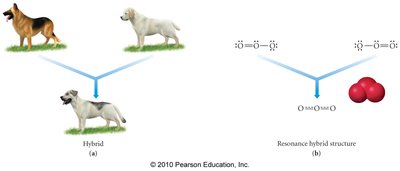
Example: SO2 and NO3- also exhibit resonance.
Formal Charge
Formal charge is a tool used to determine the most stable Lewis structure and the importance of resonance contributors. It is calculated for each atom in a molecule.
Formula:
Preferred Structure: The structure with the most atoms having a formal charge of zero is preferred.
Charge Placement: Negative formal charge should be on the more electronegative atom.
Sum of Formal Charges: Always equals the total charge of the molecule or ion.
Example: Calculating formal charge for the cyanate ion (OCN-):
Atom | Valence Electrons (VE) | Non-bonding Electrons (NB) | Bonding Electrons (B) | Formal Charge (FC) |
|---|---|---|---|---|
O | 6 | 4 | 4 | 0 |
C | 4 | 0 | 4 | 0 |
N | 5 | 2 | 3 | -1 |
Example: Lewis structure for nitrate ion (NO3-):
Example: Lewis structure for carbonate ion (CO32-):
Major Resonance Structures: Rules and Stability
Major resonance structures are those that contribute most to the resonance hybrid. They are determined by the following operational rules:
More atoms with full valence shells (octet rule).
Fewer formal charges.
Formal charges on atoms of matching electronegativity (negative charges on more EN atoms).
Example: For NO3-, the major resonance structure is the one where all atoms (except hydrogen) have a complete octet and negative charge is on the most electronegative atom.
Summary Table: Bond Types and Electronegativity Difference
Bond Type | Electronegativity Difference (ΔEN) | Electron Behavior |
|---|---|---|
Pure Covalent | 0.0–0.4 | Electrons shared equally |
Polar Covalent | 0.5–2.0 | Electrons shared unequally |
Ionic | 2.1–4.0 | Electrons transferred |
Summary Table: Formal Charge Calculation
Atom | Valence Electrons | Non-bonding Electrons | Bonding Electrons | Formal Charge |
|---|---|---|---|---|
O | 6 | 4 | 4 | 0 |
C | 4 | 0 | 4 | 0 |
N | 5 | 2 | 3 | -1 |
Additional info: The notes cover key concepts from Chapter 10 (Lewis Model), Chapter 11 (Resonance, Formal Charge), and aspects of Chapter 9 (Periodic Properties: Electronegativity) in General Chemistry.
