 Back
Lewis Structures, Resonance, and Formal Charge: Study Guide for General Chemistry
Study Guide - Smart Notes
 Tailored notes based on your materials, expanded with key definitions, examples, and context.
Lewis Structures, Resonance, and Formal Charge
Bond Polarity and Electronegativity
Bond polarity arises from differences in electronegativity between atoms in a molecule. Electronegativity (EN) is the ability of an atom to attract electrons when bonding with other atoms, while electron affinity (EA) is the energy released when an atom accepts an additional electron. Understanding these concepts is essential for predicting molecular properties and reactivity.
Electronegativity (EN): Measures an atom's tendency to attract bonding electrons. The Pauling scale is commonly used.
Electron Affinity (EA): Refers to the energy change when an atom gains an electron.
Bond Polarity: Occurs when atoms with different EN values form a bond, resulting in unequal sharing of electrons.
Bond Types: Pure covalent (nonpolar), polar covalent, and ionic bonds are distinguished by the difference in EN ().
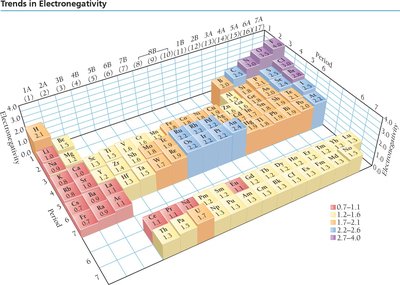
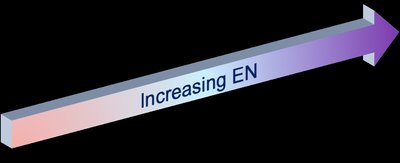
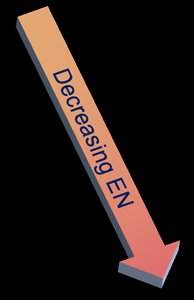
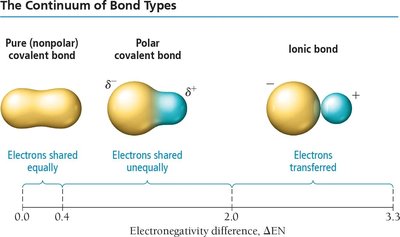
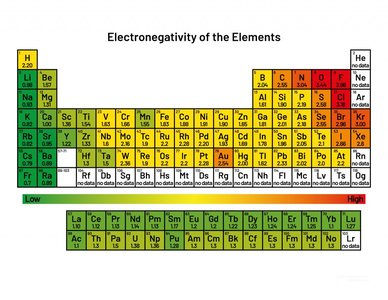
Example: In HCl, Cl is more electronegative than H, so the bond is polar covalent.
Lewis Structures: Rules and Construction
Lewis structures are diagrams that show the arrangement of atoms and electrons in a molecule. They are fundamental for understanding molecular geometry, bonding, and reactivity.
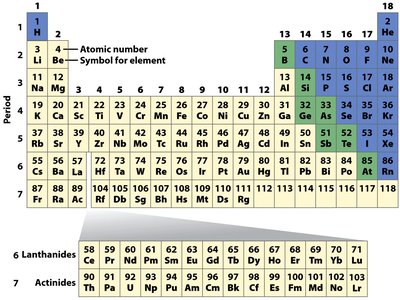
Skeletal Structure: Hydrogen is always terminal; the central atom is usually the one with the lowest EN or smallest subscript.
Valence Electrons: Count all valence electrons from each atom.
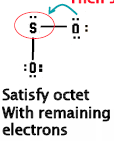
Electron Distribution: Place two electrons in each bond, complete octets for terminal atoms (except H), and put remaining pairs on the central atom.
Multiple Bonds: Form double or triple bonds if needed to satisfy octets.
Formal Charges and Resonance: Show formal charges and resonance forms as needed.

Example: For CO2, count valence electrons (6+4+6=16), distribute electrons to satisfy octets, and form double bonds as needed.
Multiple Bonds and Bond Order
Multiple bonds involve sharing more than one pair of electrons between atoms. Bond order indicates the number of shared pairs and correlates with bond strength and length.
Double Bond: Sharing two pairs of electrons (e.g., O2).
Triple Bond: Sharing three pairs of electrons (e.g., N2).
Bond Order: Single = 1, Double = 2, Triple = 3.

Resonance Structures
Resonance structures are alternative Lewis structures for a molecule that differ only in the placement of electrons, not atoms. The true structure is a resonance hybrid, representing a blend of all valid resonance forms.
Resonance: Occurs when more than one valid Lewis structure can be drawn for a molecule.
Resonance Hybrid: The actual molecule is a hybrid of all contributing resonance structures.
Drawing Resonance: Only electrons are moved; atoms remain fixed. Use curved arrows to indicate electron movement.
Major Resonance Structures: Structures with full octets, minimal formal charges, and negative charges on more electronegative atoms are preferred.

Example: Ozone (O3) has two resonance structures, both contributing to the resonance hybrid.
Formal Charge: Calculation and Application
Formal charge helps determine the most stable Lewis structure and the importance of resonance contributors. It is calculated for each atom in a molecule.
Formula:
Preferred Structure: The structure with the most atoms having formal charge zero is preferred.
Charge Placement: Negative formal charges should be on more electronegative atoms.
Sum of Formal Charges: Always equals the total charge of the molecule or ion.
Example: For the cyanate ion (OCN-), calculate formal charges for each atom to determine the preferred resonance structure.
Operational Rules for Resonance and Formal Charge
To identify the major resonance structure, follow these rules:
More atoms with full valence shells (octet rule).
Fewer formal charges.
Formal charges on atoms of matching electronegativity (negative on more EN atoms).
Example: For nitrate ion (NO3-), draw all resonance structures and assign formal charges to each atom.
Practice: Drawing Lewis Structures and Resonance Forms
Apply the rules above to draw Lewis structures for various molecules and ions, such as SO2, CO32-, and CHO2-. Always show formal charges and resonance forms where applicable.

Additional info: The notes emphasize the importance of formal charge and resonance in determining molecular stability and reactivity. Structures with complete octets and minimal formal charges are most stable and contribute most to the resonance hybrid.
