 Back
Light, Spectra, and the Bohr Model of Hydrogen: Study Notes for General Chemistry
Study Guide - Smart Notes
 Tailored notes based on your materials, expanded with key definitions, examples, and context.
Atomic Structure and the Periodic Table
Overview of Atomic Structure
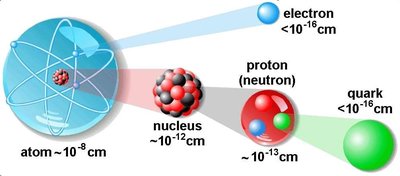
Atoms are composed of a nucleus containing protons and neutrons, surrounded by electrons at comparatively large distances. Understanding atomic structure is fundamental to explaining why elements interact to form compounds.
Atom: The smallest unit of an element, consisting of a nucleus and electrons.
Nucleus: Contains protons and neutrons; much smaller than the overall atom.
Electron: Negatively charged particle, orbits the nucleus.
Quark: Fundamental constituent of protons and neutrons.
The Modern Periodic Table
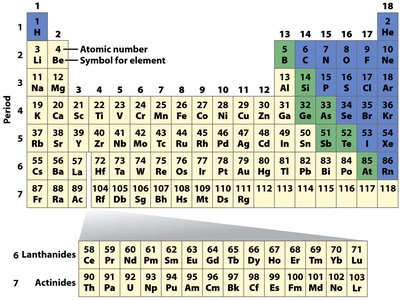
The periodic table organizes elements by increasing atomic number and groups them by similar chemical properties. Transition elements occupy the central block, and the table is divided into periods (rows) and groups (columns).
Period: Horizontal row in the periodic table.
Group: Vertical column in the periodic table.
Transition Elements: Elements in groups 3-12, characterized by partially filled d subshells.
Electromagnetic Radiation and Atomic Spectra
Emission and Absorption Spectra
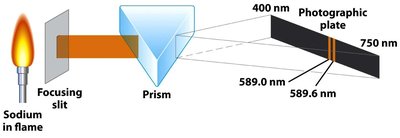
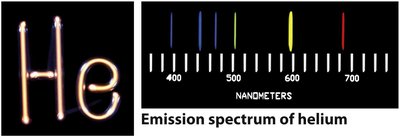
When elements are heated to high temperatures, they emit unique electromagnetic spectra. These spectra are characteristic of each element and are used to identify them. Similarly, the absorption spectrum of an element is unique and results from the absorption of specific wavelengths of light.
Emission Spectrum: The set of wavelengths emitted by an element.
Absorption Spectrum: The set of wavelengths absorbed by an element.
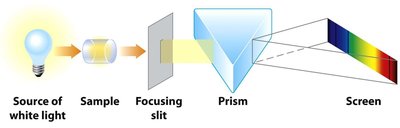
Atomic Spectra and Energy Quantization
Atomic spectra arise from the quantized energy levels of electrons in atoms. Electrons absorb or emit photons when transitioning between energy levels, resulting in discrete spectral lines.
Photon: A quantum of electromagnetic radiation.
Energy Quantization: Electrons can only occupy specific energy levels.


Electromagnetic Spectrum and Wave Properties
The Electromagnetic Spectrum
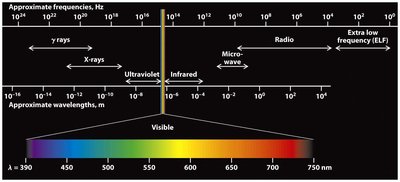
The electromagnetic spectrum is a continuous range of radiant energy, including gamma rays, X-rays, ultraviolet, visible light, infrared, microwaves, and radio waves. The visible region spans approximately 390–750 nm.
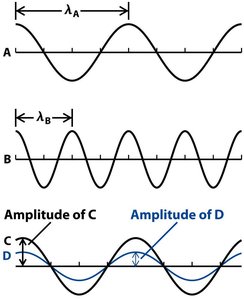
Wavelength (λ): The distance between successive crests or troughs of a wave.
Frequency (f): The number of wave cycles passing a point per unit time.
Relationship: where is the speed of light.
Wave Characteristics
Waves are disturbances that transport energy from one location to another. Key properties include wavelength, amplitude, and frequency.
Amplitude: The height of the wave crest or depth of the trough relative to the center line.
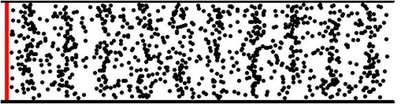
Transverse Wave: Oscillations are perpendicular to the direction of propagation.
Longitudinal Wave: Oscillations are parallel to the direction of propagation.
Electromagnetic Waves
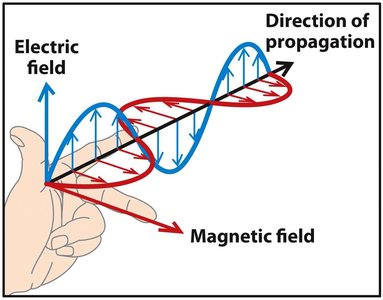
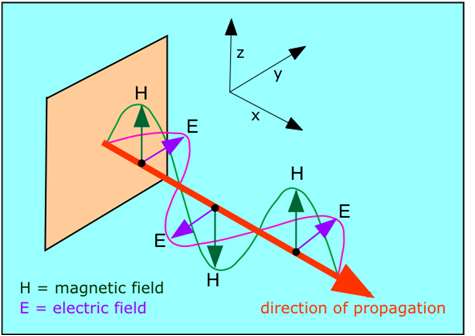
Electromagnetic radiation consists of oscillating electric and magnetic fields that propagate through space. The strengths of these fields vary as the wave travels.
Electric Field: Oscillates perpendicular to the magnetic field.
Magnetic Field: Oscillates perpendicular to the electric field and the direction of propagation.
Wave Properties: Refraction, Diffraction, and Interference
Refraction
Refraction is the bending of waves as they pass from one medium to another, such as light passing through a water droplet.

Diffraction and Interference
Diffraction is the spreading of waves around obstacles, while interference occurs when two waves overlap, resulting in constructive (amplified) or destructive (diminished) interference.
Constructive Interference: Waves add together, increasing amplitude.
Destructive Interference: Waves subtract, decreasing amplitude.

Waves Transport Energy
Energy Transport by Waves
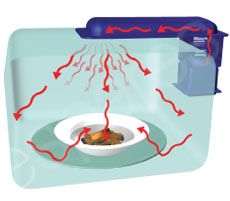
Waves can transport significant amounts of energy, as seen in phenomena such as microwaves heating food and electromagnetic waves interacting with molecules.
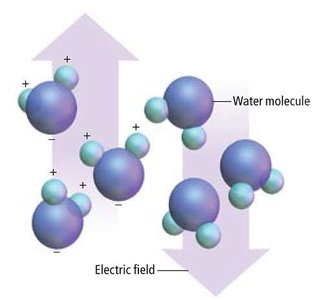
Microwave: Electromagnetic wave used to heat food by causing water molecules to rotate.
Field Polarity: In microwaves, the electric field reverses polarity billions of times per second.
The Bohr Model of the Hydrogen Atom
Bohr Model Fundamentals
The Bohr model describes electrons in atoms as orbiting the nucleus in specific, stable orbits (stationary states) without radiating energy. Each orbit has a defined energy and size, and electrons can transition between orbits by absorbing or emitting photons.
Stationary Orbits: Electrons occupy discrete energy levels.
Energy Gap: The difference in energy between two levels determines the frequency and wavelength of emitted or absorbed photons.
Photon Energy:
Photoelectric Effect
The photoelectric effect is the release of electrons from a metal when it is exposed to electromagnetic radiation. This effect demonstrates that electromagnetic radiation consists of particles called photons, and the energy absorbed or emitted by atoms is quantized.
Work Function (Φ): Minimum energy required to eject an electron from a metal.
Photoelectric Equation:
Line Spectrum and Energy Calculations
The line spectrum of hydrogen is calculated using the Rydberg formula, which relates the wavelength of emitted light to the principal quantum numbers of the initial and final energy levels.
Rydberg Formula:
Energy Level Transition:
Energy Levels and Electron Transitions
Electrons in hydrogen atoms occupy discrete energy levels, designated by the principal quantum number (n). Transitions between these levels involve absorption or emission of specific energy quanta.
Ground State: Lowest energy level (n=1).
Excited State: Any energy level above the ground state.
Electron Transition: Movement between energy levels, resulting in emission or absorption of photons.
Term | Definition |
|---|---|
Ground State | Lowest energy level available to an electron |
Excited State | Any energy state above the ground state |
Electron Transition | Movement between energy levels |
Hydrogen Spectra Calculations
The energy absorbed and emitted by atoms is quantized, and the wavelength of spectral lines can be calculated for transitions between energy levels.
Energy of Transition: J
Wavelength Calculation:
Example: The visible hydrogen spectrum line for and is approximately 656 nm.
Summary Table: Key Equations
Equation | Description |
|---|---|
Speed of light, wavelength, and frequency relationship | |
Photon energy | |
Rydberg formula for hydrogen spectrum | |
Energy difference between hydrogen atom levels |
Additional info: Academic context was added to clarify the Bohr model, photoelectric effect, and wave properties, as well as to provide definitions and examples for key terms and equations.
