 Back
Limiting Reagents, Percent Yield, and Stoichiometry in Chemical Reactions
Study Guide - Smart Notes
 Tailored notes based on your materials, expanded with key definitions, examples, and context.
Limiting Reagents and Chemical Reactions
Introduction to Limiting Reagents
In chemical reactions, the limiting reagent is the reactant that is completely consumed first, thus determining the maximum amount of product that can be formed. Identifying the limiting reagent is essential for accurate stoichiometric calculations and for predicting the outcome of reactions.
Limiting reagent: The reactant that restricts the amount of product formed.
Excess reagent: The reactant(s) that remain after the reaction is complete.
Stoichiometry: The calculation of reactants and products in chemical reactions using balanced equations.
Example: Making sandwiches: If you need 2 slices of bread, 3 slices of ham, and 1 slice of cheese per sandwich, the ingredient you run out of first limits the number of sandwiches you can make.
Real-World Analogy: Sandwich Example
To illustrate limiting reagents, consider making ham sandwiches. If you have 20 slices of bread, 24 slices of ham, and 12 slices of cheese, the number of complete sandwiches is limited by the ingredient you have in the smallest proportional amount.
Sandwich "reaction": 2 Bd + 3 Hm + 1 Ch → Bd2Hm3Ch
Calculate maximum sandwiches: Bread (20/2 = 10), Ham (24/3 = 8), Cheese (12/1 = 12). The limiting reagent is ham, so you can make 8 sandwiches.
Any leftover ingredients are excess reagents.
Stoichiometry and Percent Yield
Balancing Chemical Equations
Balanced chemical equations are fundamental for stoichiometric calculations. Each equation must have equal numbers of atoms for each element on both sides.
Example: 2 Al + Fe2O3 → Al2O3 + 2 Fe
Balancing ensures conservation of mass and accurate calculations.
Calculating Theoretical Yield
The theoretical yield is the maximum amount of product that can be formed from the limiting reagent, calculated using stoichiometry and molar masses.
Convert mass of reactants to moles using molar mass.
Use the balanced equation to determine the mole ratio between reactants and products.
Calculate the mass of product using the mole ratio and molar mass.
Example: If 124 g of Al reacts with 613 g of Fe2O3, determine which is the limiting reagent and calculate the mass of Fe produced.
Percent Yield Calculation
Percent yield measures the efficiency of a reaction, comparing the actual yield to the theoretical yield.
Formula:
Example: If 28.5 g of NaBH4 are produced when 1.05 moles of NaH react, calculate the percent yield after determining the theoretical yield.
Limiting Reagent Practice Problems
Stepwise Approach to Limiting Reagent Problems
Solving limiting reagent problems involves several steps:
Determine the limiting reagent by comparing mole ratios.
Calculate the theoretical yield of the product.
Determine how much of the excess reagent is used.
Calculate the leftover amount of the excess reagent.
Example: Aluminum and Iron(III) Oxide Reaction
Given 124 g of Al and 613 g of Fe2O3:
Convert masses to moles: Al (), Fe2O3 ()
Use the balanced equation to find the limiting reagent.
Calculate the mass of Fe produced using stoichiometry.
Determine the leftover Fe2O3 after the reaction.
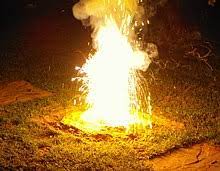
Example: Sulfur and Oxygen Reaction
Given 675.2 g S8 and 975.2 g O2:
Balance the equation: S8 + 12 O2 → 8 SO3
Convert masses to moles: S8 (), O2 ()
Determine the limiting reagent and calculate the mass of SO3 produced.
Calculate the leftover amount of the excess reagent.
Applications: Titration and Concentration Determination
Mohr Method for Chloride Determination
The Mohr method is a titration technique used to determine the concentration of chloride ions in a solution by reacting Cl- with AgNO3.
Reaction: Cl-(aq) + AgNO3(aq) → AgCl(s) + NO3-(aq)
At the equivalence point, all Cl- has reacted with AgNO3.
Calculate [Cl-] using the volume and molarity of AgNO3:
(1:1 ratio)
Example: 27.80 mL of 0.05000 M AgNO3 titrates 25.00 mL seawater sample.
Useful Molar Masses
Compound | Molar Mass (g/mol) |
|---|---|
Al | 26.98 |
Fe | 55.85 |
Al2O3 | 102.0 |
Fe2O3 | 159.7 |
S8 | 256.6 |
O2 | 32.00 |
SO3 | 80.07 |
NaBH4 | 37.83 |
Summary
Understanding limiting reagents, percent yield, and stoichiometry is crucial for predicting the outcomes of chemical reactions and for laboratory calculations. These concepts are foundational for General Chemistry and are applied in both industrial and laboratory settings.
