 Back
BackLiquids, Solids, and Intermolecular Forces: Structured Study Notes
Study Guide - Smart Notes
 Tailored notes based on your materials, expanded with key definitions, examples, and context.
Liquids, Solids, and Intermolecular Forces
Review of Types of Chemical Bonds
Chemical bonds are the fundamental interactions that hold atoms together in compounds. Understanding the types of bonds is essential for predicting molecular properties and behaviors.
Ionic Bond: Formed between a metal and a nonmetal, involving the transfer of electrons and resulting in electrostatic attraction between ions.
Pure Covalent Bond: Formed between two nonmetals with no electronegativity difference (often the same element), resulting in equal sharing of electrons.
Polar Covalent Bond: Formed between two nonmetals with significant electronegativity difference, resulting in unequal sharing of electrons.
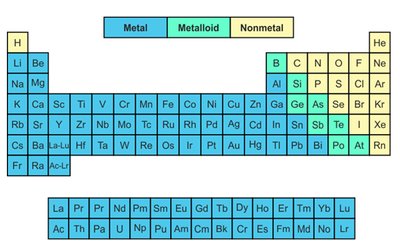
Identifying Metals and Nonmetals
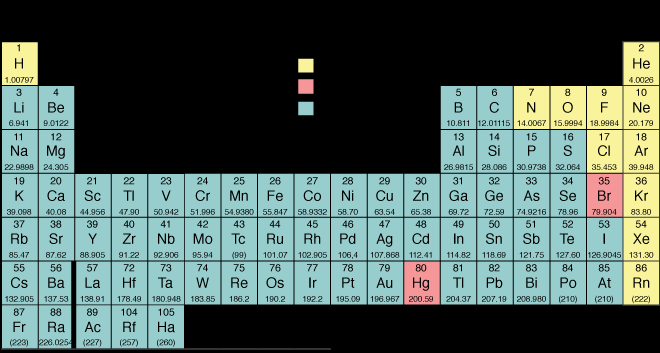
The periodic table is divided by a diagonal line separating metals (left) from nonmetals (right). Ionic compounds are typically formed from metals and nonmetals, while covalent molecules are formed from two or more nonmetals.
Examples of Ionic Compounds: NaCl, MgO, Al2O3
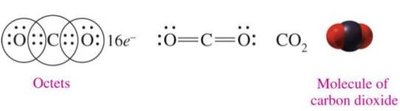
Examples of Covalent Molecules: H2O, CO2, C6H12O6
Ionic Bond in the Lewis Model
Ionic bonds involve the transfer of electrons from a metal to a nonmetal, forming ions that are held together by electrostatic (Coulombic) attraction. The strength of these attractions is measured by lattice energy.
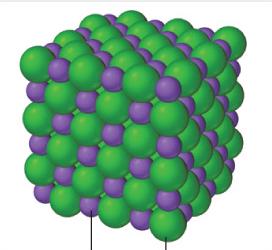
Lewis Theory Predictions for Ionic Bonding
Lewis theory uses the octet rule (8 valence electrons) to predict how many electrons a metal should lose or a nonmetal should gain for stability. This helps predict ionic compound formulas and bond strengths.
Group 1A–3A: Metals form cations by losing electrons.
Group 6A–7A: Nonmetals form anions by gaining electrons.


Predicting Charges of Monatomic Ions
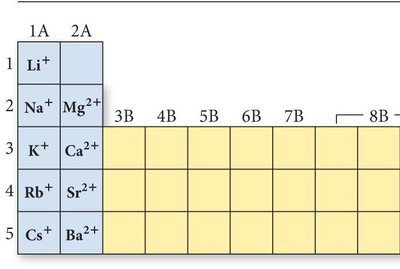
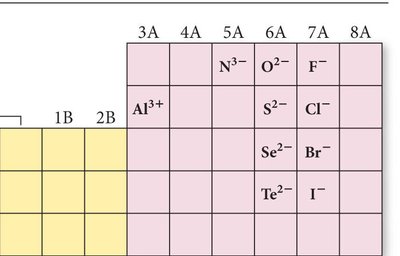
The charge of monatomic ions is determined by their group number in the periodic table.
Group 1A: Alkali metals form 1+ cations.
Group 2A: Alkaline earth metals form 2+ cations.
Group 3A: Metals form 3+ cations.
Group 6A: Nonmetals form 2– anions.
Group 7A: Halogens form 1– anions.
Formula of Ionic Compounds
Ionic compound formulas are written as the smallest whole number ratio of ions that yields a neutral compound.
Examples: Na+ + Cl– = NaCl; Mg2+ + O2– = MgO
Polyatomic ions: Al3+ + NO3– = Al(NO3)3
Pure Covalent Bond in Lewis Model
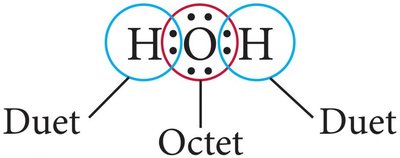
Atoms achieve an octet by sharing valence electrons, forming covalent bonds. If both atoms have the same electronegativity, the bond is pure covalent and electron sharing is equal.

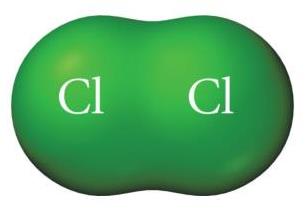
Double and Triple Covalent Bonds
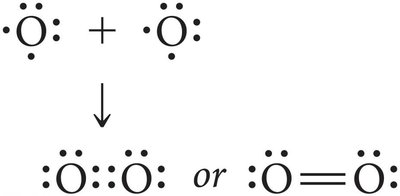
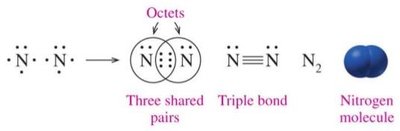
Double bonds involve two pairs of shared electrons, while triple bonds involve three pairs. Both types occur between atoms of equal electronegativity, resulting in nonpolar bonds.

Polar Covalent Bond in Lewis Model
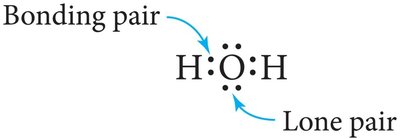
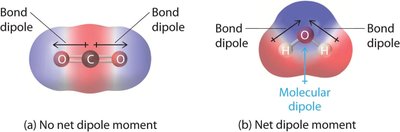
Polar covalent bonds form when atoms with different electronegativities share electrons unequally, resulting in partial charges and a bond dipole.
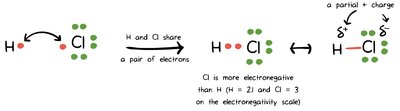
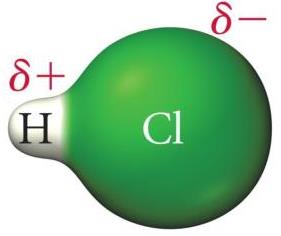
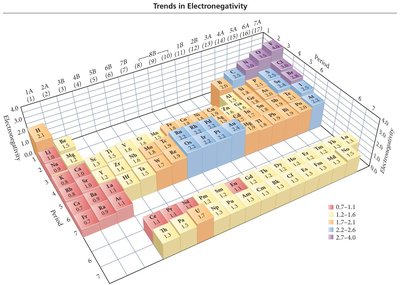
Electronegativity and Bond Type
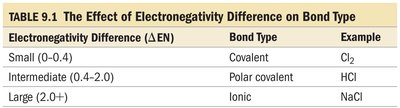
Electronegativity is the ability of an atom to attract bonding electrons. It increases across a period and decreases down a group. The difference in electronegativity determines bond type:
0–0.4: Pure covalent (nonpolar)
0.5–1.9: Polar covalent
≥2.0: Ionic
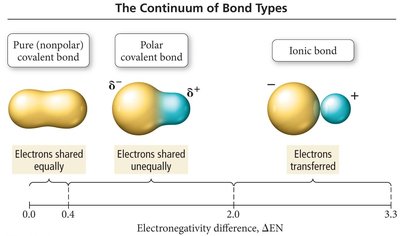
Electronegativity Difference (ΔEN) | Bond Type | Example |
|---|---|---|
Small (0–0.4) | Covalent | Cl2 |
Intermediate (0.4–2.0) | Polar covalent | HCl |
Large (2.0+) | Ionic | NaCl |
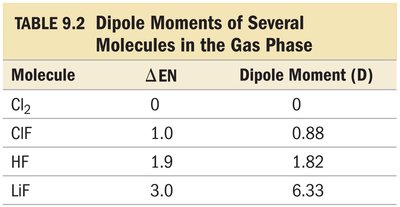
Molecule | ΔEN | Dipole Moment (D) |
|---|---|---|
Cl2 | 0 | 0 |
ClF | 1.0 | 0.88 |
HF | 1.9 | 1.82 |
LiF | 3.0 | 6.33 |
Intermolecular Forces of Attraction (IMF)
Kinetic–Molecular Theory and States of Matter
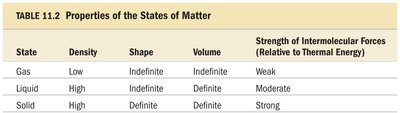
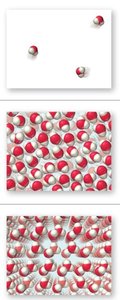
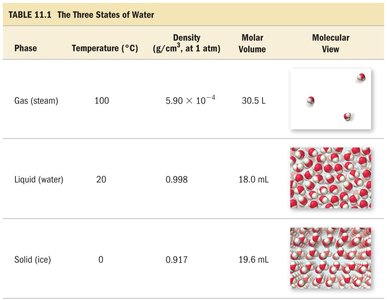
The state of matter depends on the kinetic energy of particles and the strength of intermolecular forces. Solids have strong IMF, liquids have moderate IMF, and gases have weak IMF.
State | Density | Shape | Volume | Strength of IMF |
|---|---|---|---|---|
Gas | Low | Indefinite | Indefinite | Weak |
Liquid | High | Indefinite | Definite | Moderate |
Solid | High | Definite | Definite | Strong |
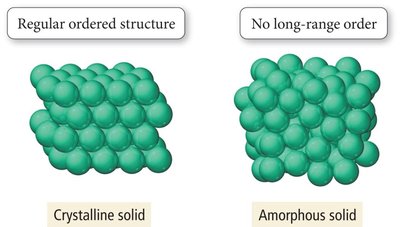
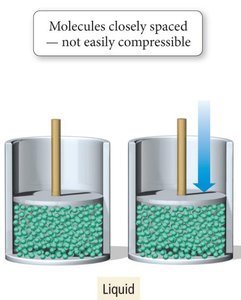
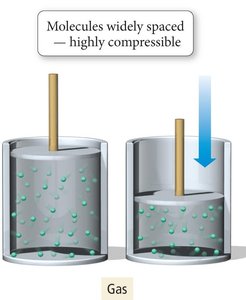
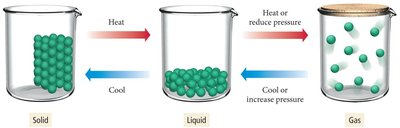
Phase | Temperature (°C) | Density (g/cm³) | Molar Volume | Molecular View |
|---|---|---|---|---|
Gas (steam) | 100 | 5.90 × 10⁻⁴ | 30.5 L |
|
Liquid (water) | 20 | 0.998 | 18.0 mL |
|
Solid (ice) | 0 | 0.917 | 19.6 mL |
|
Intermolecular Forces: Types and Strengths
IMFs are responsible for the physical properties of substances. The main types are:
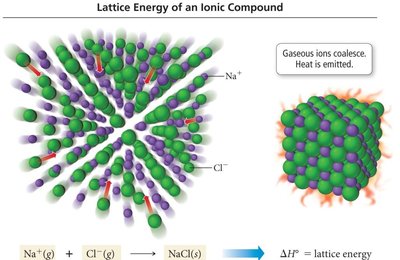
Ion–Ion Force: Electrostatic attraction between cations and anions in ionic compounds.
Ion–Dipole Force: Attraction between ions and polar molecules.
Dipole–Dipole Force: Attraction between polar molecules.
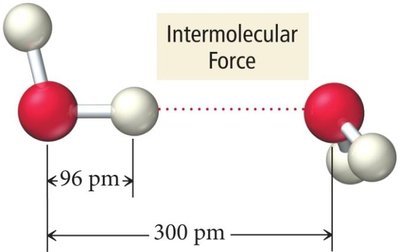
Hydrogen Bonding: Strong dipole–dipole attraction when H is bonded to F, O, or N.
Dipole–Induced Dipole Force: Attraction between polar and nonpolar molecules.
Dispersion Force (London Dispersion): Temporary polarity due to unequal electron distribution.
Ion–Ion Force and Lattice Energy
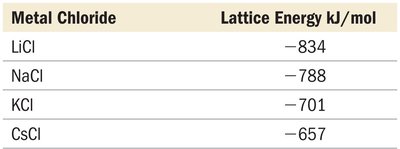
The strength of ionic attractions is measured by lattice energy, which depends on ion charge and size. Higher charge and smaller ions result in stronger attractions and higher lattice energy.
Metal Chloride | Lattice Energy (kJ/mol) |
|---|---|
LiCl | –834 |
NaCl | –788 |
KCl | –701 |
CsCl | –657 |
Ion–Dipole Force
Ion–dipole forces occur between ions and polar molecules, such as NaCl dissolved in water. The strength of these attractions affects solubility and enthalpy of hydration.
Dipole–Dipole Attractions
Dipole–dipole forces are present in polar covalent molecules and are weaker than ionic or ion–dipole forces. They increase boiling and melting points compared to nonpolar molecules.
Hydrogen Bonding
Hydrogen bonding is a strong type of dipole–dipole force occurring when H is bonded to F, O, or N. It significantly increases boiling and melting points and affects physical properties like density and heat capacity.
Dispersion Forces (London Dispersion)
Dispersion forces arise from temporary dipoles due to electron distribution fluctuations. They are present in all molecules, but are the only IMF in nonpolar molecules. Larger molecules have stronger dispersion forces.
Summary Table: IMF Strengths
Type of IMF | Relative Strength | Example |
|---|---|---|
Ion–Ion | Strongest | NaCl |
Ion–Dipole | Strong | NaCl in H2O |
Hydrogen Bond | Strong (for covalent) | H2O, NH3 |
Dipole–Dipole | Moderate | HCl, CH2O |
Dispersion | Weakest | O2, CH4 |
Physical Properties Related to IMF
Surface Tension
Surface tension is the energy required to increase the surface area of a liquid. Stronger IMF results in higher surface tension. Raising temperature decreases surface tension.
Viscosity
Viscosity is a liquid's resistance to flow. Stronger IMF and less spherical molecular shape increase viscosity. Higher temperature decreases viscosity.
Capillary Action and Meniscus
Capillary action is the ability of a liquid to rise in a thin tube due to cohesive and adhesive forces. The meniscus shape depends on the balance between these forces.
Vaporization and Condensation
Vaporization is the process where molecules escape the liquid phase to become vapor, requiring energy (endothermic). Condensation is the reverse, releasing energy (exothermic).
Dynamic Equilibrium and Vapor Pressure
In a closed container, vaporization and condensation reach a dynamic equilibrium. The pressure exerted by vapor in equilibrium with its liquid is called vapor pressure.
Effect of IMF on Vapor Pressure and Boiling Point
Weaker IMF leads to higher vapor pressure and lower boiling point. Stronger IMF leads to lower vapor pressure and higher boiling point.
Clausius-Clapeyron Equation
The relationship between vapor pressure and temperature is exponential and can be linearized for calculation:
Phase Diagrams and Critical Point
Phase diagrams show the state of matter at various temperatures and pressures. The critical point is where a substance becomes a supercritical fluid, with properties of both liquid and gas.
Water: An Extraordinary Substance
Water is unique due to its hydrogen bonding, high specific heat, and expansion upon freezing. It is an excellent solvent for ionic and polar substances.
Additional info: These notes expand on the original lecture slides and images, providing definitions, examples, and equations for clarity and completeness.
