 Back
Mock Exam 3 Study Guide: General Chemistry Concepts and Applications
Study Guide - Smart Notes
 Tailored notes based on your materials, expanded with key definitions, examples, and context.
Chemical Quantities & Aqueous Reactions
Solubility Rules for Ionic Compounds in Water
Solubility rules help predict whether an ionic compound will dissolve in water. These rules are essential for understanding precipitation reactions and solution chemistry.
Soluble ions: Compounds containing Li+, Na+, K+, Rb+, Cs+, NH4+ are generally soluble.
Soluble anions: NO3-, C2H3O2- are always soluble.
Halides (Cl-, Br-, I-): Soluble except with Ag+, Pb2+, Hg22+.
Sulfates (SO42-): Soluble except with Ba2+, Pb2+, Ca2+, Sr2+, Hg22+.
Insoluble compounds: Ionic compounds not containing the above ions are usually insoluble.
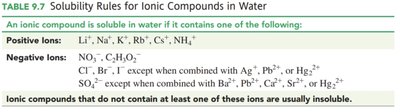
Example: Calcium sulfate (CaSO4) is insoluble because Ca2+ and SO42- are an exception to the solubility rule.
Atoms & Elements
The Periodic Table of the Elements
The periodic table organizes elements by increasing atomic number and groups them by similar chemical properties. It is fundamental for predicting element behavior, bonding, and reactivity.
Groups: Vertical columns; elements in the same group have similar properties.
Periods: Horizontal rows; properties change progressively across a period.
Atomic number: Number of protons in the nucleus.
Element symbol: One or two letters representing the element.
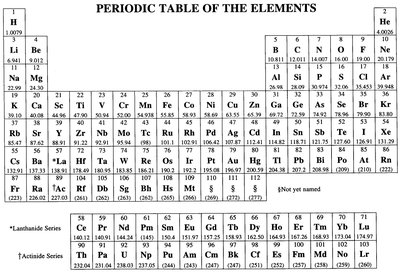
Example: Sodium (Na) is in Group 1, indicating it is an alkali metal and highly reactive.
Chemical Reactions
Combustion and Stoichiometry
Combustion reactions involve a fuel reacting with oxygen to produce carbon dioxide and water. Stoichiometry allows calculation of product amounts from reactant quantities.
Complete combustion of methane:
Mole relationships: Use coefficients from balanced equations to determine product moles.
Example: 1.5 mol of CH4 produces 1.5 mol of CO2 in complete combustion.
Solutions
Concentration Calculations
Concentration is a measure of the amount of solute dissolved in a given volume of solution, commonly expressed in molarity (M).
Molarity formula:
Dilution:
Example: Adding 5.0 mol HCl to 2.0 L water yields .
Acid and Base Equilibrium
pH and pOH Calculations
pH measures the acidity of a solution, while pOH measures its basicity. Both are related to the concentrations of hydronium and hydroxide ions.
pH formula:
pOH formula:
Relationship:
Example: Solution A with pH 4.0 has ; Solution B with pH 7.0 has .
Gases
Gas Laws
Gas laws describe the relationships between pressure, volume, temperature, and amount of gas.
Boyle's Law: (pressure and volume inversely related)
Charles' Law: (volume and temperature directly related)
Avogadro's Law: (volume and moles directly related)
Gay-Lussac's Law: (pressure and temperature directly related)
Example: Expanding a balloon from 1.0 L to 10.0 L at constant temperature and moles: .
Organic Chemistry
Alkanes, Alkenes, and Isomerism
Organic compounds are classified by their functional groups and carbon skeletons. Alkanes are saturated hydrocarbons, alkenes contain double bonds, and isomers have the same formula but different structures.
Alkane example: Butane (CH3-CH2-CH2-CH3)
Alkene example: 2-pentene (contains a double bond at the second carbon)
Cis-trans isomers: Occur in alkenes due to restricted rotation around the double bond.
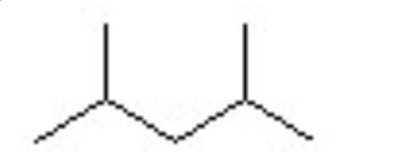
Example: The structure shown below is 2,4-dimethylpentane, an alkane with two methyl groups attached at carbons 2 and 4.
Hydration of Alkenes
Hydration is the addition of water to an alkene, typically catalyzed by acid, resulting in the formation of an alcohol.
General reaction:
Markovnikov's rule: The hydrogen atom adds to the carbon with more hydrogens; the hydroxyl group adds to the other carbon.
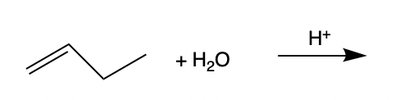
Example: Hydration of 1-butene yields 2-butanol.
Additional info:
Some answers and chemical names were inferred from context and typical exam content.
Images included only where directly relevant to the explanation.
