 Back
Molecular Orbital Theory and Bonding in Diatomic Molecules
Study Guide - Smart Notes
 Tailored notes based on your materials, expanded with key definitions, examples, and context.
Molecular Orbital Theory (MOT)
Introduction to MOT
Molecular Orbital Theory (MOT) is a fundamental approach to understanding chemical bonding in molecules, especially diatomic species. It explains how atomic orbitals combine to form molecular orbitals, which can be classified as bonding, antibonding, or nonbonding. MOT is essential for predicting bond order, stability, bond strength, and the existence of molecules.
Molecular orbitals are formed by the linear combination of atomic orbitals (LCAO) from the atoms in a molecule.
MOT considers s, p, and d orbitals of the central atom.
It explains the formation of σ (sigma), π (pi), and δ (delta) bonds.
MOT can explain the properties of molecules such as N2, O2, HCl, CO, and coordination complexes.
Bonding and Antibonding Molecular Orbitals
Bonding orbitals result from constructive interference of atomic orbitals, increasing electron density between nuclei. Antibonding orbitals arise from destructive interference, creating a nodal plane and reducing electron density between nuclei.
Bonding orbital (σ): Enhanced probability density in the internuclear region due to constructive overlap.
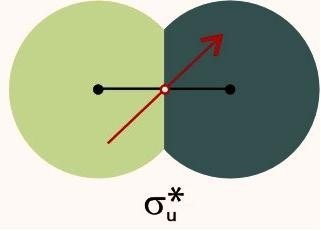
Antibonding orbital (σ*): Reduced probability density in the internuclear region due to destructive overlap; presence of a nodal plane.
Mathematical representation for H2 molecule:
Bonding:
Antibonding:
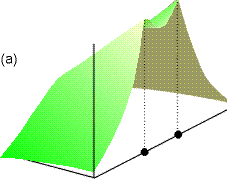
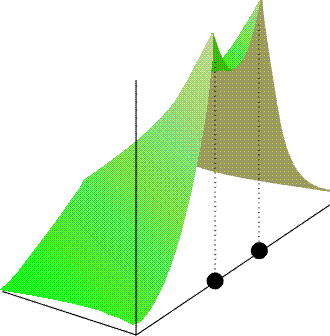
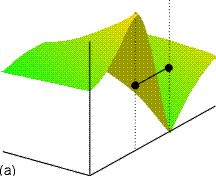
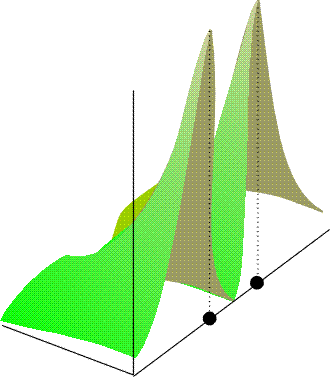
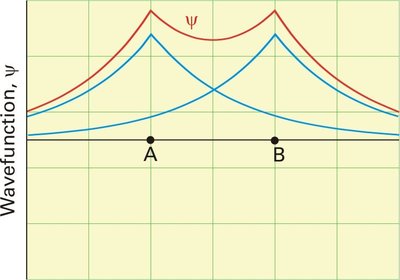
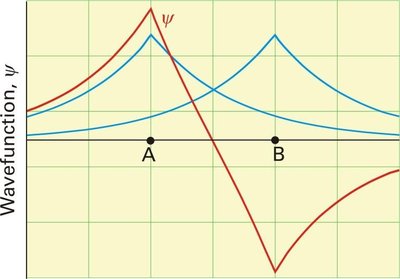
Bonding and Antibonding MO’s: Electron Density Variation
The electron density between nuclei is increased in bonding orbitals and decreased in antibonding orbitals, with a node midway between nuclei in the latter.
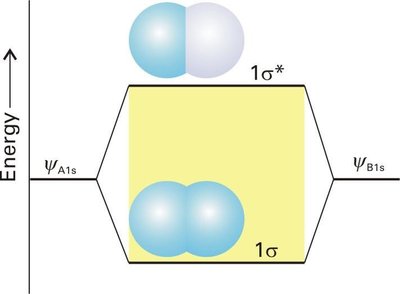
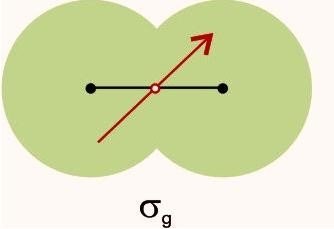
Symmetry and Inversion in Molecular Orbitals
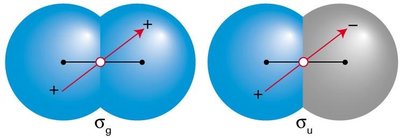
Molecular orbitals are characterized by their symmetry under inversion. In homonuclear diatomic molecules, orbitals are classified as symmetric (gerade, g) or antisymmetric (ungerade, u).
Gerade (g): Even symmetry under inversion.
Ungerade (u): Odd symmetry under inversion.


Bond Order Calculation
Bond order is a measure of the strength and stability of a bond. It is calculated as half the difference between the number of electrons in bonding and antibonding orbitals.
Formula:
Higher bond order implies shorter bond length and greater bond strength.

Molecular Orbitals in Period 2 Diatomic Molecules
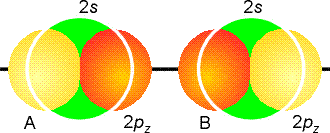
For homonuclear diatomic molecules of Period 2, molecular orbitals are constructed from 2s and 2p atomic orbitals. The number of molecular orbitals equals the number of atomic orbitals combined.
Four σ molecular orbitals are formed from two 2s and two 2pz orbitals.
With N atomic orbitals, N molecular orbitals are formed.
π Orbitals and Degeneracy
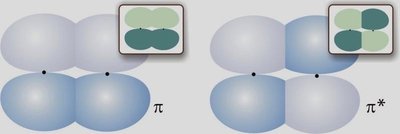
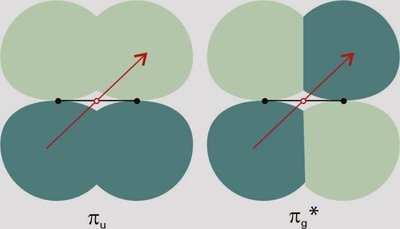
The 2px and 2py orbitals lead to pairs of π and π* orbitals, which are degenerate (have the same energy).
Construction and Filling of Molecular Orbitals
Molecular orbitals are constructed using all available valence orbitals and classified according to symmetry. The filling of these orbitals follows specific rules:
Aufbau Principle: Fill lowest energy orbitals first.
Pauli Exclusion Principle: Maximum two electrons per orbital with opposite spins.
Hund’s Rule: Electrons occupy degenerate orbitals singly before pairing.

MO Diagram for N2 Molecule
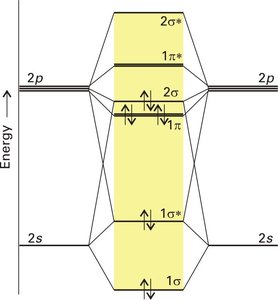
The molecular orbital configuration for N2 is:
1σg2 1σu2 1πu4 2σg2
Bond order of N2 = 3
σ and σ* orbitals may have mixed 2s and 2p character.

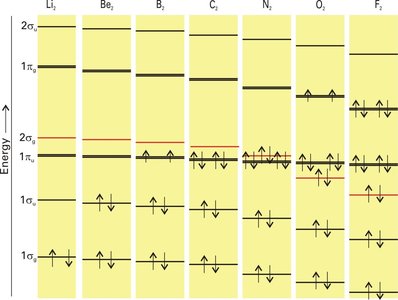
Variation of Orbital Energies in Diatomic Molecules
The energy ordering of molecular orbitals can vary across Period 2 diatomic molecules. For example, in Be2, the 2σg orbital is above 1πu, and Be2 does not exist as a stable molecule.


Model Questions: Electronic Configurations and Stability
Ground state electronic configuration of C2 is 1σb21σa21πb4. Bond order of C2 = 2, and C2- = 2.5, making C2- more stable.

Model Question: Stability of He2
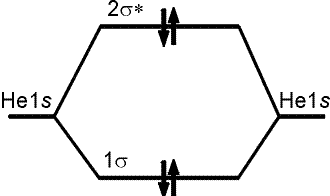
He2 has four electrons, resulting in a bond order of zero. Therefore, He2 is not stable and does not exist.

Model Question: MO Diagram of H2+
H2+ has one electron in the bonding molecular orbital. The MO diagram shows gerade and ungerade characters, which develop based on symmetry under inversion.

Heteronuclear Diatomic Molecules
Bonding in Heteronuclear Diatomics
In heteronuclear diatomic molecules, the bonding electron pair is attracted more strongly toward the more electronegative atom, resulting in a polar covalent bond with partial charges.
Example: HF, where the electron pair is closer to F, giving F a partial negative charge (δ−) and H a partial positive charge (δ+).

Orbital Contributions in Heteronuclear Diatomics
The bonding molecular orbital is a linear combination of atomic orbitals with unequal coefficients. The atomic orbital with lower energy contributes more to the bonding MO, while the higher energy AO dominates the antibonding MO.
Bonding MO:
Nonpolar bond:
Pure ionic bond: One coefficient is zero.

Energy Considerations in HF
In HF, the H1s orbital lies 13.6 eV below zero, and the F2p orbital lies at 18.6 eV. The bonding σ orbital is mainly F2p in character, and the antibonding σ orbital is mainly H1s. The two electrons in the bonding orbital are most likely found in the F2p orbital, resulting in a partial negative charge on F.

Bond Order and Overlap in HF
The overlap of fluorine 2pz and 2px atomic orbitals with hydrogen 1s orbital results in two σ molecular orbitals. The 2sF, 2pxF, and 2pyF orbitals are non-bonding, so the bond order of HF is one.

Heteronuclear Diatomic Molecule: CO
CO is a strong ligand due to its ability to interact with metals via σ-donation and π-back-donation. It binds strongly to hemoglobin, making it poisonous.
CO→Metal: σ-donation
Metal→CO: π-back-donation

General Features of Heteronuclear Diatomics
For molecules like CN, NO, CO, or ClF, valence molecular orbitals are constructed from the ns and np valence atomic orbitals of both atoms. The probability density in bonding MOs is greater around the more electronegative atom.
MO shapes are similar to homonuclear diatomics, but electron density is skewed toward the more electronegative atom.

Summary Table: Bond Order and Stability of Diatomic Molecules
The following table summarizes the bond order and stability for select diatomic molecules:
Molecule | Bond Order | Stability |
|---|---|---|
H2 | 1 | Stable |
He2 | 0 | Not stable |
N2 | 3 | Stable |
C2 | 2 | Stable |
C2- | 2.5 | More stable |
HF | 1 | Stable, polar |
CO | 3 | Stable, strong ligand |
Additional info: Academic context and explanations have been expanded for clarity and completeness. All images included are directly relevant to the adjacent paragraphs and reinforce the educational content.
