 Back
BackMolecular Shapes, VSEPR Theory, and Molecular Polarity
Study Guide - Smart Notes
 Tailored notes based on your materials, expanded with key definitions, examples, and context.
Chemical Bonding II: Molecular Shapes, VSEPR Theory, and Molecular Polarity
VSEPR Theory: Predicting Molecular Shapes
The Valence Shell Electron Pair Repulsion (VSEPR) theory is used to predict the three-dimensional shapes of molecules based on the repulsions between electron groups around a central atom. Electron groups include lone pairs, single, double, and triple bonds, as well as radicals. The arrangement of these groups minimizes repulsion and thus determines the geometry of the molecule.
Electron Groups: Regions of electron density (bonds or lone pairs) around a central atom.
Repulsions: Electron groups repel each other and arrange themselves as far apart as possible to minimize energy.
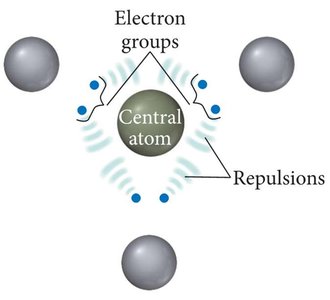
Basic Molecular Geometries
The number of electron groups around a central atom determines the basic geometry:
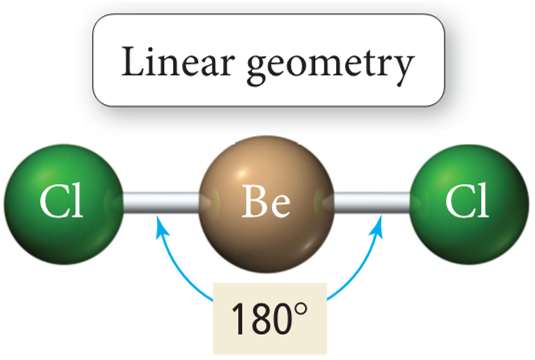
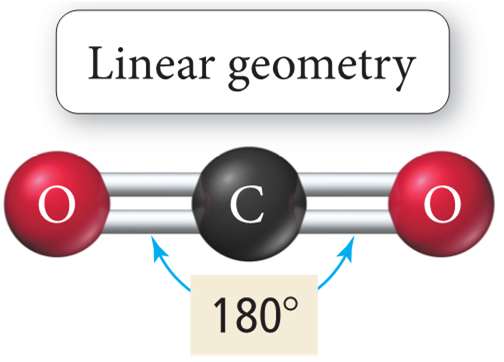
2 Electron Groups: Linear geometry, 180° bond angle.
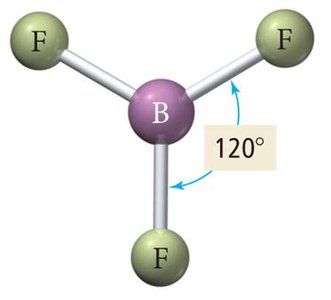
3 Electron Groups: Trigonal planar geometry, 120° bond angle.
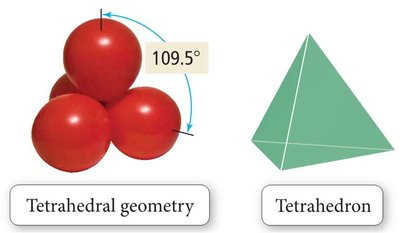
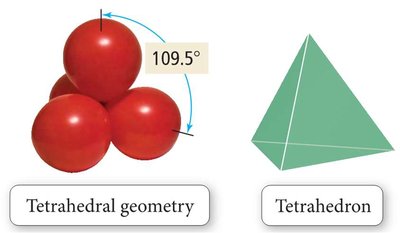
4 Electron Groups: Tetrahedral geometry, 109.5° bond angle.
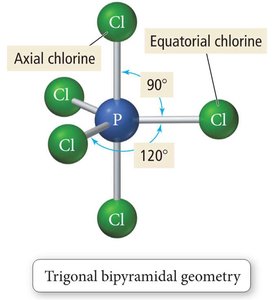
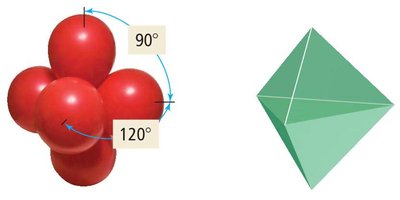
5 Electron Groups: Trigonal bipyramidal geometry, 90° and 120° bond angles.
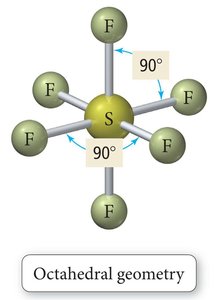
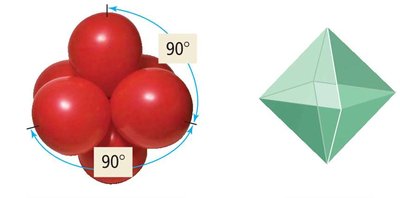
6 Electron Groups: Octahedral geometry, 90° bond angles.
Linear Geometry
Example: BeCl2 and CO2 both have two electron groups and adopt a linear geometry with a bond angle of 180°.
Trigonal Planar Geometry
Example: BF3 has three electron groups and bond angles of 120°.
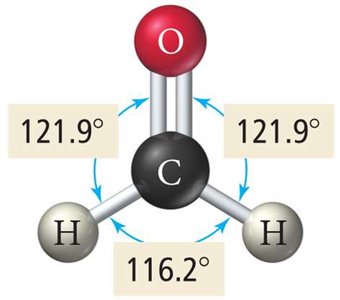
Example: CH2O (formaldehyde) has three electron groups, but the bond angles are slightly distorted due to differences in repulsion between double and single bonds.
Tetrahedral Geometry
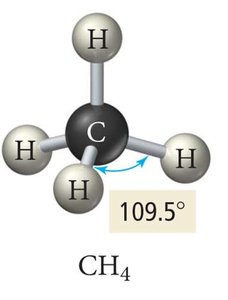
Example: Methane (CH4) is a classic example of a tetrahedral molecule with bond angles of 109.5°.
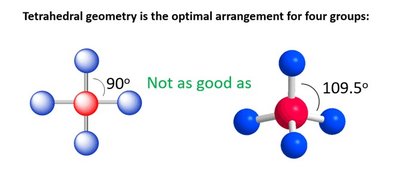
Comparison: Tetrahedral geometry (109.5°) is more stable than a square planar arrangement (90°) for four groups.
Trigonal Bipyramidal and Octahedral Geometries
Trigonal Bipyramidal: Five electron groups, with two axial positions (90° to equatorial) and three equatorial positions (120° apart).
Example: PCl5
Octahedral: Six electron groups, all 90° apart.
Example: SF6
The Effect of Lone Pairs on Molecular Geometry
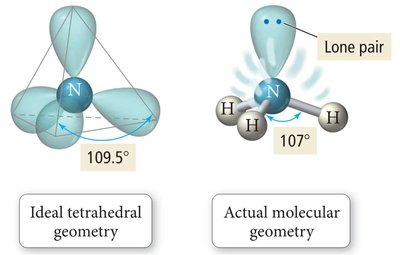
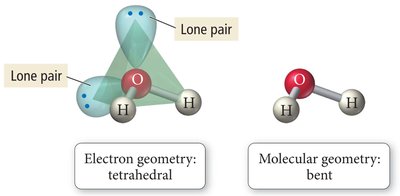
Lone pairs occupy more space than bonding pairs, causing bond angles to compress. This leads to deviations from idealized geometries.
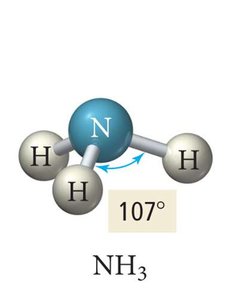
NH3 (Ammonia): Tetrahedral electron geometry, but trigonal pyramidal molecular geometry due to one lone pair. Bond angle is reduced from 109.5° to 107°.
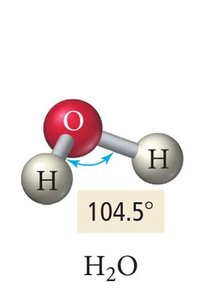
H2O (Water): Tetrahedral electron geometry, but bent molecular geometry due to two lone pairs. Bond angle is reduced to 104.5°.
CH4, NH3, H2O: All have tetrahedral electron geometry, but different molecular geometries and bond angles due to the number of lone pairs.
Summary Table: Electron Groups, Lone Pairs, and Molecular Geometry
Electron Groups | Lone Pairs | Geometry | Bond Angles |
|---|---|---|---|
2 | 0 | Linear | 180° |
3 | 0 | Trigonal Planar | 120° |
4 | 0 | Tetrahedral | 109.5° |
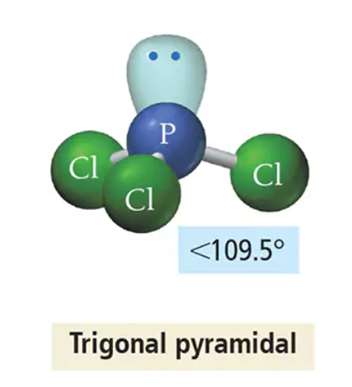
4 | 1 | Trigonal Pyramidal | <109.5° |
4 | 2 | Bent | <109.5° |
Five and Six Electron Groups with Lone Pairs
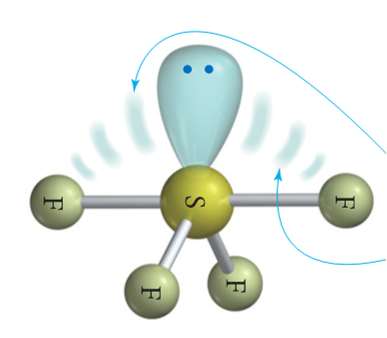
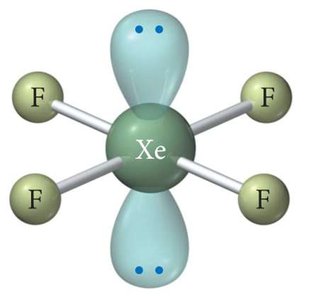
When lone pairs are present in trigonal bipyramidal or octahedral geometries, they occupy positions that minimize repulsions (equatorial for trigonal bipyramidal, axial for octahedral).
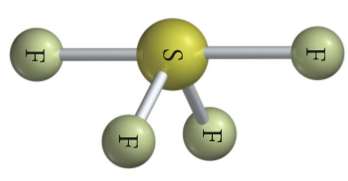
SF4: Seesaw geometry (one lone pair, equatorial position).
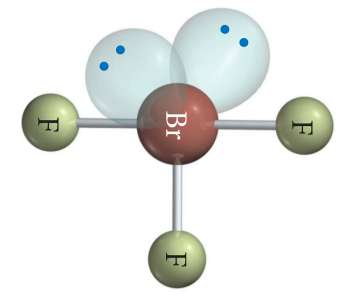
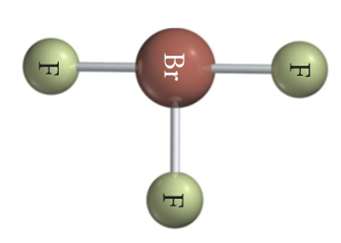
BrF3: T-shaped geometry (two lone pairs, both equatorial).
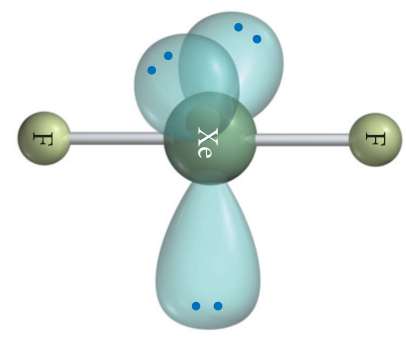
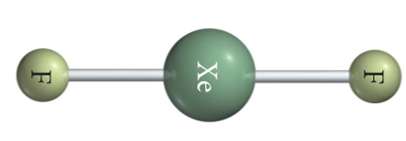
XeF2: Linear geometry (three lone pairs, all equatorial).
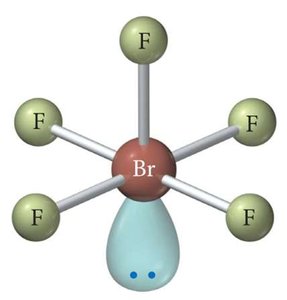
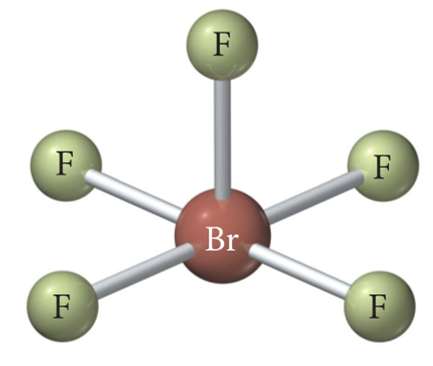
BrF5: Square pyramidal geometry (one lone pair, axial position).
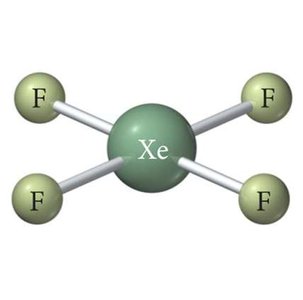
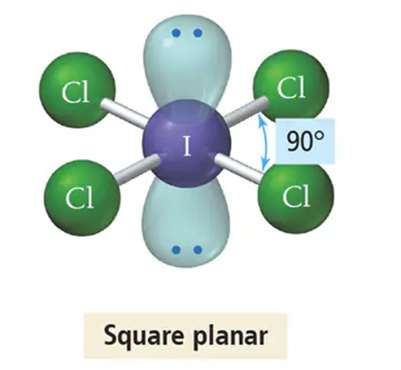
XeF4: Square planar geometry (two lone pairs, both axial).
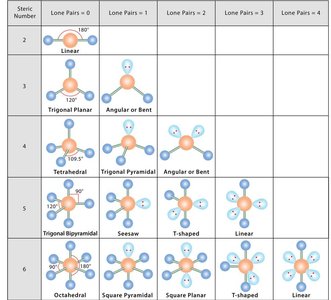
Summary Table: VSEPR Geometries
Steric Number | Lone Pairs = 0 | Lone Pairs = 1 | Lone Pairs = 2 | Lone Pairs = 3 | Lone Pairs = 4 |
|---|---|---|---|---|---|
2 | Linear | ||||
3 | Trigonal Planar | Bent | |||
4 | Tetrahedral | Trigonal Pyramidal | Bent | ||
5 | Trigonal Bipyramidal | Seesaw | T-shaped | Linear | |
6 | Octahedral | Square Pyramidal | Square Planar | T-shaped | Linear |
Step-by-Step Guide: Predicting Molecular Geometry
Draw the Lewis structure for the molecule.
Determine the total number of electron groups around the central atom.
Count the number of bonding groups and lone pairs.
Assign the electron geometry and then the molecular geometry.
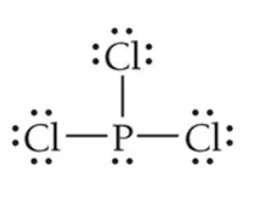
Example: PCl3 has four electron groups (three bonding, one lone pair). Electron geometry is tetrahedral; molecular geometry is trigonal pyramidal.
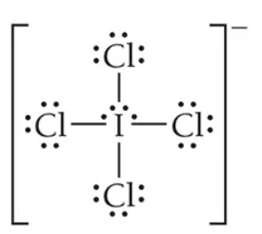
Example: ICl4– has six electron groups (four bonding, two lone pairs). Electron geometry is octahedral; molecular geometry is square planar.
Representing 3D Shapes on Paper
Wedge-and-dash notation is used to represent three-dimensional molecular shapes on two-dimensional paper:
Straight line: Bond in the plane of the paper.
Hatched wedge: Bond going into the page.
Solid wedge: Bond coming out of the page.

Molecular Shape and Polarity
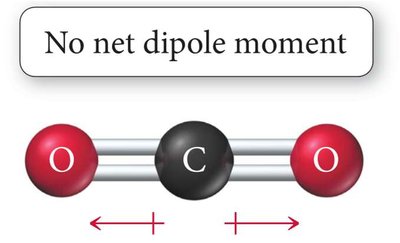
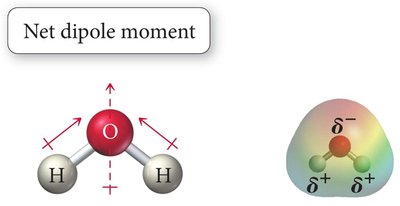
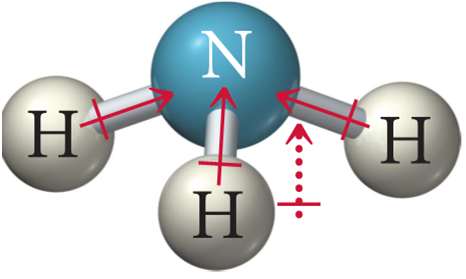
The polarity of a molecule depends on both the polarity of its bonds and its molecular geometry. The vector sum of individual bond dipoles determines the overall molecular dipole moment.
CO2: Linear geometry; bond dipoles cancel, resulting in a nonpolar molecule.
H2O: Bent geometry; bond dipoles do not cancel, resulting in a polar molecule.
NH3: Trigonal pyramidal geometry; bond dipoles do not cancel, resulting in a polar molecule.
Summary Table: Polarity of Selected Molecules
Molecule | Geometry | Polarity |
|---|---|---|
CO2 | Linear | Nonpolar |
H2O | Bent | Polar |
NH3 | Trigonal pyramidal | Polar |
CH4 | Tetrahedral | Nonpolar |
Key Points and Additional Information
Electron geometry is determined by the number of electron groups around the central atom.
Molecular geometry is determined by the arrangement of atoms (excluding lone pairs).
Lone pairs exert greater repulsion than bonding pairs, compressing bond angles.
Polarity depends on both bond polarity and molecular geometry.
Additional info: The VSEPR model is a powerful tool for predicting molecular shapes, but it does not account for the subtleties of orbital hybridization or electron delocalization, which are addressed in valence bond and molecular orbital theories.
