 Back
Organic Compounds: Structure, Classification, and Examples
Study Guide - Smart Notes
 Tailored notes based on your materials, expanded with key definitions, examples, and context.
Organic Compounds
Definition and Historical Context
Organic compounds are a fundamental class of chemical substances, originally defined as those derived from living organisms. Early chemists distinguished between organic compounds (from living things, e.g., sugar) and inorganic compounds (from non-living sources, e.g., salt). Today, organic compounds are synthesized in laboratories and are ubiquitous in both biological and industrial contexts. They are primarily composed of carbon (C) and hydrogen (H), with possible inclusion of oxygen (O), nitrogen (N), sulfur (S), and trace elements.
Key Characteristics of Organic Compounds
Major components of living organisms
Composed mainly of C and H
Can include O, N, S, and other elements
Formed through covalent bonding
Carbon Bonding in Organic Compounds
Bonding Properties of Carbon
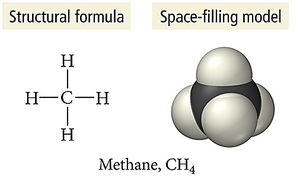
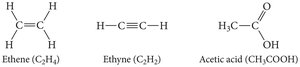
The versatility of carbon is central to organic chemistry. Carbon atoms form four covalent bonds, which can be single, double, or triple bonds. This allows for a wide variety of molecular structures.
Single bonds: Carbon forms four single bonds (e.g., methane, CH4).
Double bonds: Carbon can form two double bonds (e.g., ethene, C2H4).
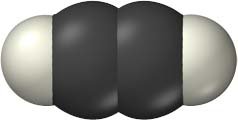
Triple bonds: Carbon can form a triple bond (e.g., ethyne, C2H2).
Carbon atoms can bond with themselves, creating chains and rings that are straight, branched, or cyclic.
Classification of Organic Compounds
Hydrocarbons and Functionalized Hydrocarbons
Organic compounds are classified into two main categories: hydrocarbons and functionalized hydrocarbons.
Hydrocarbons: Contain only carbon and hydrogen. Common fuels such as gasoline, propane, and natural gas are hydrocarbons.
Functionalized hydrocarbons: Contain additional elements (O, N, S, halogens) and are characterized by specific functional groups (e.g., -OH, -COOH, -NH2).
Types of Hydrocarbons
Aliphatic hydrocarbons: Include alkanes (single bonds), alkenes (double bonds), alkynes (triple bonds), cycloalkanes, and cycloalkenes.
Aromatic hydrocarbons: Include benzene and substituted benzenes.
Types of Functionalized Hydrocarbons
Oxygen-containing: Alcohols, ethers, aldehydes, carboxylic acids
Nitrogen-containing: Amines, amides, nitriles
Sulfur-containing: Thiols, thioethers
Halogen-containing: Compounds with F, Cl, Br, I
Common Hydrocarbons: Structural Examples
Structural Formulas and Models
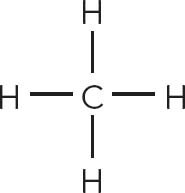
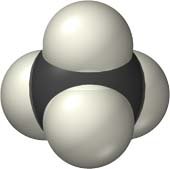
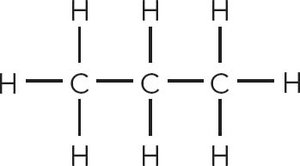
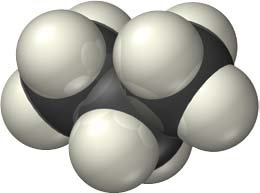
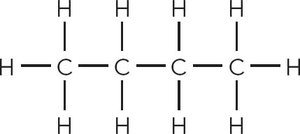
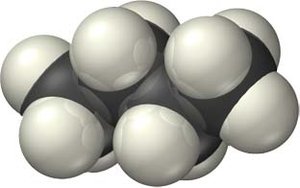
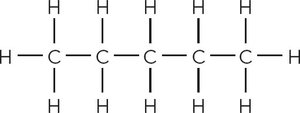
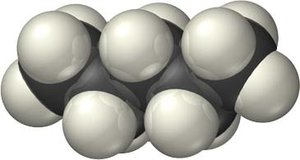
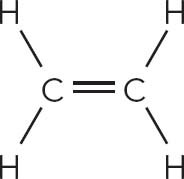
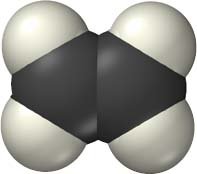
Hydrocarbons can be represented by structural formulas and space-filling models, which illustrate the arrangement of atoms and bonds.
Methane (CH4): Simplest hydrocarbon, tetrahedral geometry.
Ethane (C2H6): Two carbon atoms, single bond.
Propane (C3H8): Three carbon atoms, straight chain.
Isobutane (C4H10): Branched chain hydrocarbon.
Cyclohexane (C6H12): Ring structure.
Ethene (C2H4): Double bond between carbons.
Ethyne (C2H2): Triple bond between carbons.
Functionalized Hydrocarbons: Examples of Functional Groups
Common Functional Groups
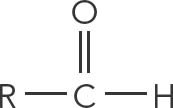
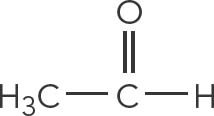
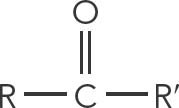
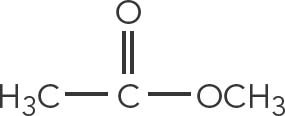
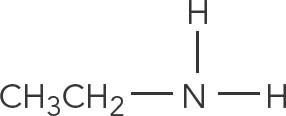
Functional groups are specific groups of atoms within molecules that are responsible for the characteristic chemical reactions of those molecules.
Aldehyde group: -CHO
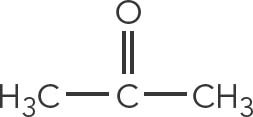
Ketone group: -CO-
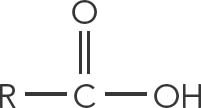
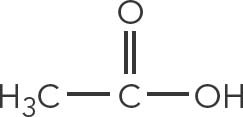
Carboxylic acid group: -COOH
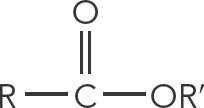
Ester group: -COOR
Amine group: -NH2
Summary Table: Classification of Organic Compounds
Type | Elements Present | Examples |
|---|---|---|
Hydrocarbons | C, H | Methane, Ethane, Propane, Benzene |
Oxygen-containing | C, H, O | Alcohols, Ethers, Aldehydes, Carboxylic acids |
Nitrogen-containing | C, H, N | Amines, Amides, Nitriles |
Sulfur-containing | C, H, S | Thiols, Thioethers |
Halogen-containing | C, H, Halogens | Chloroform, Fluorocarbons |
Key Formulas and Equations
General Formula for Alkanes
Alkanes are saturated hydrocarbons with the general formula:
Example: Combustion of Hydrogen
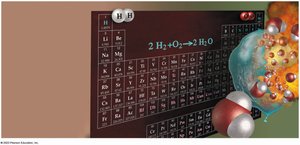
The reaction of hydrogen and oxygen to form water is a fundamental chemical equation:
Conclusion
Organic compounds are diverse and essential to life and industry. Their classification, structural diversity, and functional groups form the basis for understanding organic chemistry in general chemistry courses.
