 Back
BackPeriodic Properties of Elements: Electron Spin, Atomic and Ionic Radii, Ionization Energy, and Electron Affinity
Study Guide - Smart Notes
 Tailored notes based on your materials, expanded with key definitions, examples, and context.
Periodic Properties of Elements
Electron Spin and Quantum Numbers
The concept of electron spin is fundamental to understanding the behavior of electrons in atoms. Experiments such as the Stern-Gerlach experiment demonstrated that electrons possess an intrinsic property called spin, which generates a magnetic field. This property is quantized and can exist in one of two orientations: spin up or spin down. The spin quantum number (ms) is the fourth quantum number used to describe electrons in an atom, supplementing the principal (n), angular momentum (l), and magnetic (ml) quantum numbers.
Spin Quantum Number (ms): Can be +1/2 or -1/2, representing two possible spin states.
Electron Configuration: The arrangement of electrons in atomic orbitals, including their spins.
Orbital Diagram: Visual representation of electron configuration, showing paired and unpaired electrons.
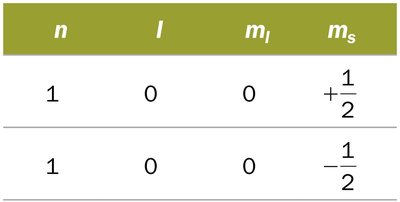
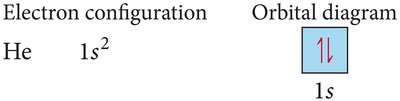
Example: Helium (He) has two electrons in the 1s orbital, one with spin up and one with spin down, as shown in the orbital diagram.
Atomic Radii and Covalent Radius
The atomic radius is a measure of the size of an atom, typically defined as the distance from the nucleus to the outermost electron shell. The covalent radius is half the distance between the nuclei of two identical atoms bonded together. Atomic radii vary across the periodic table due to changes in nuclear charge and electron shielding.
Trends Across a Period: Atomic radius decreases from left to right due to increasing effective nuclear charge (Zeff).
Trends Down a Group: Atomic radius increases down a group as additional electron shells are added.
Covalent Radius: Used to compare the sizes of atoms in molecules.
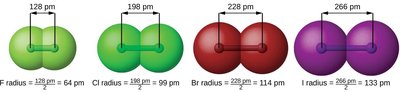
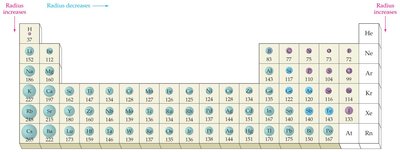
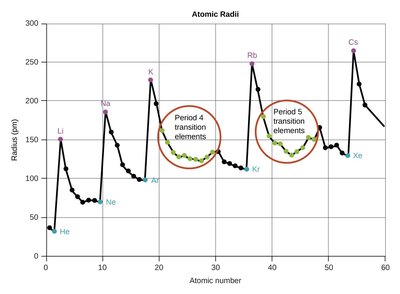
Example: Fluorine has a smaller covalent radius (64 pm) compared to iodine (133 pm), reflecting the trend of increasing radius down the group.
Effective Nuclear Charge, Shielding, and Penetration
Effective nuclear charge (Zeff) is the net positive charge experienced by an electron in a multi-electron atom. It is calculated as the actual nuclear charge minus the shielding effect of inner electrons. Shielding reduces the attraction between the nucleus and outer electrons, while penetration refers to how close an electron can get to the nucleus.
Formula:
Shielding: Inner electrons repel outer electrons, reducing the effective nuclear charge.
Penetration: Electrons in orbitals that penetrate closer to the nucleus experience higher Zeff.
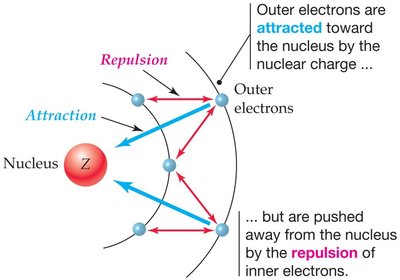
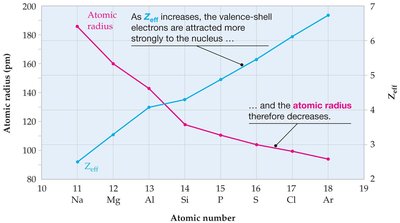
Example: As Zeff increases across a period, atomic radius decreases because electrons are pulled closer to the nucleus.
Ionic Radii
Ionic radius refers to the size of an ion. Cations (positively charged ions) are smaller than their parent atoms due to loss of electrons and increased nuclear attraction. Anions (negatively charged ions) are larger than their parent atoms due to added electrons and increased electron-electron repulsion.
Cations: Smaller than parent atoms; increased Zeff draws electrons closer.
Anions: Larger than parent atoms; added electrons increase repulsion.
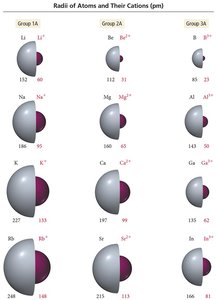
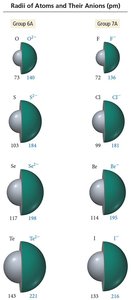
Example: Na+ is much smaller than Na, while Cl- is larger than Cl.
Ionization Energy
Ionization energy (IE) is the energy required to remove an electron from a gaseous atom or ion. The first ionization energy refers to the removal of the most loosely bound electron. Ionization energy trends are influenced by atomic radius and effective nuclear charge.
Trend Down a Group: First IE decreases as electrons are farther from the nucleus.
Trend Across a Period: First IE increases as Zeff increases.
Equation:
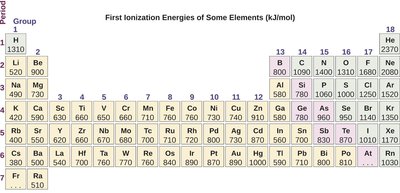
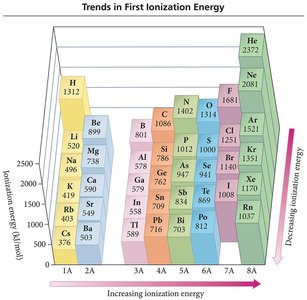
Example: Helium has the highest first ionization energy among the elements, while alkali metals have the lowest.
Exceptions in Ionization Energy Trends
Some elements show exceptions to the general ionization energy trends due to electron configurations. For example, nitrogen has a half-filled p sublevel, making it harder to ionize, while oxygen gains a half-filled sublevel upon ionization, making it easier.
Nitrogen: Higher IE due to stability of half-filled sublevel.
Oxygen: Lower IE due to resulting half-filled sublevel after ionization.


Example: The first ionization energy of nitrogen is higher than that of oxygen, despite oxygen being to the right of nitrogen in the periodic table.
Trends in Successive Ionization Energies
Removing each successive electron from an atom requires more energy, especially after all valence electrons are removed and core electrons are targeted. This is due to increased Zeff and reduced electron-electron repulsion.
Regular Increase: Each successive valence electron costs more energy to remove.
Large Jump: Removing core electrons results in a significant increase in ionization energy.
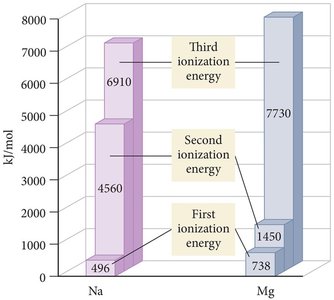
Example: The third ionization energy of Mg is much higher than the first and second, reflecting the removal of a core electron.
Electron Affinity
Electron affinity (EA) is the energy change when an electron is added to a gaseous atom, forming an anion. A negative value indicates energy is released, while a positive value means energy is required. EA trends are influenced by atomic structure and electron configuration.
Equation:
Negative EA: Energy released; favorable for most nonmetals.
Positive EA: Energy required; less favorable for noble gases and some metals.
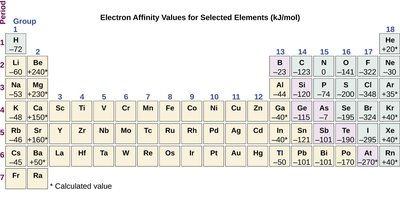
Example: Chlorine has a high negative electron affinity, indicating it readily gains electrons.
Trends in Metallic Character
Metallic character refers to the tendency of an element to exhibit properties typical of metals, such as conductivity, malleability, and tendency to lose electrons. Metallic character increases down a group and decreases across a period.
Metals: Located on the left and center of the periodic table; high metallic character.
Nonmetals: Located on the right; low metallic character.
Metalloids: Intermediate properties; found between metals and nonmetals.
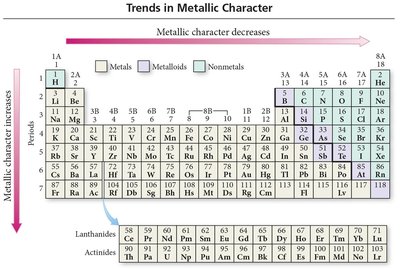
Example: Alkali metals (Group 1A) have the highest metallic character, while noble gases have the lowest.
