 Back
BackPeriodic Properties of the Elements: Structure, Trends, and Applications
Study Guide - Smart Notes
 Tailored notes based on your materials, expanded with key definitions, examples, and context.
Periodic Properties of the Elements
Introduction to Periodic Properties
Periodic properties are characteristics of elements that show a recurring pattern when the elements are arranged by increasing atomic number. These properties can be predicted based on an element’s position in the periodic table and are fundamental to understanding chemical behavior.
The Development of the Periodic Table
Mendeleev and the Periodic Law
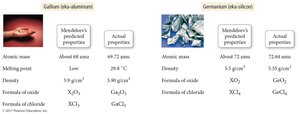
The periodic table was developed by Dmitri Mendeleev, who arranged elements by increasing atomic mass and observed repeating patterns in their properties. He placed elements with similar properties in the same columns and used these patterns to predict the properties of undiscovered elements. Where atomic mass order did not fit observed properties, he reordered elements based on chemical behavior (e.g., Te and I).

Periodic Law: When elements are arranged in order of increasing atomic mass, certain sets of properties recur periodically.
Prediction of Properties: Mendeleev’s arrangement allowed for the prediction of properties of elements not yet discovered.
Quantum Mechanical Explanation of Periodicity
Electron Configurations and Orbitals
Quantum mechanics explains why periodic trends exist. Electrons in atoms occupy orbitals, and the arrangement of these electrons (electron configuration) determines the chemical properties of elements.
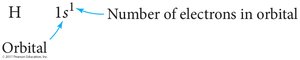
Electron Configuration: A description of the orbitals occupied by electrons in an atom.
Orbitals: Regions in an atom where electrons are likely to be found.
Quantum Numbers and Electron Spin
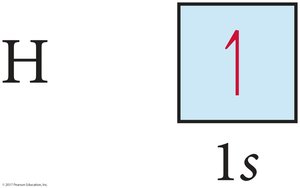
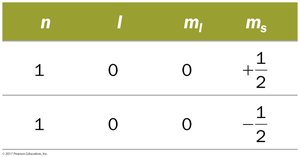
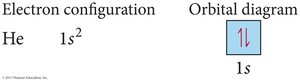
Each electron in an atom is described by four quantum numbers: principal (n), angular momentum (l), magnetic (ml), and spin (ms). The spin quantum number can be +1/2 or -1/2, representing the two possible orientations of electron spin.
Pauli Exclusion Principle: No two electrons in an atom can have the same set of four quantum numbers; thus, each orbital can hold a maximum of two electrons with opposite spins.
Sublevel Splitting, Shielding, and Penetration
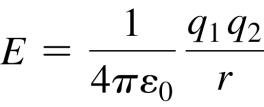
In multielectron atoms, sublevels within a principal energy level are split in energy due to electron-electron interactions, shielding, and penetration effects.
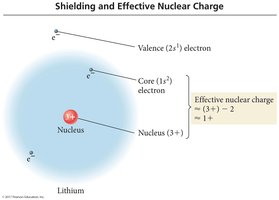
Shielding: Core electrons shield outer electrons from the full nuclear charge, reducing the effective nuclear charge experienced by valence electrons.
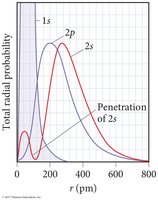
Penetration: The ability of an electron to get close to the nucleus. s orbitals penetrate more than p, d, or f orbitals, leading to lower energy for s electrons.
Energy Ordering of Orbitals
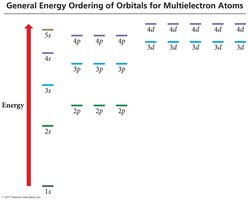
Orbitals fill in order of increasing energy, generally following the sequence: s → p → d → f. This is known as the Aufbau principle. Hund’s rule states that electrons occupy degenerate orbitals singly before pairing.
Electron Configurations and the Periodic Table
The periodic table is structured so that elements with similar valence electron configurations are grouped together, explaining the periodic recurrence of chemical properties.
Valence Electrons: Electrons in the outermost principal energy level; determine chemical reactivity.
Core Electrons: Electrons in inner energy levels; do not participate in chemical bonding.
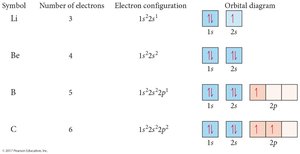
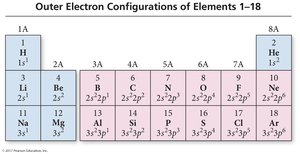
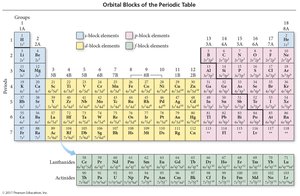
Irregular Electron Configurations
Some transition metals have irregular electron configurations due to small energy differences between s and d sublevels. These configurations are determined experimentally.
Periodic Trends in Atomic Properties
Atomic Radius
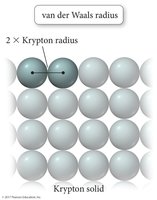
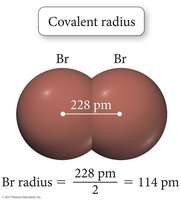
The atomic radius is the average distance from the nucleus to the outermost electrons. It can be measured as van der Waals radius (nonbonding), covalent radius (bonding), or metallic radius.
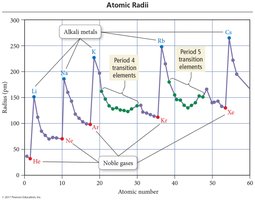
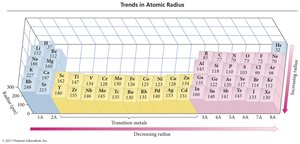
Trend Down a Group: Atomic radius increases due to addition of energy levels.
Trend Across a Period: Atomic radius decreases due to increasing effective nuclear charge, pulling electrons closer.
Shielding and Effective Nuclear Charge
Shielding reduces the effective nuclear charge (Zeff) felt by outer electrons. Zeff is calculated as:
where Z is the nuclear charge and S is the number of core electrons.
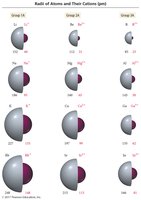
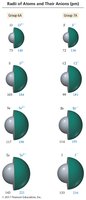
Trends in Ionic Radius
Ionic radius depends on the charge and electron configuration:
Cations: Smaller than their parent atoms due to loss of electrons and increased Zeff.
Anions: Larger than their parent atoms due to gain of electrons and decreased Zeff.
Ionization Energy (IE)
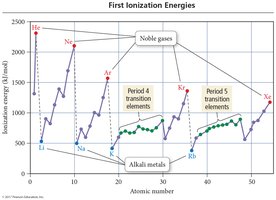
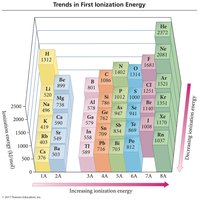
Ionization energy is the minimum energy required to remove an electron from a gaseous atom or ion. The first ionization energy (IE1) refers to removal from a neutral atom.
Trend Down a Group: IE decreases as electrons are farther from the nucleus.
Trend Across a Period: IE increases due to higher Zeff and smaller atomic radius.
Electron Affinity (EA)
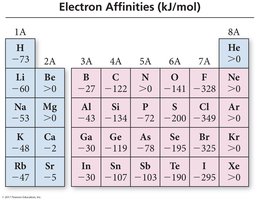
Electron affinity is the energy change when a neutral atom gains an electron. A more negative value indicates a greater tendency to accept an electron.
Trend Across a Period: EA generally becomes more negative (increases) from left to right.
Trend Down a Group: EA generally becomes less negative (decreases) down a group, but trends are less regular than for IE or atomic radius.
Metallic Character
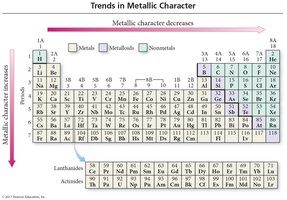
Metallic character refers to how closely an element’s properties match those of a metal (e.g., malleability, conductivity, tendency to lose electrons).
Trend Down a Group: Metallic character increases.
Trend Across a Period: Metallic character decreases.
Group Trends: Alkali Metals, Halogens, and Noble Gases
Alkali Metals (Group 1A)
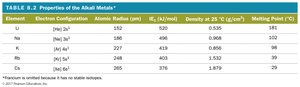
Alkali metals are highly reactive, have low ionization energies, and form +1 cations. Their reactivity increases down the group.
React vigorously with water to produce hydrogen gas and a hydroxide ion.
Form ionic compounds with nonmetals.
Halogens (Group 7A)
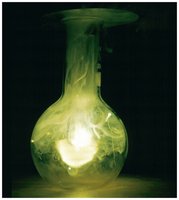
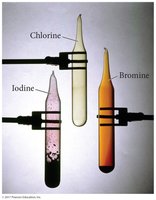
Halogens are highly reactive nonmetals with high electron affinities. They tend to gain one electron to form -1 anions and react with metals to form salts.
Noble Gases (Group 8A)
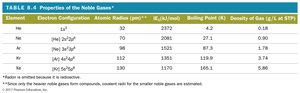
Noble gases are characterized by full valence shells, making them extremely unreactive. Their atomic radius and boiling points increase down the group.
Summary Table: Key Periodic Trends
Property | Down a Group | Across a Period (Left to Right) |
|---|---|---|
Atomic Radius | Increases | Decreases |
Ionization Energy | Decreases | Increases |
Electron Affinity | Generally decreases | Generally increases (more negative) |
Metallic Character | Increases | Decreases |
