 Back
BackQuantum Mechanics and the Atomic Model: Study Notes for General Chemistry
Study Guide - Smart Notes
 Tailored notes based on your materials, expanded with key definitions, examples, and context.
Quantum Mechanics: The Atomic Model that Explains the Strange Behavior of Electrons
Introduction to Quantum Mechanics
Quantum mechanics is the branch of physics that describes the behavior of matter and energy at the atomic and subatomic levels. Early twentieth-century scientists such as Albert Einstein, Neils Bohr, Louis de Broglie, Max Planck, Werner Heisenberg, P. A. M. Dirac, and Erwin Schrödinger laid the foundation for our current understanding of matter at the microscopic scale. - Key Point 1: Subatomic particles (electrons, protons, neutrons) behave differently from macroscopic matter. - Key Point 2: The quantum mechanical model explains the dual nature (wave–particle duality) of electrons. - Example: Electrons exhibit both mass and wave-like properties depending on experimental conditions.
Wave–Particle Duality
The concept of wave–particle duality states that subatomic particles, such as electrons, can exhibit both particle-like and wave-like behavior. - Key Point 1: Electrons can behave as particles (with mass and volume) or as waves (with frequency and wavelength). - Key Point 2: Direct observation of electrons changes their behavior due to their extremely small size.
The Nature of Light: Its Wave Nature
Electromagnetic Radiation
Light is a form of electromagnetic radiation, consisting of oscillating electric and magnetic fields perpendicular to each other and to the direction of travel. - Key Point 1: An electric field is a region where an electrically charged particle experiences a force. - Key Point 2: A magnetic field is a region where a magnetized particle experiences a force. 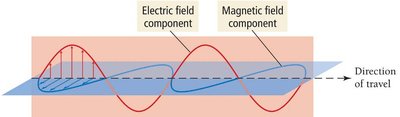
Characteristics of Energy Waves
Energy waves are characterized by amplitude, wavelength, and frequency. - Amplitude: The height of the wave; determines the intensity (brightness) of light. - Wavelength (\lambda): The distance between two consecutive peaks or troughs; determines the color of light. - Frequency (\nu): The number of waves passing a point per unit time; measured in hertz (Hz). 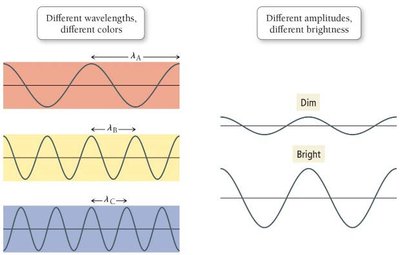
Relationship Between Wavelength and Frequency
The speed of light (c) is constant for all electromagnetic waves. Wavelength and frequency are inversely proportional: - Short wavelength: High frequency - Long wavelength: Low frequency 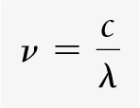
Electromagnetic Spectrum and Photon Energy
Electromagnetic Spectrum
The electromagnetic spectrum includes all wavelengths of electromagnetic radiation, from radio waves (lowest energy) to gamma rays (highest energy). - Visible light: 400–700 nm, only a small fraction of the spectrum. - Energy: Shorter wavelength (higher frequency) light has higher energy.
Photoelectric Effect and Photon Energy
The photoelectric effect occurs when light shines on a metal surface and ejects electrons. Einstein explained this by proposing that light energy is delivered in packets called photons. - Energy of a photon: or where h is Planck’s constant ( J·s) and c is the speed of light ( m/s).
Atomic Spectra and the Bohr Model
Atomic Spectra
When atoms absorb energy, they emit light at specific wavelengths, producing a unique atomic spectrum. - Key Point 1: Line spectra are unique to each element and can be used for identification.
The Bohr Model of the Atom
The Bohr model explains energy transitions in atoms. Electrons emit photons when they transition from higher to lower energy orbits. - Key Point 1: Energy levels are quantized. - Key Point 2: The energy of emitted photons corresponds to the difference between energy levels.
Wave Behavior of Electrons
de Broglie’s Relation
Louis de Broglie proposed that particles have wave-like properties. The wavelength of a particle is inversely proportional to its mass and velocity: - Key Point 1: The wave character of electrons is significant due to their small mass.
Heisenberg’s Uncertainty Principle
The uncertainty principle states that the more accurately the position of a particle is known, the less accurately its velocity can be known, and vice versa. - Key Point 1: It is impossible to predict the exact path of an electron. - Key Point 2: Electron location is described statistically.
Quantum Mechanical Model and Quantum Numbers
Schrödinger’s Equation and Orbitals
Schrödinger’s equation calculates the probability of finding an electron with a particular energy at a specific location. The solutions are quantum numbers that describe orbitals. - Principal Quantum Number (n): Energy level and size; n = 1, 2, 3, ... - Angular Momentum Quantum Number (l): Orbital type; l = 0 (s), 1 (p), 2 (d), 3 (f) - Magnetic Quantum Number (ml): Orientation; values from -l to +l - Spin Quantum Number (ms): Electron spin; +1/2 or -1/2 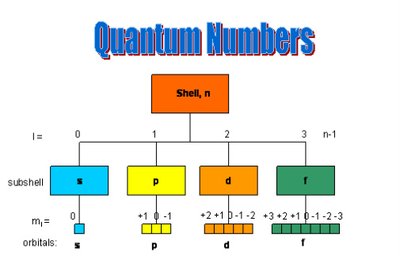
Shapes of Atomic Orbitals
The shapes of atomic orbitals are determined by quantum numbers. - s orbitals: Spherical shape (l = 0) 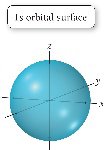 - p orbitals: Dumbbell shape (l = 1)
 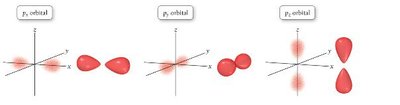 - d orbitals: Cloverleaf shape (l = 2) - f orbitals: Complex shapes (l = 3)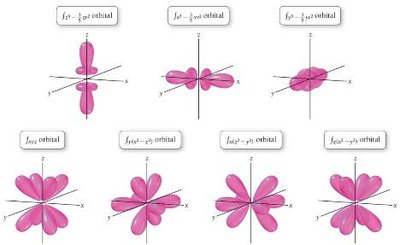
Distribution of Electrons in Orbitals
The number of orbitals and electrons per energy level is determined by quantum numbers. - Key Point 1: Each orbital can hold two electrons with opposite spins. - Key Point 2: The arrangement of electrons explains chemical properties and periodic trends.
Atomic Spectra and Electron Transitions
Electron Excitation and Relaxation
Each wavelength in an atomic spectrum corresponds to a specific electron transition between orbitals. - Key Point 1: Electrons absorb energy to move to higher energy levels (excitation). - Key Point 2: Electrons emit energy as photons when they return to lower energy levels (relaxation). 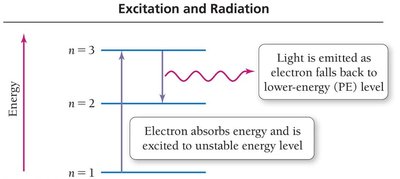
Key Equations and Tables
Important Equations
- Frequency and Wavelength: 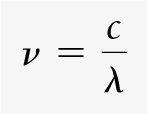 - Photon Energy: - de Broglie’s Relation:
Quantum Numbers Table
Quantum Number | Symbol | Allowed Values | Physical Meaning |
|---|---|---|---|
Principal | n | 1, 2, 3, ... | Energy level, size |
Angular Momentum | l | 0 to n-1 | Orbital shape |
Magnetic | ml | -l to +l | Orbital orientation |
Spin | ms | +1/2, -1/2 | Electron spin |
Summary Table: Orbital Types and Quantum Numbers
l | Subshell | ml Values | Orbital Types |
|---|---|---|---|
0 | s | 0 | spherical |
1 | p | -1, 0, +1 | dumbbell |
2 | d | -2, -1, 0, +1, +2 | cloverleaf |
3 | f | -3, -2, -1, 0, +1, +2, +3 | complex |
Additional info:
- The periodic table is referenced for quantum numbers and electron configurations, but not included here as it is not directly relevant to quantum mechanics explanations. - Practice problems and examples are available in the original material for further study. ----------------------------------------
