 Back
Quantum Numbers, Atomic Orbitals, and Periodic Properties
Study Guide - Smart Notes
 Tailored notes based on your materials, expanded with key definitions, examples, and context.
Quantum-Mechanical Model of the Atom
Quantum Numbers and Atomic Orbitals
The quantum-mechanical model describes electrons in atoms using four quantum numbers, which define the properties and behavior of atomic orbitals. These orbitals are regions in space where electrons are most likely to be found.
Principal Quantum Number (n): Specifies the energy level and size of the orbital. Higher n means larger and higher-energy orbitals.
Angular Momentum Quantum Number (l): Determines the shape of the orbital. Values of l are integers from 0 up to n-1.
Magnetic Quantum Number (ml): Specifies the orientation of the orbital in space. Values range from -l to +l.
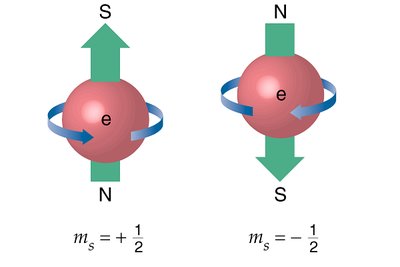
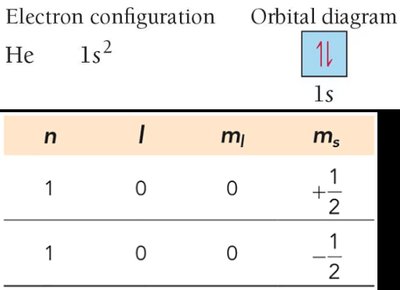
Spin Quantum Number (ms): Describes the spin of the electron, either +1/2 or -1/2.
Table: Letter Designation for l Values
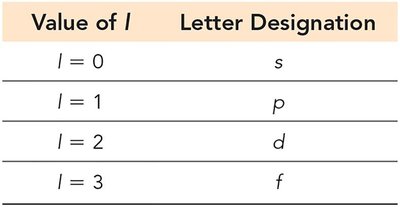
s orbital: l = 0 (spherical shape)
p orbital: l = 1 (dumbbell shape)
d orbital: l = 2 (cloverleaf shape)
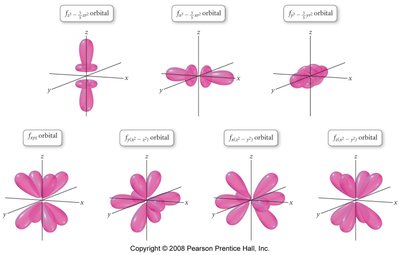
f orbital: l = 3 (complex shape)
Spin Quantum Number (ms)
The spin quantum number describes the intrinsic spin of the electron. There are only two possible values: +1/2 (spin up) and -1/2 (spin down). This property is fundamental to the Pauli exclusion principle, which states that no two electrons in an atom can have the same set of four quantum numbers.
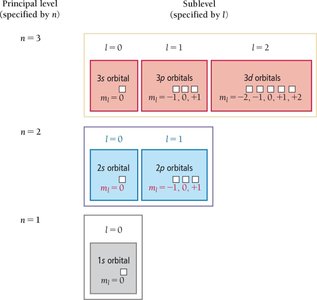
Orbital Structure and Quantum Numbers
Each principal energy level (n) contains sublevels (l), and each sublevel contains orbitals with different orientations (ml). The number of sublevels in a level equals n, and the number of orbitals in a sublevel equals 2l + 1. The total number of orbitals in a level is n2.
Shapes and Properties of Atomic Orbitals
s Orbitals
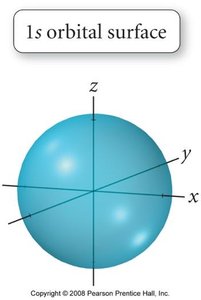
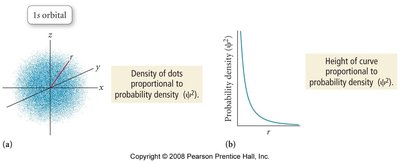
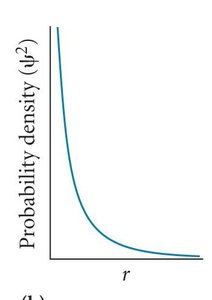
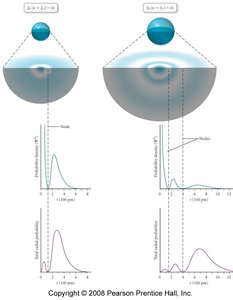
s orbitals are spherical and have only one orientation (ml = 0). The probability of finding an electron is highest near the nucleus and decreases with distance.
p Orbitals
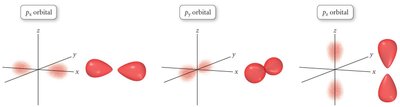
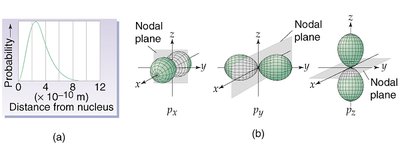
p orbitals (l = 1) are dumbbell-shaped and have three orientations (ml = -1, 0, +1), corresponding to px, py, and pz. Each p orbital has a nodal plane where the probability of finding an electron is zero.
d Orbitals
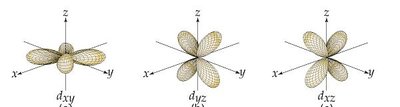
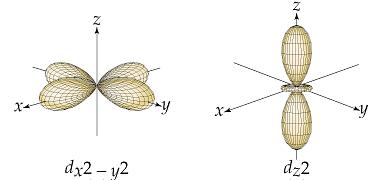
d orbitals (l = 2) have more complex shapes, typically cloverleaf patterns, and five orientations (ml = -2, -1, 0, +1, +2). Most d orbitals have two nodal planes.
f Orbitals
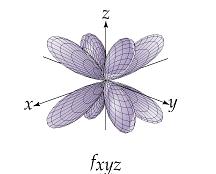
f orbitals (l = 3) are even more complex, with seven orientations and eight lobes or mirrored dumbbells with toroidal shapes.
Orbital Nodes
Nodes are regions where the probability of finding an electron is zero. Radial nodes occur in s orbitals, while angular nodes (nodal planes) occur in p, d, and f orbitals.
Probability Density and Radial Distribution
Probability Density (ψ2)
Probability density is the likelihood of finding an electron per unit volume at a specific location. For s orbitals, this density is highest at the nucleus and decreases with distance.
Total Radial Probability
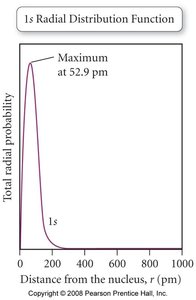
Total radial probability is the probability of finding an electron within a thin shell at radius r from the nucleus. For the hydrogen atom, the maximum probability occurs at the Bohr radius (52.9 pm), not at the nucleus.
Periodic Properties and Electron Configuration
Electron Configuration and Orbital Diagrams
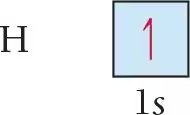
Electron configuration shows which orbitals an atom's electrons occupy. Orbital diagrams use boxes and arrows to represent orbitals and electron spins.

Shielding and Effective Nuclear Charge (Zeff)
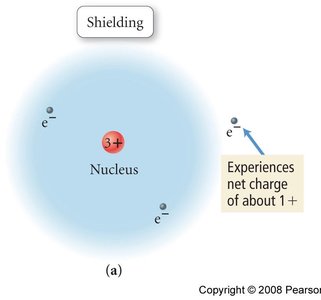
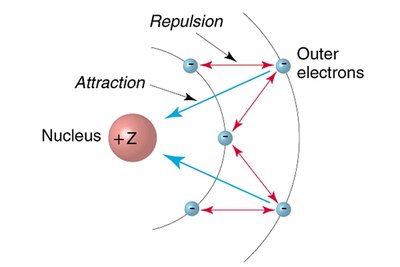
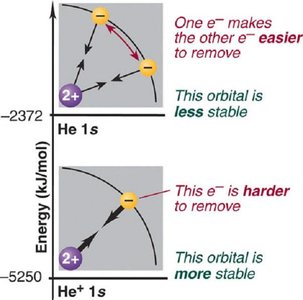
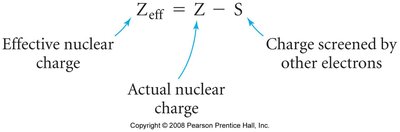
Shielding occurs when inner electrons reduce the nuclear charge felt by outer electrons. The effective nuclear charge is calculated as:
Penetration and Radial Probability
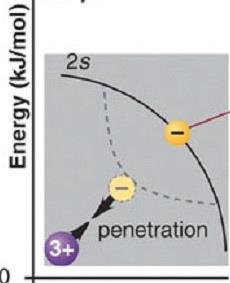
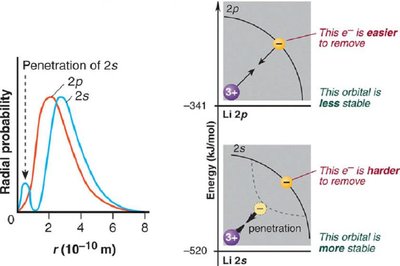
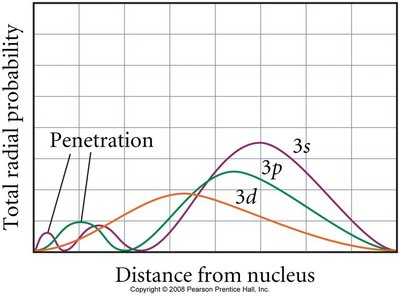
Penetration describes how some orbitals (like s) can get closer to the nucleus, experiencing greater nuclear charge and lower energy. Radial probability diagrams illustrate this effect.
Energy Ordering of Orbitals
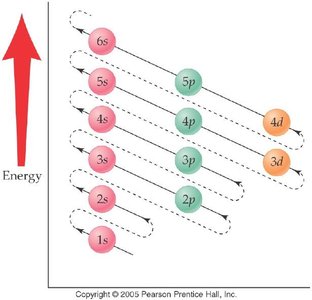
In multielectron atoms, sublevels within the same principal energy level differ in energy due to shielding and penetration. The general order is:
Summary
The quantum-mechanical model provides a detailed understanding of atomic structure, orbital shapes, and periodic properties. Quantum numbers define the energy, shape, orientation, and spin of electrons in orbitals, which in turn influence chemical behavior and periodic trends.
