 Back
Reaction Enthalpy: Methods, Calculations, and Applications
Study Guide - Smart Notes
 Tailored notes based on your materials, expanded with key definitions, examples, and context.
Reaction Enthalpy
Introduction to Enthalpy of Reaction
The enthalpy of reaction (ΔHrxn) is a fundamental concept in thermochemistry, describing the heat change associated with a chemical reaction at constant pressure. It is crucial for understanding energy transfer in chemical processes and predicting reaction spontaneity.
Methods to Determine ΔHrxn
Experimental Measurement: Coffee cup calorimetry (constant pressure) is used to directly measure ΔHrxn.
Tabulated Values: Enthalpy can be calculated using standard enthalpies of formation, bond energies, or Hess's law.
Standard Enthalpy of Reaction (ΔH⁰rxn)
Standard enthalpy of reaction is measured under standard conditions:
Gas: 1 atm
Solution: 1 M
Standard State: Most stable form of a pure substance at 298 K
Standard Enthalpy of Formation (ΔH⁰f)
The standard enthalpy of formation (ΔH⁰f) is the enthalpy change when 1 mole of a compound is formed from its elements in their standard states. The ΔH⁰f of any element in its standard state is zero.
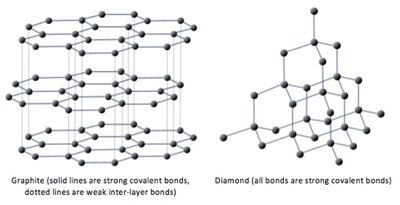
Example: Graphite and diamond are forms of elemental carbon, but graphite is more stable at standard conditions. ΔH⁰f (graphite) = 0 kJ/mol ΔH⁰f (diamond) = +1.895 kJ/mol

Calculating Enthalpy of Reaction Using ΔHf
Enthalpy of reaction can be calculated from standard enthalpies of formation using the following formula:
Example: For the reaction 2 HN3 (l) + 2 NO (g) → H2O2 (l) + 4 N2 (g):
Bond Energies and Enthalpy of Reaction
Bond energy is the energy required to break one mole of a bond in the gas phase. It is always positive and depends on the atoms and bond type (single, double, triple). Stronger bonds require more energy to break and are more chemically stable.
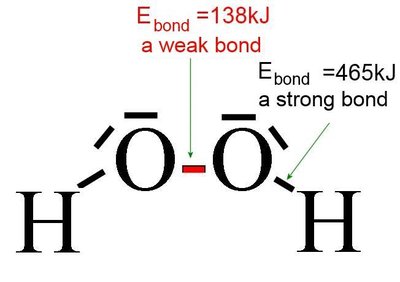
Breaking bonds (reactants): Requires energy (positive ΔH)
Forming bonds (products): Releases energy (negative ΔH)
Exothermic reactions: Weak bonds break, strong bonds form
Endothermic reactions: Strong bonds break, weak bonds form
The enthalpy of reaction using bond energies is:
Example: For 3H2(g) + N2(g) → 2 NH3(g): Bonds broken: 3(H-H) + 1(N≡N) = 3(436) + 946 = 2254 kJ Bonds formed: 6(N-H) = 6(-389) = -2334 kJ
Hess's Law
Hess's law states that if a chemical equation can be expressed as the sum of a series of steps, the enthalpy change for the overall equation is the sum of the enthalpy changes for each step. This allows calculation of ΔHrxn for reactions where direct measurement is difficult.
If a chemical equation is multiplied by a factor, ΔHrxn is multiplied by the same factor.
If a chemical equation is reversed, ΔHrxn changes sign.
Sum of steps: ΔHrxn (overall) = sum of ΔHrxn (steps)
Example: Calculating the enthalpy for Sr(s) + C(s, graphite) + 3/2 O2(g) → SrCO3(s) using known reaction enthalpies:
Reaction | ΔHrxn (kJ) |
|---|---|
SrCO3(s) → SrO(s) + CO2(g) | +234 |
C(s, graphite) + O2(g) → CO2(g) | -394 |
2 SrO(s) → 2 Sr(s) + O2(g) | +1184 |
Sr(s) + 1/2 O2(g) → SrO(s) | -592 |
SrO(s) + CO2(g) → SrCO3(s) | -234 |
By combining these reactions appropriately, the enthalpy for the target reaction is found to be ΔHrxn = -1220 kJ.
Summary Table: Methods for Determining ΔHrxn
Method | Description | Key Equation |
|---|---|---|
Calorimetry | Direct measurement at constant pressure | Measured experimentally |
Enthalpy of Formation | Uses tabulated ΔHf values | |
Bond Energies | Uses bond energies for reactants and products | |
Hess's Law | Sum of enthalpy changes for a series of reactions | ΔHrxn (overall) = sum of ΔHrxn (steps) |
Key Points and Applications
Enthalpy is state-dependent: Phase, pressure, concentration, and temperature affect ΔHrxn.
Standard state: Most stable form of a substance at 298 K and 1 atm.
Bond strength: Stronger bonds are more stable and less reactive.
Exothermic vs. Endothermic: Negative ΔHrxn indicates exothermic (energy released), positive indicates endothermic (energy absorbed).
Additional info: The notes above expand on brief points with academic context, definitions, and examples to ensure completeness and clarity for exam preparation.
