 Back
BackRedox Reactions and Electrochemistry: Principles, Applications, and Experimental Observations
Study Guide - Smart Notes
 Tailored notes based on your materials, expanded with key definitions, examples, and context.
Redox Reactions and Equilibria
Introduction to Redox Reactions
Oxidation-reduction (redox) reactions are fundamental chemical processes involving the transfer of electrons between species. These reactions are central to energy production, corrosion, metabolism, and industrial processes.
Oxidation: The process in which an element loses electrons, often associated with the addition of oxygen or the loss of hydrogen.
Reduction: The process in which an element gains electrons, often associated with the removal of oxygen or the gain of hydrogen.
Redox Reaction: A chemical reaction involving both oxidation and reduction, where electrons are transferred from the reducing agent to the oxidizing agent.
Example: (Copper is oxidized, oxygen is reduced.)
Definitions and Examples of Oxidation and Reduction
Classical Definition: Oxidation is the combination with oxygen; reduction is the removal of oxygen.
Hydrogen-Based Definition: Oxidation is the loss of hydrogen; reduction is the gain of hydrogen.
Electron-Based Definition: Oxidation is the loss of electrons; reduction is the gain of electrons.
Example: (CO is reduced by gaining hydrogen.)
The Redox Couples and Oxidation Numbers
Redox Couples
A redox couple consists of an oxidized and a reduced form of a chemical species, represented as Ox/Red. Electron transfer occurs between these forms during a redox reaction.
Oxidant (Oxidizing Agent): Accepts electrons and is itself reduced.
Reductant (Reducing Agent): Donates electrons and is itself oxidized.
General Equation:
Examples:
:
:
:
Oxidation Number (Oxidation State)
The oxidation number (n.o.) is a formalism that helps track electron transfer in redox reactions. It is the hypothetical charge an atom would have if all bonds were ionic.
Rules for Assigning Oxidation Numbers:
Elemental form: n.o. = 0 (e.g., , )
Monoatomic ion: n.o. = ion charge (e.g., : n.o. = +2)
Hydrogen: n.o. = +1 (except in metal hydrides, where n.o. = -1)
Oxygen: n.o. = -2 (except in peroxides, where n.o. = -1)
The sum of oxidation numbers in a neutral molecule is 0; in an ion, it equals the ion's charge.
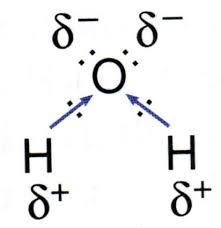
Example: In , n.o.(H) = +1, n.o.(O) = -2.
Electronegativity and Oxidation States
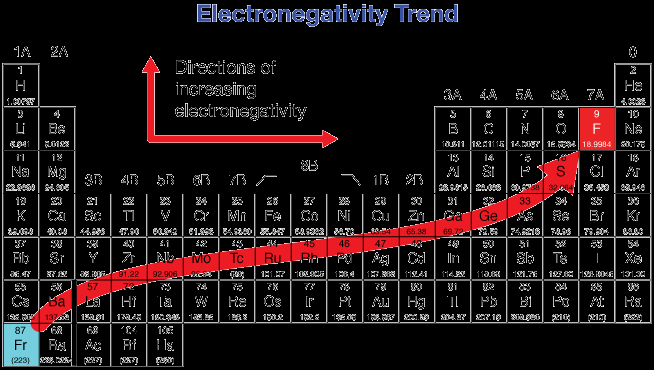
Electronegativity is the tendency of an atom to attract electrons. It influences oxidation states and redox behavior.
Electronegativity increases across a period and decreases down a group.
Highly electronegative elements (e.g., F, O) are strong oxidants.
Common Oxidation States in the Periodic Table
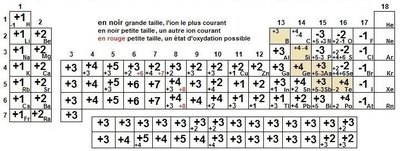
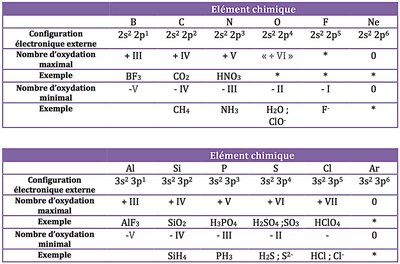
Elements can exhibit multiple oxidation states, especially transition metals. The most common oxidation states are summarized in periodic tables and reference charts.
Experimental Observations of Redox Reactions
Redox Reaction: Zinc and Copper(II) Sulfate
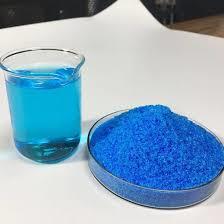
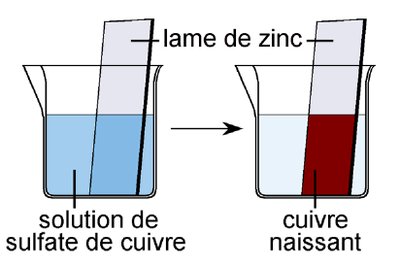
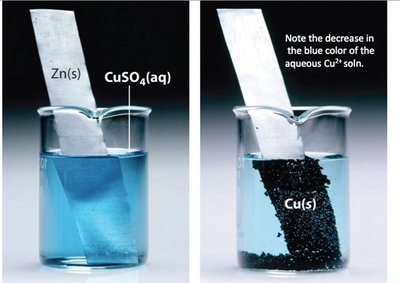
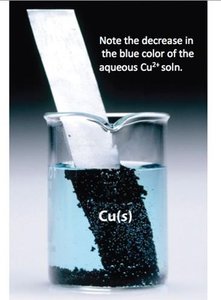
When a zinc strip is placed in a solution of copper(II) sulfate, a redox reaction occurs, resulting in the deposition of copper metal and the dissolution of zinc.
Observation: The blue color of the solution fades as ions are reduced to copper metal, which deposits on the zinc strip.
Half-Reactions:
Oxidation:
Reduction:



Redox Potentials and Electrochemical Series
Standard Electrode Potentials
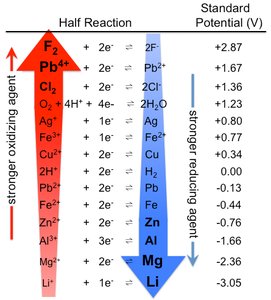
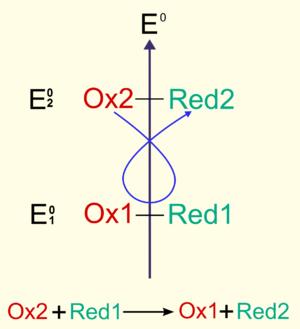
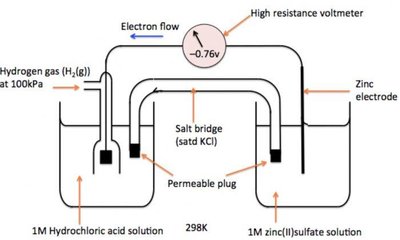
Each redox couple is assigned a standard electrode potential (), measured relative to the standard hydrogen electrode (SHE, V). The more positive the $E^\circ$, the stronger the oxidizing agent; the more negative, the stronger the reducing agent.
Example: V, V
Electrochemical Series: A ranked list of redox couples by their standard potentials.
Predicting Redox Reactions
A redox reaction is thermodynamically favorable if the oxidant's standard potential is higher than the reductant's. The cell potential () is calculated as:
Example: For the Zn/Cu cell: V
Electrochemical Cells and Batteries
Galvanic (Voltaic) Cells
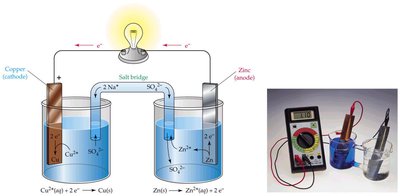
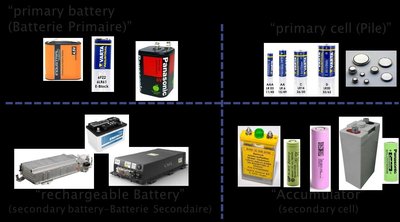
Galvanic cells convert chemical energy from spontaneous redox reactions into electrical energy. They consist of two half-cells connected by a salt bridge, with electron flow from the anode (oxidation) to the cathode (reduction).
Anode: Site of oxidation (negative electrode in galvanic cell)
Cathode: Site of reduction (positive electrode in galvanic cell)
Salt Bridge: Maintains electrical neutrality by allowing ion flow

Gibbs Free Energy and Cell Potential
The spontaneity of a redox reaction is related to the change in Gibbs free energy ():
Under standard conditions:
If , the reaction is spontaneous.
Nernst Equation
The Nernst equation relates the cell potential to the concentrations of reactants and products:
At 25°C:
Example: For the Zn/Cu cell,
Applications: Lead-Acid Battery
Lead-Acid Battery Chemistry
The lead-acid battery is a common rechargeable battery. Its operation involves the following reactions:
Discharge:
Nominal Voltage: About 2 V per cell; cells are connected in series for higher voltages.
Role of Electrolyte: Sulfuric acid participates in the redox reactions and conducts ions.
Summary Table: Standard Reduction Potentials
Half Reaction | Standard Potential (V) |
|---|---|
F2 + 2e- → 2F- | +2.87 |
Pb4+ + 2e- → Pb2+ | +1.67 |
Cl2 + 2e- → 2Cl- | +1.36 |
O2 + 4H+ + 4e- → 2H2O | +1.23 |
Ag+ + e- → Ag | +0.80 |
Fe3+ + e- → Fe2+ | +0.77 |
Cu2+ + 2e- → Cu | +0.34 |
Zn2+ + 2e- → Zn | -0.76 |
Al3+ + 3e- → Al | -1.66 |
Mg2+ + 2e- → Mg | -2.37 |
Li+ + e- → Li | -3.05 |

Key Equations
Cell Potential:
Gibbs Free Energy:
Nernst Equation: (at 25°C)
Conclusion
Redox reactions are essential for understanding chemical reactivity, energy conversion, and electrochemical devices. Mastery of oxidation numbers, redox couples, and electrochemical potentials is crucial for predicting and harnessing these reactions in both laboratory and real-world applications.
