 Back
BackSolubility Equilibria and Precipitation Reactions
Study Guide - Smart Notes
 Tailored notes based on your materials, expanded with key definitions, examples, and context.
Solubility Equilibria
Solubility and Solutions
Solubility describes the amount of solute that dissolves in a given quantity of solvent at a specific temperature, typically expressed in grams per liter (g/L). Molar solubility (S) is the amount of dissolved solute expressed in moles per liter (mol/L). The solubility of ionic compounds in water is governed by a set of solubility rules, which help predict whether a compound will dissolve or form a precipitate.
Solubility Rules:
All compounds containing Group 1 elements (Li+, Na+, K+) and ammonium (NH4+) are soluble.
Acetates (C2H3O2-) and nitrates (NO3-) are soluble.
Most chlorides, bromides, and iodides are soluble except when paired with Cu+, Ag+, Hg22+, or Pb2+.
Most sulfates (SO42-) are soluble except with Ca2+, Sr2+, Ba2+, Ag+, Hg22+, or Pb2+.
Electrolytes:
Strong electrolytes: Completely dissociate in solution (e.g., strong acids, strong bases, soluble salts).
Weak electrolytes: Partially dissociate (e.g., weak acids, weak bases).
Nonelectrolytes: Do not dissociate (e.g., molecular compounds like sugars).
Precipitation Reactions
Precipitation occurs when two solutions are mixed and an insoluble product (precipitate) forms. The formation of a precipitate can be predicted using solubility rules and is often represented by a net ionic equation.
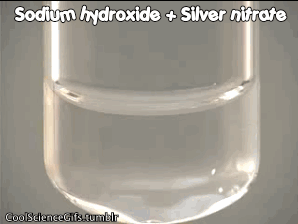
Example: Mixing sodium hydroxide (NaOH) and silver nitrate (AgNO3) results in the formation of a precipitate, silver hydroxide (AgOH).
Solubility Product Constant (Ksp)
Definition and Expression
The solubility product constant, Ksp, is the equilibrium constant for the dissolution of a sparingly soluble ionic compound. For a general salt MnXm:
The Ksp expression is:
Example:
SrCO3(s):
Ag2S(s):
Mg3(AsO4)2(s):
Solubility Product Table
The following table lists Ksp values for various slightly soluble salts, which are essential for predicting precipitation and calculating solubility.
Substance | Formula | Ksp |
|---|---|---|
Aluminum hydroxide | Al(OH)3 | 4.6 x 10⁻³³ |
Barium chromate | BaCrO4 | 1.2 x 10⁻¹⁰ |
Barium fluoride | BaF2 | 1.0 x 10⁻⁶ |
Calcium carbonate | CaCO3 | 3.8 x 10⁻⁹ |
Silver chloride | AgCl | 1.8 x 10⁻¹⁰ |
Lead(II) sulfate | PbSO4 | 1.7 x 10⁻⁸ |
Molar Solubility Calculations
Calculating Molar Solubility from Ksp
Molar solubility (S) is the number of moles of solute that dissolve per liter of solution. For Mg(OH)2 (Ksp = 1.8 x 10⁻¹¹):
Solve for x (molar solubility):
Common Ion Effect
The presence of a common ion decreases the solubility of a sparingly soluble salt. For example, adding Na2SO4 to a BaSO4 solution increases [SO42-], shifting the equilibrium left and decreasing BaSO4 solubility.
Precipitation and the Reaction Quotient (Q)
Predicting Precipitation
To determine if a precipitate will form, compare the ion product (Q) to Ksp:
If Q > Ksp, precipitation occurs.
If Q < Ksp, no precipitation occurs.
If Q = Ksp, the solution is saturated and at equilibrium.
Example: Mixing 0.050 M Pb(NO3)2 and 0.050 M NaCl:
Since Q > Ksp (1.6 x 10⁻⁵), PbCl2 will precipitate.
Factors Affecting Solubility
pH Effects
For salts containing basic anions, solubility increases as pH decreases (more acidic). For example, adding acid to CaF2 consumes F- ions, shifting equilibrium to dissolve more CaF2:
Amphoteric Hydroxides
Some metal hydroxides (e.g., Zn(OH)2) can react with both acids and bases, increasing their solubility in both acidic and basic solutions:
With acid:
With base:
Complex-Ion Equilibria
Formation of Complex Ions
Some metal ions form complex ions with ligands (Lewis bases), increasing the solubility of their salts. The equilibrium constant for complex ion formation is the formation constant (Kf):
The dissociation constant (Kd) is the reciprocal of Kf.
Combined Equilibria: Ksp and Kf
When a slightly soluble salt forms a complex ion, the overall equilibrium constant (Kc) is the product of Ksp and Kf:
Learning Objectives and Practice
Understand and write solubility product expressions.
Calculate Ksp from solubility and vice versa.
Predict precipitation using Q and Ksp.
Analyze the effect of common ions and pH on solubility.
Calculate solubility in the presence of complex ions using Kf.
