 Back
BackSolutions and Their Properties: Structure, Types, and Calculations
Study Guide - Smart Notes
 Tailored notes based on your materials, expanded with key definitions, examples, and context.
Chapter 15–16: Solutions
Introduction to Solutions
Solutions are homogeneous mixtures composed of two or more substances. The study of solutions is fundamental in chemistry, as many reactions occur in solution and their properties affect solubility, conductivity, and reactivity.
Properties of Water and Hydrogen Bonding
Unique Properties of Water
Surface Tension: Water has a high surface tension due to hydrogen bonding, which is the inward force that minimizes the surface area of a liquid.
Vapor Pressure: Water exhibits low vapor pressure because hydrogen bonds hold molecules together, preventing easy evaporation.
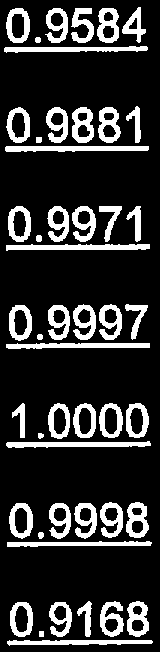
Density: Water is most dense at 4°C. Ice is less dense than liquid water due to the open structure formed by hydrogen bonds, allowing it to float.
Boiling and Freezing Points: Water has unusually high boiling and freezing points for its molecular mass, again due to hydrogen bonding.
Polarity of Water
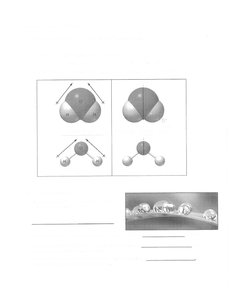
Bond Polarity: The O–H bonds in water are polar covalent (oxygen is partially negative, hydrogen is partially positive).
Molecular Polarity: The bent shape of the water molecule makes it overall polar, with a net dipole moment.

Why Ice Floats
Extensive hydrogen bonding in ice holds water molecules in a rigid, open structure, making ice less dense than liquid water.
This property allows aquatic life to survive under the ice layer in winter.
Solutions: Definitions and Types
Key Terms
Solution: A homogeneous mixture of two or more substances.
Solute: The substance dissolved in a solution (present in a smaller amount).
Solvent: The substance that does the dissolving (present in a larger amount).
Aqueous Solution: A solution in which water is the solvent.
Soluble: The ability of a substance to dissolve in another to form a homogeneous mixture.
Saturated Solution: A solution that contains the maximum amount of solute that can dissolve at a given temperature.

Types of Solutions
Solutions can be classified based on the physical state of the solute and solvent:
Solvent | Solute | Example |
|---|---|---|
Liquid | Liquid | Rubbing alcohol |
Liquid | Solid | Salt water, Kool-Aid |
Liquid | Gas | Soda |
Gas | Gas | Air |
Solid | Solid | Brass, bronze |
Solid | Liquid | Dental amalgam (Hg in Ag) |

Miscibility
Miscible: Two liquids that mix in all proportions (e.g., ethanol and water).
Immiscible: Liquids that do not mix (e.g., gasoline and water).
Heterogeneous Mixtures
Suspensions and Colloids
Heterogeneous mixtures are not uniform throughout. Two main types are:
Suspensions: Particles are large, settle out upon standing, and can be separated by filtration (e.g., muddy water).
Colloids: Intermediate particle size, do not settle out, and scatter light (Tyndall effect).

Dissolving Process
How Substances Dissolve
Solvent molecules are in constant motion and collide with solute particles.
Polar solvents are attracted to the charges or partial charges on solute molecules or ions.
As solute particles break away, they are surrounded by solvent molecules (solvation).
Ionic compounds dissociate into ions when dissolved in water.

Electrolytes and Conductivity
Electrolytes
Electrolyte: A compound that conducts electricity in aqueous or molten state due to the presence of mobile ions.
Strong Electrolyte: Nearly all dissolved solute breaks into ions (e.g., NaCl).
Weak Electrolyte: Only a fraction of the solute exists as ions.
Non-electrolyte: Does not conduct electricity (e.g., sugar in water).

Why Are All Ionic Compounds Electrolytes?
All ionic compounds are electrolytes because they dissociate into ions in solution, which can conduct electricity.
Concentration of Solutions
Molarity (M)
Molarity is a common unit of concentration, defined as the number of moles of solute per liter of solution:
n = moles of solute
V = volume of solution in liters
To calculate molarity or the amount of solute needed, use the molar mass to convert between grams and moles.
Practice Problems
Calculate the molarity when 145 g NaCl is dissolved to make 2.75 L of solution.
Find the grams of KCl needed to make 0.750 L of 1.50 M solution.
Calculate the molarity when 85.6 g HCl is dissolved to make 0.385 L of solution.
Find the grams of NaOH needed to make 3.00 L of 1.90 M solution.
Calculate the molarity when 8.77 g KI is dissolved to make 4.75 L of solution.
Find the grams of FeCl3 needed to make 2.00 L of 3.00 M solution.
Calculate the molarity when 14.1 g NH3 is dissolved to make 0.100 L of solution.
Find the grams of KOH needed to make 10.5 L of 2.50 M solution.
Summary Table: Solution Types and Properties
Type | Particle Size | Settling | Separation | Example |
|---|---|---|---|---|
Solution | < 1 nm | No | Not by filtration | Salt water |
Colloid | 1–1000 nm | No | Not by filtration | Milk |
Suspension | > 1000 nm | Yes | By filtration | Muddy water |
Key Concepts and Applications
"Like dissolves like": Polar solvents dissolve polar and ionic solutes; nonpolar solvents dissolve nonpolar solutes.
Solutions are homogeneous; suspensions and colloids are heterogeneous.
Electrolytes conduct electricity due to mobile ions; non-electrolytes do not.
Water's unique properties are due to hydrogen bonding and molecular polarity.
