Back
Solutions, Aqueous Reactions, and Thermochemistry: Structured Study Notes
Study Guide - Smart Notes
 Tailored notes based on your materials, expanded with key definitions, examples, and context.
Chapter 8 – Solutions and Aqueous Reactions
Solution Concentration
Solutions are homogeneous mixtures composed of a solute (minority component) and a solvent (majority component). In aqueous solutions, water acts as the solvent. The concentration of a solution can be described qualitatively as dilute or concentrated, but these terms are relative. Quantitative concentration is measured using molarity (M), defined as the number of moles of solute per liter of solution:
Molarity formula:
Example: Calculating the molarity of 1.22 mol KI in 1.15 L solution.
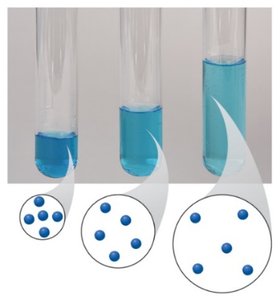
Key Point: The visual difference between dilute and concentrated solutions is the amount of solute present relative to the solvent.
Dilution
Dilution is the process of decreasing the concentration of a solution by adding more solvent. The number of moles of solute remains constant during dilution, and the relationship between initial and final concentrations and volumes is given by:
Dilution formula:
Example: Calculating the volume of 1.00 M CuSO4 needed to make 250.0 mL of 0.100 M CuSO4.
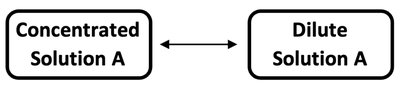
Key Point: Dilution does not change the amount of solute, only the volume and concentration.
Solution Stoichiometry
Molarity is used in stoichiometric calculations to convert between solution volumes and moles of reactants or products. The roadmap for solution stoichiometry involves converting volume to moles, using the balanced equation to relate moles of different substances, and then converting back to volume if needed.
Example: Calculating the volume of 0.150 M KCl solution needed to react with 0.150 L of 0.175 M Pb(NO3)2.

Types of Aqueous Solutions and Solubility
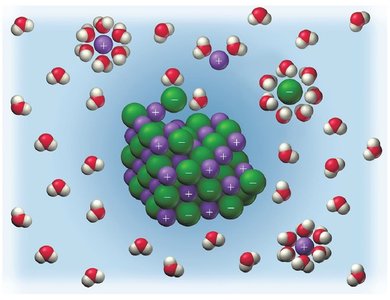
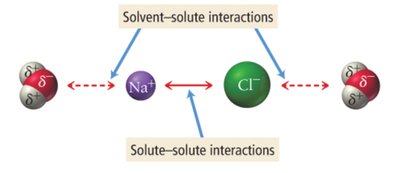
Substances dissolve in water based on the strength of solute-solvent interactions. If these interactions are strong enough, the solute dissolves.
Solubility: The ability of a substance to dissolve in a solvent.
Soluble: Dissolves in water.
Insoluble: Does not dissolve in water.
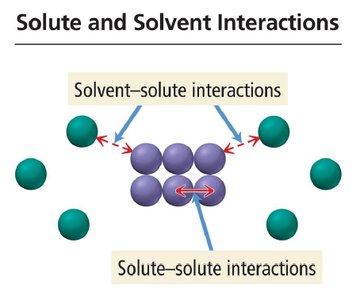
Example: Dissolution of NaCl in water involves the attraction between water molecules and Na+/Cl– ions.
Electrolytes and Nonelectrolytes
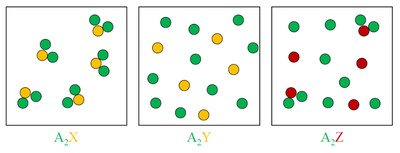
Electrolytes are substances that produce ions in water, allowing the solution to conduct electricity. Nonelectrolytes dissolve as intact molecules and do not conduct electricity.
Strong electrolytes: Completely dissociate or ionize (e.g., soluble ionic compounds, strong acids/bases).
Weak electrolytes: Partially ionize in water.
Nonelectrolytes: Do not produce ions.
Solubility Rules
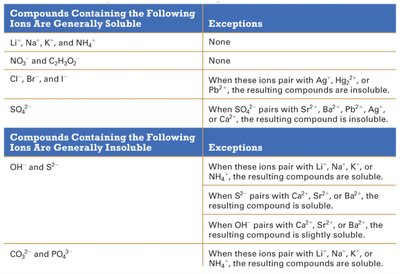
Solubility rules help predict whether a compound will dissolve in water. These rules are essential for identifying the formation of precipitates in reactions.
Precipitation Reactions
Precipitation reactions occur when two aqueous solutions react to form an insoluble solid (precipitate). Double displacement reactions involve the exchange of ions between compounds.
Generic formula:
Example: Mixing KI and Pb(NO3)2 forms PbI2 (s) and KNO3 (aq).
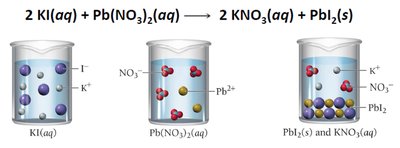
Representing Aqueous Reactions: Molecular, Ionic, and Net Ionic Equations
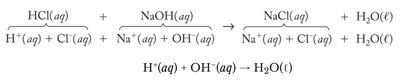
Chemical reactions in solution can be represented in three ways:
Molecular equation: Shows reactants and products as neutral compounds.
Total (complete) ionic equation: Shows all ions present in solution.
Net ionic equation: Shows only the ions and molecules directly involved in the reaction.
Spectator ions are ions that do not participate in the reaction and appear unchanged on both sides of the equation.
Acid-Base Reactions
Acids are molecular compounds that ionize in water to produce hydronium ions (H3O+). Bases produce hydroxide ions (OH–) in water. Acid-base reactions are a type of double displacement reaction, resulting in the formation of water and a salt.
Example:


Titration
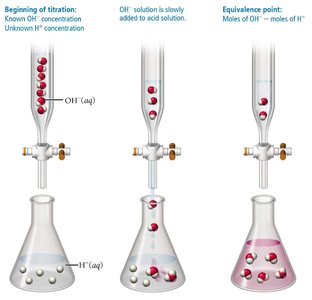
Titration is a laboratory technique used to determine the concentration of an unknown solution by reacting it with a solution of known concentration. The equivalence point is reached when the moles of acid equal the moles of base.
Chapter 9 – Thermochemistry
The Nature of Energy
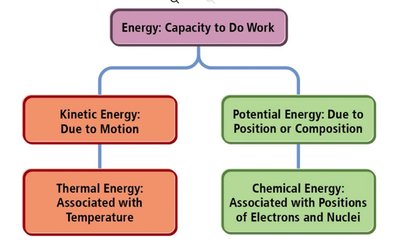
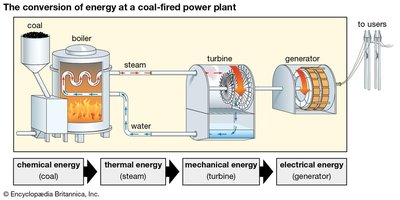
Energy is the capacity to do work and exists in two main forms: kinetic and potential energy. Kinetic energy is associated with motion, while potential energy is related to position or composition. Thermal energy is a type of kinetic energy, and chemical energy is a type of potential energy.
Conservation of Energy
The law of conservation of energy states that energy cannot be created or destroyed, only transferred or converted. In chemical systems, energy transfer occurs between the system and its surroundings.
Tracking Energy Changes
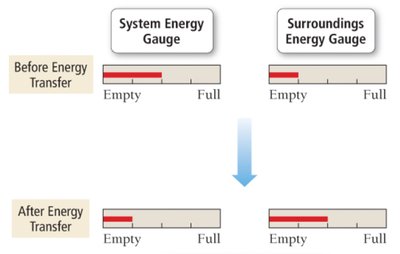
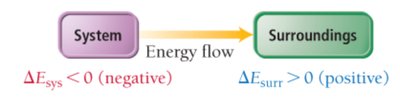
Energy changes are tracked by dividing the universe into the system (under investigation) and the surroundings (everything else). When the system loses energy, the surroundings gain it, and vice versa.
Heat and Temperature
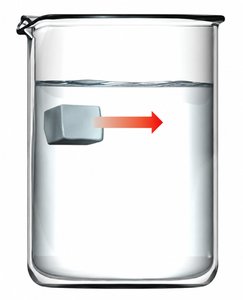
Heat (q) is the transfer of thermal energy due to a temperature difference. Temperature measures the average kinetic energy of particles. Heat flows spontaneously from high to low temperature until equilibrium is reached.
Change in temperature formula:
Heat Capacity and Specific Heat
Heat capacity (C) is the amount of heat required to raise the temperature of an object by 1°C. Specific heat capacity (Cs) is the heat required to raise 1 g of a substance by 1°C. Substances with higher specific heat capacity experience smaller temperature changes for the same amount of heat absorbed.
Specific heat formula (mass):
Specific heat formula (moles):
Heat Transfer
When two substances at different temperatures come into contact, heat transfers from the hotter to the cooler substance until equilibrium is reached. The heat lost by one substance equals the heat gained by the other:
Heat transfer formula:
Work and Pressure-Volume Work
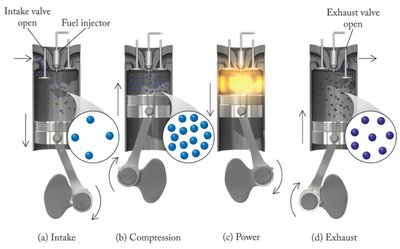
Work (w) occurs when a force acts through a distance. Pressure-volume work is done when a system changes volume against an external pressure:
Pressure-volume work formula:
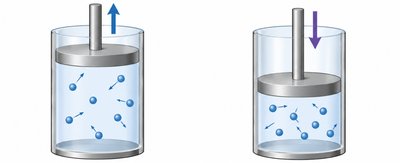
Expansion and Compression
When a gas expands, its volume increases (), and work is done by the system (). When a gas is compressed, its volume decreases (), and work is done on the system ().
First Law of Thermodynamics
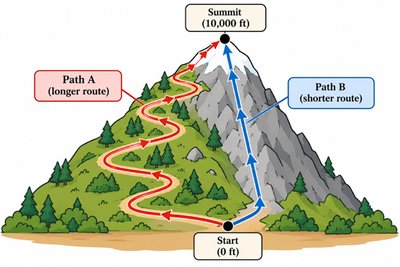
The first law of thermodynamics states that the total energy of the universe remains constant. Internal energy (E) is the sum of all kinetic and potential energies in a system and is a state function.
Change in internal energy formula:
For chemical reactions:
Internal Energy Changes in Chemical Reactions
When , the system absorbs energy; when , the system releases energy. The energy lost by the system is gained by the surroundings:
Energy transfer formula:
Internal Energy Formula (Heat and Work)
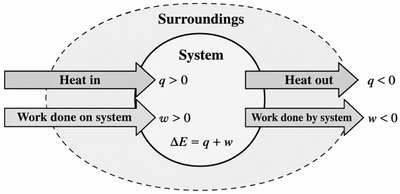
The change in internal energy is the sum of heat and work:
Formula:
Measuring Internal Energy: Calorimetry
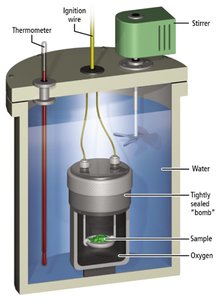
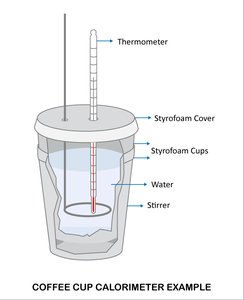
Calorimetry measures heat transferred between a system and its surroundings. Bomb calorimetry is used for constant-volume reactions, while coffee-cup calorimetry is used for constant-pressure reactions.
Enthalpy and Enthalpy of Reaction
Enthalpy (H) is a thermodynamic property defined as the sum of internal energy and the pressure-volume product. At constant pressure, the change in enthalpy equals the heat transferred:
Enthalpy formula:
At constant pressure:
Hess's Law
Hess's Law states that the overall enthalpy change of a reaction is equal to the sum of the enthalpy changes of the individual steps:
Formula:
Standard Enthalpy of Formation
The standard enthalpy of formation () is the enthalpy change when 1 mole of a compound forms from its elements in their standard states. The standard enthalpy of reaction () is calculated by subtracting the sum of the reactants from the sum of the products:
Formula:
Bond Energies
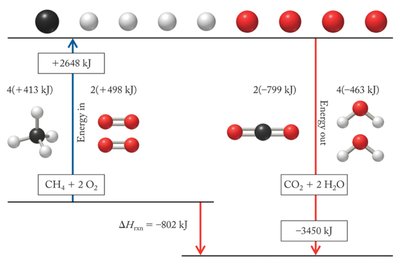
Bond energy is the energy required to break one mole of a bond in the gas phase. The enthalpy change of a reaction can be estimated by subtracting the energy of bond formation from the energy associated with bond breaking:
Formula:
Chapter 10 – Gases
Kinetic Molecular Theory (KMT)
KMT explains the behavior of gases based on the motion of their particles. Key postulates include:
Gas particles have negligible volume compared to the container.
Average kinetic energy is proportional to temperature.
Collisions are elastic; no energy is lost.
Gas Laws
The behavior of gases is described by several laws:
Boyle's Law: (pressure and volume inversely proportional)
Charles's Law: (volume and temperature directly proportional)
Avogadro's Law: (volume and amount of gas directly proportional)
Gay-Lussac's Law: (pressure and temperature directly proportional)
Combined Gas Law:
Ideal Gas Law:
Applications of the Ideal Gas Law
The ideal gas law can be used to determine molar volume, density, and molar mass of a gas. At STP (0°C, 1 atm), 1 mole of an ideal gas occupies 22.4 L.
Mixtures of Gases and Partial Pressures
Dalton's law of partial pressures states that the total pressure of a gas mixture equals the sum of the partial pressures of its components:
Formula:
Gas Stoichiometry
Gas stoichiometry uses the ideal gas law to convert between moles and gas volume in reactions.

Real Gases
Real gases deviate from ideal behavior at high pressures and low temperatures due to particle volume and intermolecular forces.