 Back
BackSolutions: Water as a Solvent and Types of Solutions
Study Guide - Smart Notes
 Tailored notes based on your materials, expanded with key definitions, examples, and context.
Solutions
Definition and Components
A solution is a homogeneous mixture composed of two or more substances. The substance present in the greatest amount is called the solvent, while the other substance(s) present in lesser amounts are called solute(s).
Solvent: The substance in which the solute is dissolved (often present in the greatest amount).
Solute: The substance dissolved in the solvent (present in a lesser amount).
Example: In a solution of copper(II) sulfate (CuSO4) in water (H2O), water is the solvent and CuSO4 is the solute.

Additional info: Solutions can exist in any phase: solid, liquid, or gas.
Water as a Solvent
Properties of Water as a Solvent
Water is known as the "universal solvent" due to its ability to dissolve a wide variety of substances. This property is largely due to its polar nature and ability to form hydrogen bonds.
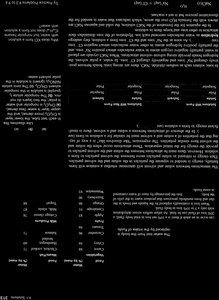
Polarity: Water molecules have a partial negative charge on the oxygen atom and partial positive charges on the hydrogen atoms, making them highly polar.
Hydrogen Bonding: Water molecules can form hydrogen bonds with each other and with other polar molecules or ions, facilitating the dissolution process.
Example: Table salt (NaCl) dissolves in water because the positive sodium ions (Na+) are attracted to the oxygen atom of water, while the negative chloride ions (Cl-) are attracted to the hydrogen atoms.
Additional info: Water's solvent properties are essential for biological and chemical processes, including nutrient transport and chemical reactions in living organisms.
Types of Solutions and Solvents
Classification by State of Solute and Solvent
Solutions can be classified based on the physical states of the solute and solvent. The most common types are:
Type | Solute State | Solvent State | Example |
|---|---|---|---|
Gas Solutions | Gas | Gas | Air (O2 in N2) |
Liquid Solutions | Gas | Liquid | CO2 in water (soda) |
Liquid Solutions | Liquid | Liquid | Alcohol in water |
Liquid Solutions | Solid | Liquid | Salt in water |
Solid Solutions | Solid | Solid | Brass (Zn in Cu) |

Additional info: The ability of a solute to dissolve in a solvent depends on the nature of both substances ("like dissolves like").
Formation of Solutions
Process of Dissolution
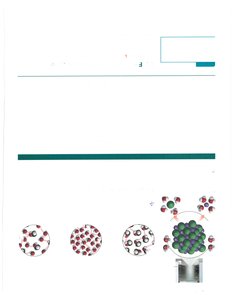
The formation of a solution involves the interaction between solute and solvent particles. For ionic compounds, the ions separate and become surrounded by solvent molecules (hydration in water).
Dissociation: Ionic compounds break into ions when dissolved in water.
Hydration: Water molecules surround and stabilize the ions.
Example: When NaCl dissolves in water, it dissociates into Na+ and Cl- ions, each surrounded by water molecules.
Additional info: The energy changes during dissolution include breaking solute-solute and solvent-solvent interactions and forming solute-solvent interactions.
Electrolytes and Nonelectrolytes
Conductivity in Solution
Substances that dissolve in water can be classified as electrolytes or nonelectrolytes based on their ability to conduct electricity.
Electrolytes: Substances that dissociate into ions in solution and conduct electricity (e.g., NaCl, HCl).
Nonelectrolytes: Substances that dissolve as molecules and do not conduct electricity (e.g., sugar, ethanol).
Example: A solution of NaCl conducts electricity, while a solution of sucrose does not.

Additional info: Strong electrolytes dissociate completely, while weak electrolytes only partially dissociate in solution.
Table: Examples of Solutions
Common Solution Types
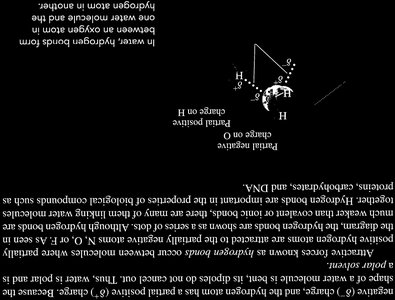
The following table summarizes common examples of solutions, their solute and solvent states, and examples:
Type | Solute | Solvent | Example |
|---|---|---|---|
Gas in Gas | O2 | N2 | Air |
Gas in Liquid | CO2 | H2O | Soda water |
Liquid in Liquid | EtOH | H2O | Alcoholic beverages |
Solid in Liquid | NaCl | H2O | Salt water |
Solid in Solid | Zn | Cu | Brass |
Summary
Solutions are homogeneous mixtures of solute(s) and solvent.
Water is an excellent solvent due to its polarity and hydrogen bonding ability.
Solutions can be classified by the physical states of their components.
The process of dissolution involves interactions between solute and solvent particles.
Electrolytes conduct electricity in solution; nonelectrolytes do not.
