Back
BackLesson 5.5: Standard Enthalpies of Formation and Their Application in Thermochemistry
Study Guide - Smart Notes
 Tailored notes based on your materials, expanded with key definitions, examples, and context.
Standard Enthalpies of Formation
Introduction to Standard Enthalpy of Formation
The standard enthalpy of formation (ΔHf°) of a compound is the enthalpy change that occurs when 1 mole of a compound is formed from its constituent elements, with all substances in their standard states. The standard state of a substance is its most stable physical form at 25 °C and 100 kPa. This concept is fundamental in thermochemistry for calculating the energy changes in chemical reactions.
Standard state: The most stable form of an element or compound under standard conditions (25 °C, 100 kPa).
ΔHf° of an element in its standard state is defined as zero.
Examples of standard states: O2(g), Na(s), Hg(l).

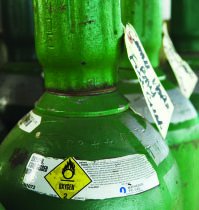
Most elements are solids in their standard state. Exceptions include noble gases and diatomic gases (H2, O2, N2, F2, Cl2), which are gases, and bromine and mercury, which are liquids at standard conditions.
Formation Equations and Hess's Law
Formation equations represent the synthesis of 1 mole of a compound from its elements in their standard states. The enthalpy change for a reaction can be determined using Hess's law, which states that the total enthalpy change for a reaction is the same, regardless of the pathway taken.
Example: Formation of sulfur trioxide (SO3) from sulfur dioxide (SO2) and oxygen.
Thermochemical equations can be manipulated (reversed, multiplied) to derive the desired reaction enthalpy.
Key Equations:
Using Hess's law and given formation enthalpies, the enthalpy change for this reaction can be calculated.
Calculating Enthalpy Changes Using Standard Enthalpies of Formation
The enthalpy change for any reaction under standard conditions can be calculated using the standard enthalpies of formation of the reactants and products:
Where is the stoichiometric coefficient from the balanced equation.
ΔHf° values are multiplied by the number of moles as indicated in the balanced equation.
Example: Combustion of Methane
Balanced equation:
ΔHf° values (kJ/mol): CH4(g): –74.4, CO2(g): –393.5, H2O(l): –285.8, O2(g): 0
Calculation:
Products: (–393.5) + 2×(–285.8) = –965.1 kJ
Reactants: (–74.4) + 0 = –74.4 kJ
ΔHr° = –965.1 – (–74.4) = –890.7 kJ
Sample Problems and Applications
Standard enthalpies of formation are used to calculate the enthalpy changes for various reactions, including combustion and synthesis reactions. The following examples illustrate the application of these concepts:
Thermite Reaction:
ΔHr° = [ΔHf°(Al2O3)] – [ΔHf°(Fe2O3)] = (–1675.7) – (–824.2) = –851.5 kJ
Combustion of Methanol and Octane:
Combustion of methanol (CH3OH): kJ/mol, per gram: –22.65 kJ/g
Combustion of octane (C8H18): kJ/mol, per gram: –47.89 kJ/g
Octane releases more energy per gram than methanol.
Table: Standard Enthalpies of Formation for Selected Compounds
Compound | ΔHf° (kJ/mol) |
|---|---|
AlCl3(s) | –704.2 |
Al2O3(s) | –1675.7 |
CH4(g) | –74.4 |
CO2(g) | –393.5 |
H2O(l) | –285.8 |
C8H18(l) | –250.1 |
NO2(g) | 33.2 |
NH3(g) | –45.9 |
Fe2O3(s) | –824.2 |
MgO(s) | –601.6 |
HCl(g) | –92.3 |
H2SO4(l) | –814.0 |
NH4Cl(s) | –314.4 |
NO(g) | 90.2 |
SiO2(s) | –910.7 |
H2O(g) | –241.8 |
Summary of Key Points
The standard enthalpy of formation, ΔHf°, is the enthalpy change for forming 1 mol of a compound from its elements in their standard states.
The standard state is the most stable form of a substance at 25 °C and 100 kPa.
The enthalpy of formation of any element in its standard state is zero.
The enthalpy change for a reaction is calculated by subtracting the sum of the enthalpies of formation of the reactants from that of the products.
Environmental and Practical Applications
Sulfur dioxide (SO2) is a significant air pollutant produced by the combustion of fossil fuels in power plants. It reacts further in the atmosphere to form acid precipitation, which can damage ecosystems. Understanding the enthalpy changes in these reactions is crucial for environmental chemistry and industrial applications.