 Back
BackStep-by-Step Guidance for ACS Chemistry Exam Questions
Study Guide - Smart Notes
 Tailored notes based on your materials, expanded with key definitions, examples, and context.
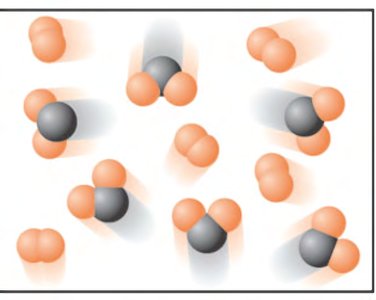
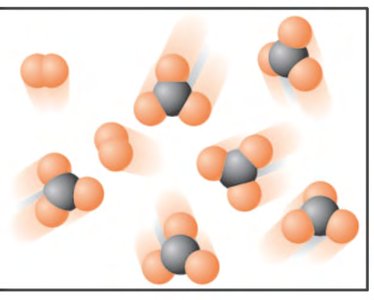
Q19. The following illustration represents a chemical reaction: Which of the following is a balanced chemical equation for this reaction?
Background
Topic: Chemical Reactions and Stoichiometry
This question tests your ability to interpret a molecular diagram and write a balanced chemical equation based on the visual representation of reactants and products.
Key Terms and Formulas:
Stoichiometry: The calculation of reactants and products in chemical reactions.
Balanced Equation: An equation where the number of atoms for each element is the same on both sides.
Reactant: A substance that is consumed in a chemical reaction.
Product: A substance that is formed in a chemical reaction.
Step-by-Step Guidance
Carefully examine the first image (reactants) and count the number of each type of molecule present. Identify the formula for each molecule (e.g., AB2, B2).
Examine the second image (products) and count the number of each type of molecule present. Identify the formula for each product (e.g., AB3, B2).
Write a preliminary equation using the formulas and quantities observed: .
Check if the equation is balanced by comparing the number of atoms of each element on both sides. If not, adjust coefficients to balance the equation.
Try solving on your own before revealing the answer!
Final Answer: 6AB2 + 3B2 → 6AB3
By counting the molecules in the images, you see that 6 AB2 and 3 B2 react to form 6 AB3. This equation is balanced for both A and B atoms.
