 Back
Stoichiometry and Solution Calculations in General Chemistry
Study Guide - Smart Notes
 Tailored notes based on your materials, expanded with key definitions, examples, and context.
Chapter 6: Stoichiometry
6.1 The Mole Concept
The mole is a fundamental unit in chemistry that allows chemists to count atoms, molecules, or ions by weighing them. Because atoms and molecules are extremely small, the mole provides a bridge between the atomic scale and the laboratory scale.
Definition of a Mole: One mole contains entities (Avogadro's number).
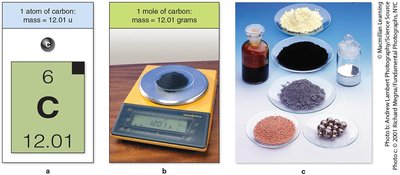
Molar Mass: The mass of one mole of a substance, expressed in grams per mole (g/mol), numerically equals the average atomic or molecular mass in atomic mass units (amu).
Application: The molar mass allows conversion between the mass of a substance and the number of moles.
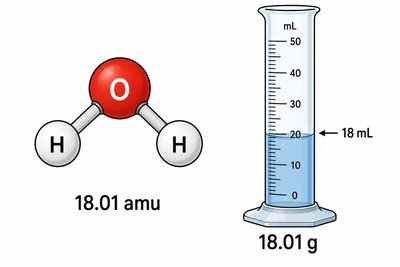
Example: 1 mole of H2O has a mass of 18.01 g and contains molecules.
6.1.1 Conversions Between Grams, Moles, and Particles
Stoichiometric calculations often require converting between mass, moles, and the number of particles (atoms, molecules, or ions). The relationships are as follows:
Grams to Moles: Divide the mass by the molar mass.
Moles to Particles: Multiply the number of moles by Avogadro's number.
Particles to Moles: Divide the number of particles by Avogadro's number.
Moles to Grams: Multiply the number of moles by the molar mass.

6.2 The Mole Concept in Balanced Equations
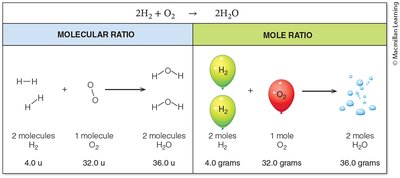
Balanced chemical equations provide the mole ratios of reactants and products, which are essential for stoichiometric calculations. These ratios allow chemists to predict the amounts of substances consumed and produced in a reaction.
Chemical Equation:
Mole Ratio: The coefficients indicate the ratio of moles of each substance involved.
Example: 2 moles of H2 react with 1 mole of O2 to produce 2 moles of H2O.
6.2.1 The Mole Map
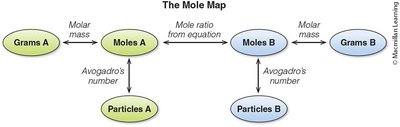
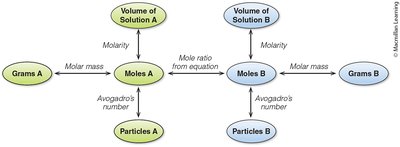
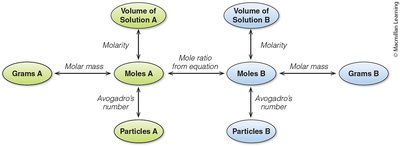
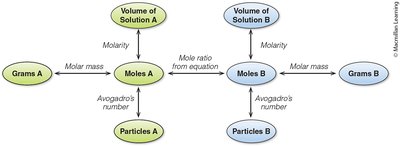
The mole map is a visual tool that helps organize the steps required to convert between different quantities in stoichiometry, such as grams, moles, and particles, using molar mass and Avogadro's number.
Key Steps: Use molar mass to convert between grams and moles; use Avogadro's number to convert between moles and particles; use mole ratios from balanced equations to relate different substances.
6.3 Limiting Reactants and Theoretical Yield
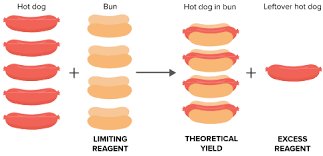
In chemical reactions, the limiting reactant is the substance that is completely consumed first, thus limiting the amount of product formed. The theoretical yield is the maximum amount of product that can be formed from the limiting reactant.
Limiting Reactant: The reactant that determines the maximum amount of product possible.
Excess Reactant: The reactant that remains after the reaction is complete.
Theoretical Yield: The calculated maximum amount of product, based on the limiting reactant.
Example: If you have 4 hot dogs and 3 buns, you can only make 3 hot dogs in buns; the buns are the limiting reactant.
6.3.1 Limiting Reactant in Chemical Reactions
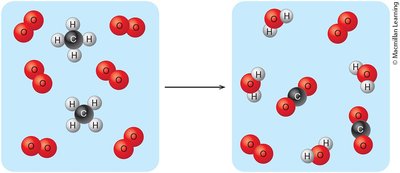
To determine the limiting reactant, compare the amount of product each reactant can produce. The reactant that produces the least amount of product is the limiting reactant.
Step 1: Convert all given quantities to moles.
Step 2: Use the balanced equation to determine the mole ratio.
Step 3: Calculate the amount of product formed from each reactant.
Step 4: The smallest amount of product indicates the limiting reactant.
Chapter 6.4: Molarity and Solution Stoichiometry
6.4.1 Concentration of Solutions
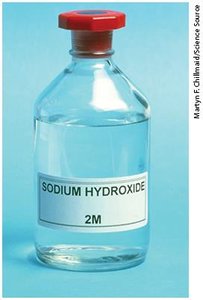
The concentration of a solution is a measure of the amount of solute dissolved in a given quantity of solvent. Molarity (M) is the most common unit of concentration in chemistry, defined as moles of solute per liter of solution.
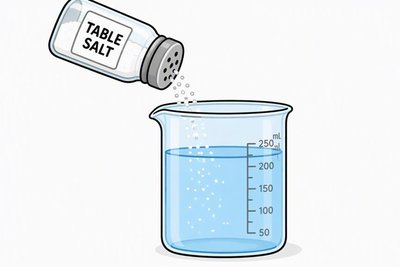
Solute: The substance being dissolved (e.g., table salt).
Solvent: The substance doing the dissolving (e.g., water).
Molarity Formula:
Example: Dissolving 5.00 g of NaCl in 100.0 mL of water creates a solution with a specific molarity.
6.4.2 Dilution of Solutions
Solutions can be diluted by adding more solvent. The relationship between the concentrations and volumes before and after dilution is given by:
Dilution Equation:
Application: Used to calculate the volume of stock solution needed to prepare a solution of desired concentration.
6.4.3 Solution Stoichiometry
Stoichiometric calculations can be extended to reactions in solution by incorporating molarity and volume. The mole map for solutions includes additional pathways for converting between volume and moles using molarity.
Key Steps: Use molarity to convert between volume and moles; use mole ratios to relate reactants and products; convert moles to grams if needed.
Chapter 6.5: Theoretical and Percent Yield
6.5.1 Actual Yield and Percent Yield
In practice, the amount of product obtained (actual yield) is often less than the theoretical yield due to losses or incomplete reactions. The percent yield quantifies the efficiency of a reaction:
Percent Yield Formula:
Example: If the theoretical yield is 31.2 g and the actual yield is 27.8 g, then percent yield is .
