 Back
BackStoichiometry of Formulas and Equations: The Mole, Mass Relationships, and Chemical Calculations
Study Guide - Smart Notes
 Tailored notes based on your materials, expanded with key definitions, examples, and context.
Stoichiometry of Formulas and Equations
The Mole Concept
The mole is a fundamental unit in chemistry that allows chemists to count atoms, molecules, or ions by weighing them. It bridges the gap between the atomic scale and the macroscopic scale, making chemical calculations practical and meaningful.
Definition: One mole (1 mol) is the amount of substance that contains as many entities (atoms, molecules, ions, etc.) as there are atoms in exactly 12 grams of carbon-12.
Avogadro’s Number (NA): entities per mole.
Significance: The mole allows chemists to relate measurable masses to the number of particles present.
Measuring Relative Atomic Masses
Relative atomic masses are determined by comparing the mass of atoms to a standard (carbon-12). This enables the calculation of molar masses for elements and compounds.

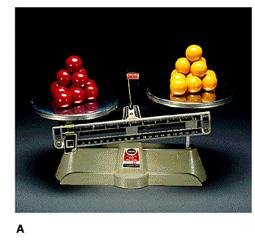
Counting by Weighing: Analogy
Just as marbles of different colors can be counted by weighing if their individual masses are known, atoms and molecules can be counted by weighing samples and using their molar masses.
Example: 12 red marbles at 7g each = 84g; 12 yellow marbles at 4g each = 48g.
By weighing a bulk sample, the number of objects can be determined if the mass per object is known.
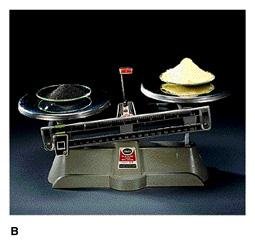
Mole-Mass Relationships for Substances
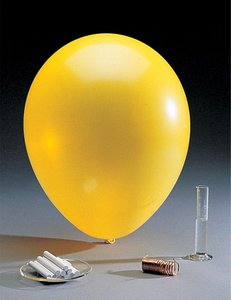
One mole of any substance contains Avogadro’s number of entities and has a mass equal to its molar mass (in grams).
Examples: 18.02 g of water (H2O), 100.09 g of calcium carbonate (CaCO3), 32.00 g of oxygen (O2), and 63.55 g of copper (Cu) each represent one mole of the respective substance.
Key Mass Terminology
Term | Definition | Unit |
|---|---|---|
Isotopic mass | Mass of an isotope of an element | amu |
Atomic mass | Weighted average of isotopic masses | amu |
Molecular (or formula) mass | Sum of atomic masses in a molecule or formula unit | amu |
Molar mass (M) | Mass of 1 mole of entities | g/mol |
Information from Chemical Formulas
Chemical formulas provide the number of atoms of each element in a molecule, the mass of each element per mole, and the total molar mass.
Example: Glucose (C6H12O6): M = 180.16 g/mol
6 C atoms, 12 H atoms, 6 O atoms per molecule
Masses per mole: 72.06 g C, 12.10 g H, 96.00 g O
Interconverting Mass, Moles, and Number of Entities
Stoichiometric calculations often require converting between mass, moles, and number of particles using molar mass and Avogadro’s number.
Formulas:
Number of moles:
Number of entities:
Mass:
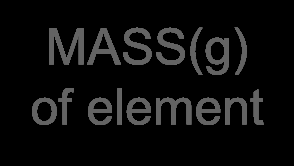
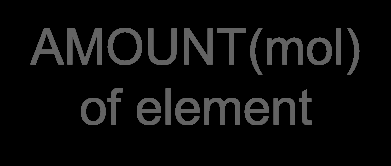
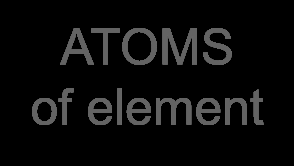
Connecting the Measurable and the Unmeasurable
The mole concept allows chemists to relate the number of atoms or molecules (which cannot be measured directly) to the mass of a sample (which can be measured).







Mass-Mole-Number Relationships for Compounds
For compounds, the relationships extend to molecules (or formula units) and the number of moles of each element within a compound.
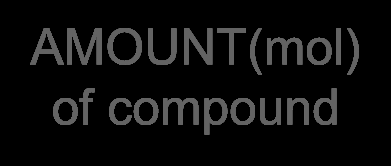
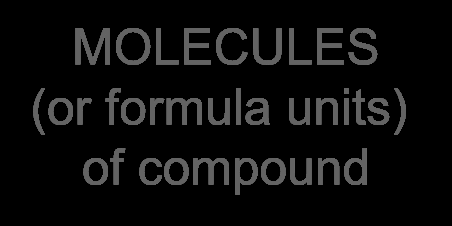
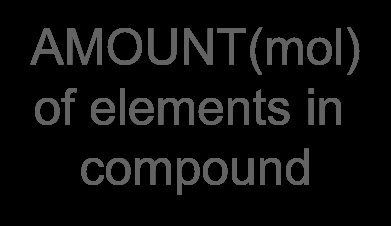
Combustion Analysis
Combustion analysis is a laboratory technique used to determine the empirical and molecular formulas of organic compounds by measuring the amounts of CO2 and H2O produced.
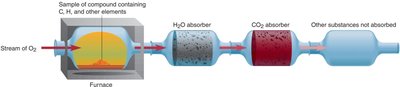
Empirical and Molecular Formulas
Empirical Formula: The simplest whole-number ratio of atoms in a compound.
Molecular Formula: The actual number of atoms of each element in a molecule; may be a multiple of the empirical formula.
Examples of Compounds with the Same Empirical Formula
Many compounds can share the same empirical formula but have different molecular formulas and properties.
Name | Molecular Formula | Whole-Number Multiple | M (g/mol) | Use or Function |
|---|---|---|---|---|
Formaldehyde | CH2O | 1 | 30.03 | Disinfectant; biological preservative |
Acetic acid | C2H4O2 | 2 | 60.05 | Vinegar, acetate polymers |
Lactic acid | C3H6O3 | 3 | 90.09 | Sour milk; muscle metabolism |
Erythrose | C4H8O4 | 4 | 120.10 | Sugar metabolism |
Ribose | C5H10O5 | 5 | 150.13 | Nucleic acids |
Glucose | C6H12O6 | 6 | 180.16 | Major energy source |
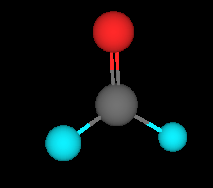
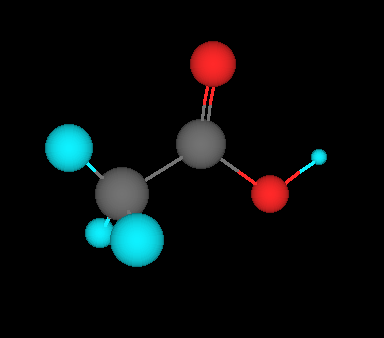
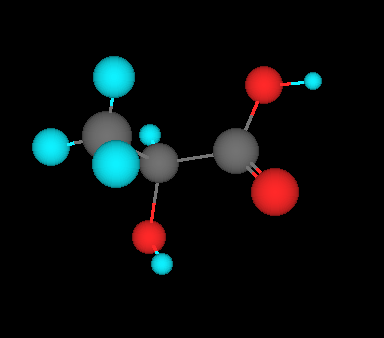
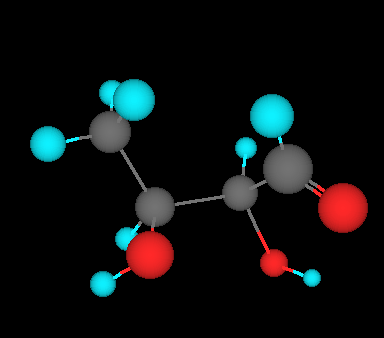
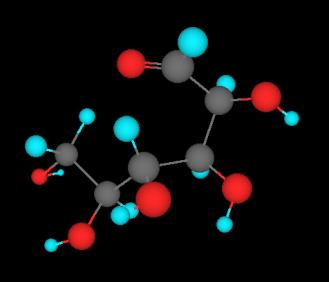
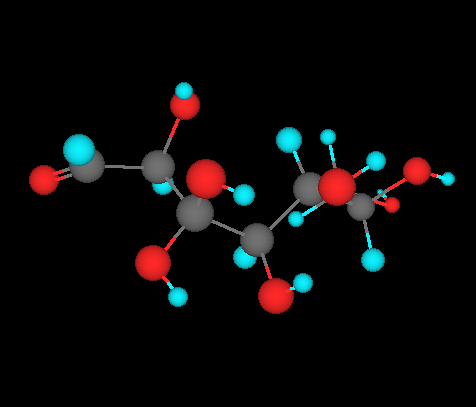
Additional info: The images above show the molecular structures of compounds with the empirical formula CH2O, illustrating how different arrangements and numbers of atoms lead to different substances.
